
Ventilated Container Rental for Coffee, Spices, and Perishables
A ventilated container is a dry container with vents that let air move through the box. That moving air is what makes it the right choice for coffee, spices, and perishables. Coffee beans, spice sacks, and fresh produce all give off moisture and warmth, and a sealed steel box traps both. Moisture leads to damp cartons, mould, and spoiled goods. A ventilated container lets the air flow, keeps the load drier, and protects the cargo on the journey from China to Bangladesh. This guide explains how ventilated containers work, how to choose one, and how to pack it well.
No fixed rental rate is given in this guide, because a rate is confirmed only after checking the actual shipment and documents. Rental pricing depends on the route, the lease period, the container condition, and the terms of the lease. What this guide gives is a clear way to understand the factors, to compare offers fairly, and to plan a ventilated load that arrives in good order. All container figures here are widely standard approximate figures, clearly labelled as approximate. The actual specs for a container are on the plate fixed to that container, and the plate is the authority.
Since 2016, Total Import Solution has supported importers in Bangladesh with container hire guidance, ventilated load planning, documentation, customs clearance support, and delivery coordination. The team works with buyers who import coffee and spices for the first time, and with buyers who ship perishables on a regular basis. This guide gives practical steps only, and it advises checking the actual container in every case.
1. What a Ventilated Container Is
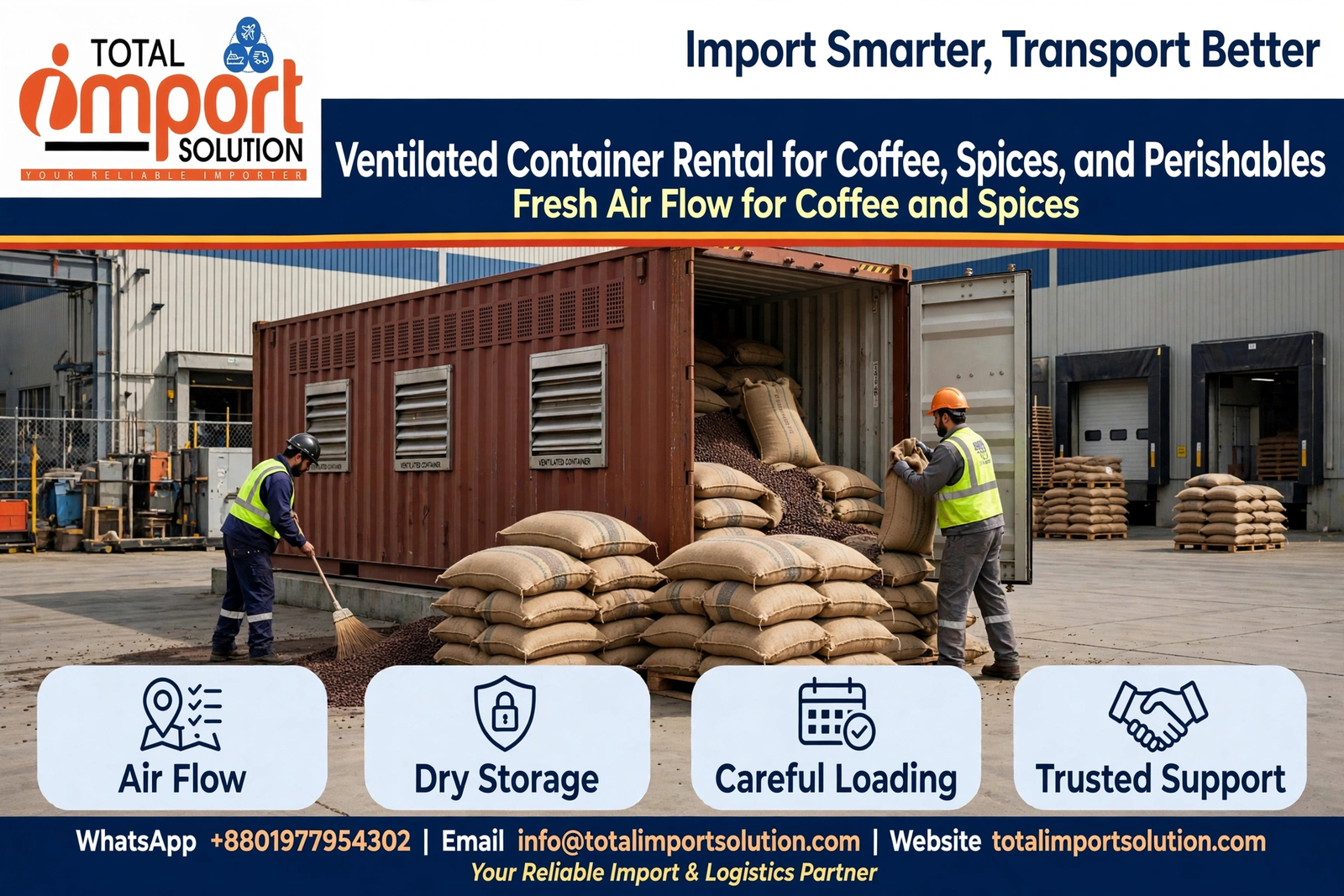
A ventilated container looks like a standard dry container from the outside, but it has vents fitted in the walls, usually near the top and near the bottom. The vents let fresh air enter at the bottom and warm, moist air leave at the top, so the air inside the box keeps moving. The vents are covered so that rain and spray cannot enter, and they are small enough that pests cannot easily pass through. The container is not a reefer and it does not cool the cargo. It protects the cargo by moving air, not by lowering the temperature. That is an important difference, and the importer should be clear about it before booking.
| Feature | What it does | Why it matters |
|---|---|---|
| Wall vents | Let air flow through the box | Moisture leaves the container |
| Rain covers | Keep rain and spray out | Cargo stays dry in wet weather |
| No cooling unit | Air moves, cargo is not cooled | Know what the box can and cannot do |
| Standard size | 20ft or 40ft, like a dry box | Same handling as a normal container |
| Dry floor | Sound floor, no standing water | Goods stay off damp surfaces |
2. Coffee, Spices and Perishables: What Each Needs
Coffee, spices, and perishables each need air, but in different ways. Coffee beans need a dry box with moving air, because moisture can spoil the flavour and cause mould. The beans should be packed in clean, dry sacks, and the sacks should be kept off the floor on pallets. Spices need the same dry air, and they also need to be kept apart from goods with strong smells, because spices can take on smells from nearby cargo. Perishables need air the most, because fresh produce gives off warmth and moisture quickly, and a sealed box can spoil a load in a short time. Each cargo needs its own packing plan, and the plan should be agreed with the supplier before the goods are packed.
| Cargo | Main need | Packing point |
|---|---|---|
| Coffee beans | Dry air, no damp | Clean dry sacks, off the floor |
| Spices | Dry air, no strong smells nearby | Sealed sacks, kept apart |
| Fresh produce | Moving air, quick journey | Ventilated cartons, short transit |
| Dried goods | Dry air, no rain entry | Sound roof, vents clear |
| Mixed loads | Each cargo kept apart | Separate rows, clear labels |
3. How Ventilation Protects the Cargo
Ventilation protects cargo by moving moist air out of the box and bringing drier air in. Warm air rises, so the vents near the top let warm, moist air leave, while the vents near the bottom let cooler, drier air enter. This slow, steady flow keeps the inside of the box drier than a sealed box would be. It also keeps the temperature inside the box closer to the air outside, which matters for goods that suffer when a sealed box heats up in the sun. The vents work on their own, with no power and no moving parts, which makes them simple and steady. The importer should check that the vents are clear before loading, because a blocked vent stops the air flow.
| Vent point | What to check | Why it matters |
|---|---|---|
| Top vents | Clear, covers in place | Warm moist air must leave |
| Bottom vents | Clear, covers in place | Fresh air must enter |
| Vent covers | Sound, no damage | Rain must stay out |
| No blockage | No cartons against the vents | Blocked vents stop the air |
| Floor gap | Goods on pallets, off the floor | Air must move under the load |
A ventilated container does not protect cargo that is loaded wet, and it does not dry cargo that is already damp. The goods must be dry when they are loaded, the sacks must be clean, and the cartons must be sound. If the goods are loaded damp, the vents cannot remove the moisture fast enough, and the load can still spoil. The importer should ask the supplier to confirm in writing that the goods are dry at loading, and should ask the loading team to check the sacks and cartons before they go into the box. A dry load, a clear vent, and a sound roof are the three things that make ventilation work.
4. Choosing Between 20ft and 40ft Ventilated Boxes
Ventilated containers come in 20ft and 40ft sizes, and the choice depends on the cargo. A 20ft box suits a small load of coffee or spices, a first order, or a buyer with a small warehouse. A 40ft box suits a larger load, a regular buyer, or a shipment with many cartons. A 40ft high cube gives extra height for tall stacks, but it does not carry a larger weight of cargo. The importer should add up the real carton weights and the real carton sizes, and match both figures to the box. A buyer who books a 40ft box for a small load wastes space, while a buyer who books a 20ft box for a large load needs a second box.
| Size | Usual load | What to remember |
|---|---|---|
| 20ft ventilated | Small coffee or spice order | Short box, easy to place |
| 40ft ventilated | Larger load, many cartons | More space, same vent system |
| 40ft high cube | Tall stacks, light bulky goods | Extra height, not extra payload |
| Volume, 20ft | About 33 CBM | Approximate figure only |
| Volume, 40ft | About 67 CBM | Approximate figure only |
The choice should be made with the supplier and the agent together, before the order is packed. The supplier knows the size and weight of each sack and carton, and the agent knows which ventilated boxes are available on the route and at the port of loading. Ventilated boxes are less common than standard dry boxes, so the importer should book early and ask the agent to confirm the box type in writing. A buyer who waits until the last day may find that no ventilated box is free, which leads to a delay or a sealed box that does not suit the cargo. Early booking, with the figures ready, gives the agent time to find the right box.
5. Rental Pricing: What Decides the Rate
Rental pricing for a ventilated container is worked out from several factors, and no single rate fits every shipment. The route matters, because the port of loading and the port of discharge affect the cost. The lease period matters, because a longer hire is priced differently from a short hire. The container type matters, because ventilated boxes are less common than standard boxes and need more care. The season matters, because busy periods change availability. The terms of the lease matter, because the return place, the free time allowed, and the repair rules all form part of the price. A rate is confirmed only after checking the actual shipment and documents, and the importer should ask for the terms in writing before signing.
| Pricing factor | How it affects the rental | What the importer should ask |
|---|---|---|
| Route | Port of loading and discharge | Which ports the price covers |
| Lease period | Longer hire, different terms | How the period is counted |
| Box type | Ventilated boxes need more care | Age and condition of the box |
| Season | Busy periods change availability | Whether the rate holds for the dates |
| Return place | Where the box must go back | Return depot and free time |
| Repair rules | Who pays for vent or door damage | Return standard in writing |
6. Checking a Ventilated Container Before Loading
Before loading, the importer or the loading team should check the ventilated container with care. Walk around the box and check the roof for dents or holes, the floor for soft spots or cracks, and the door seals for gaps. Check every vent, top and bottom, to see that it is clear, that its cover is sound, and that no carton or rubbish blocks it. Check that the doors close well and the seal holds. Check the container number against the booking, and photograph all four sides, the roof edge, the doors, and the vents. If a vent is damaged or blocked, the container should not be loaded until the agent or the depot confirms the box in writing.
Step 1: Walk around the box. Check the roof, walls, floor and doors for damage.
Step 2: Check every vent. Top and bottom vents clear, covers sound, no blockage.
Step 3: Check the doors. Doors close well, seals hold, lock rods work.
Step 4: Check the number. Container number matches the booking.
Step 5: Photograph the box. All four sides, roof edge, doors, and vents, kept with the file.
The check should be written down on the pick-up condition report, with every mark noted. A container that is accepted without a check can lead to a dispute at return, because damage found later cannot be shown to be old or new. The importer should ask the loading team to send the check photos before loading starts, and should keep them with the packing list and the bill of lading. This small step costs nothing and protects the importer at every stage. A sound box, with clear vents and a full record, is the right start for a ventilated load.
7. Packing Coffee and Spices for a Ventilated Load
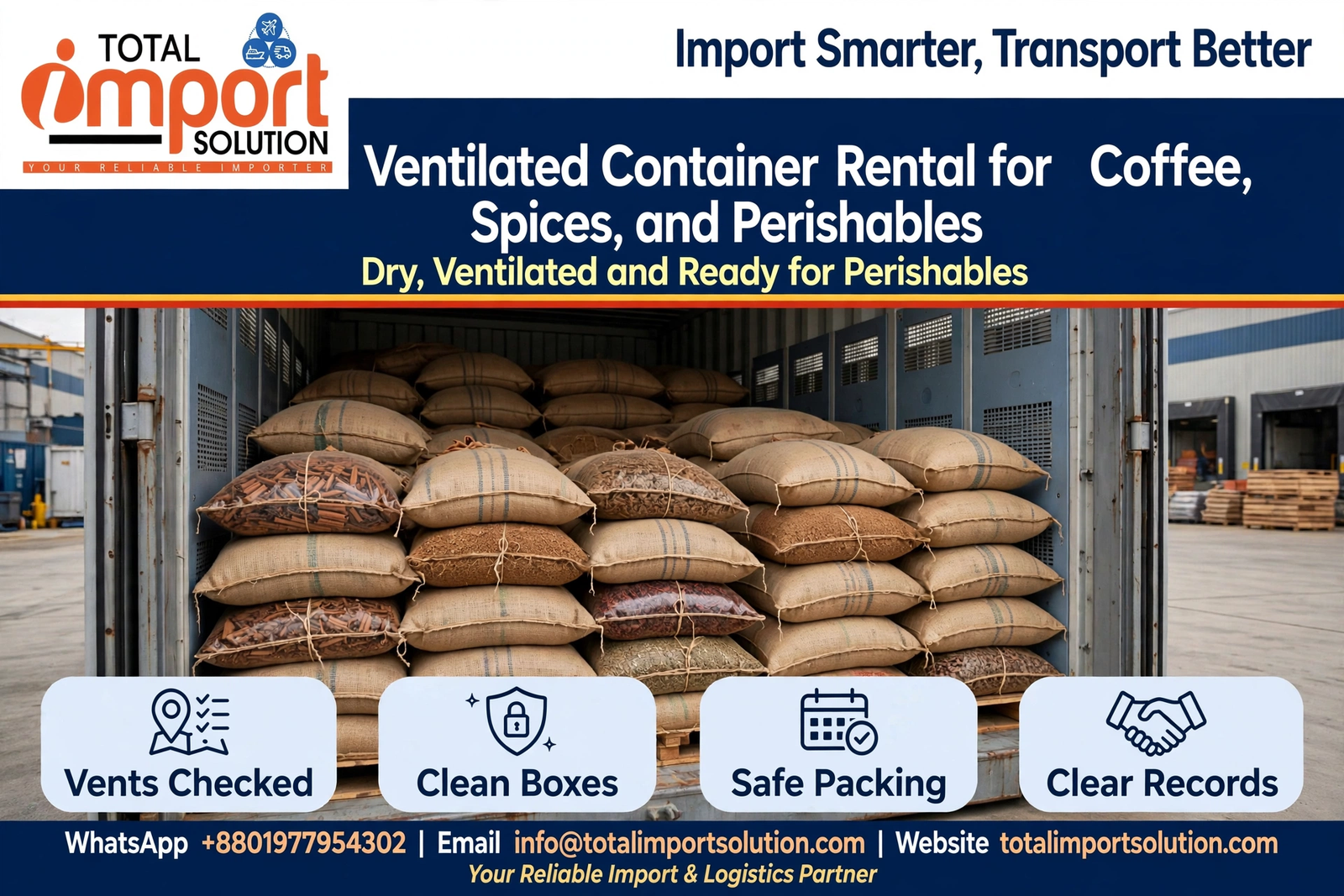
Packing coffee and spices for a ventilated load needs dry sacks, sound cartons, and gaps for air. Coffee beans should be packed in clean, dry sacks that breathe, and the sacks should be stacked on pallets so air can move under them. Spices should be packed in sealed sacks inside cartons, so the spice stays dry and its smell does not pass to other goods. Cartons should be strong enough for the weight they carry, and heavy sacks should not sit on top of light cartons. Gaps should be left between the rows and between the load and the walls, so air can move through the box. The vents must never be blocked by cartons, because a blocked vent stops the air flow that the load depends on.
Step 1: Use dry sacks and cartons. Check that every sack and carton is dry before loading.
Step 2: Stack on pallets. Keep sacks and cartons off the floor so air moves under the load.
Step 3: Keep heavy loads low. Heavy sacks at the bottom, light cartons on top.
Step 4: Leave air gaps. Gaps between rows and between the load and the walls.
Step 5: Keep vents clear. No carton against any vent, top or bottom.
8. Packing Perishables for a Short Journey
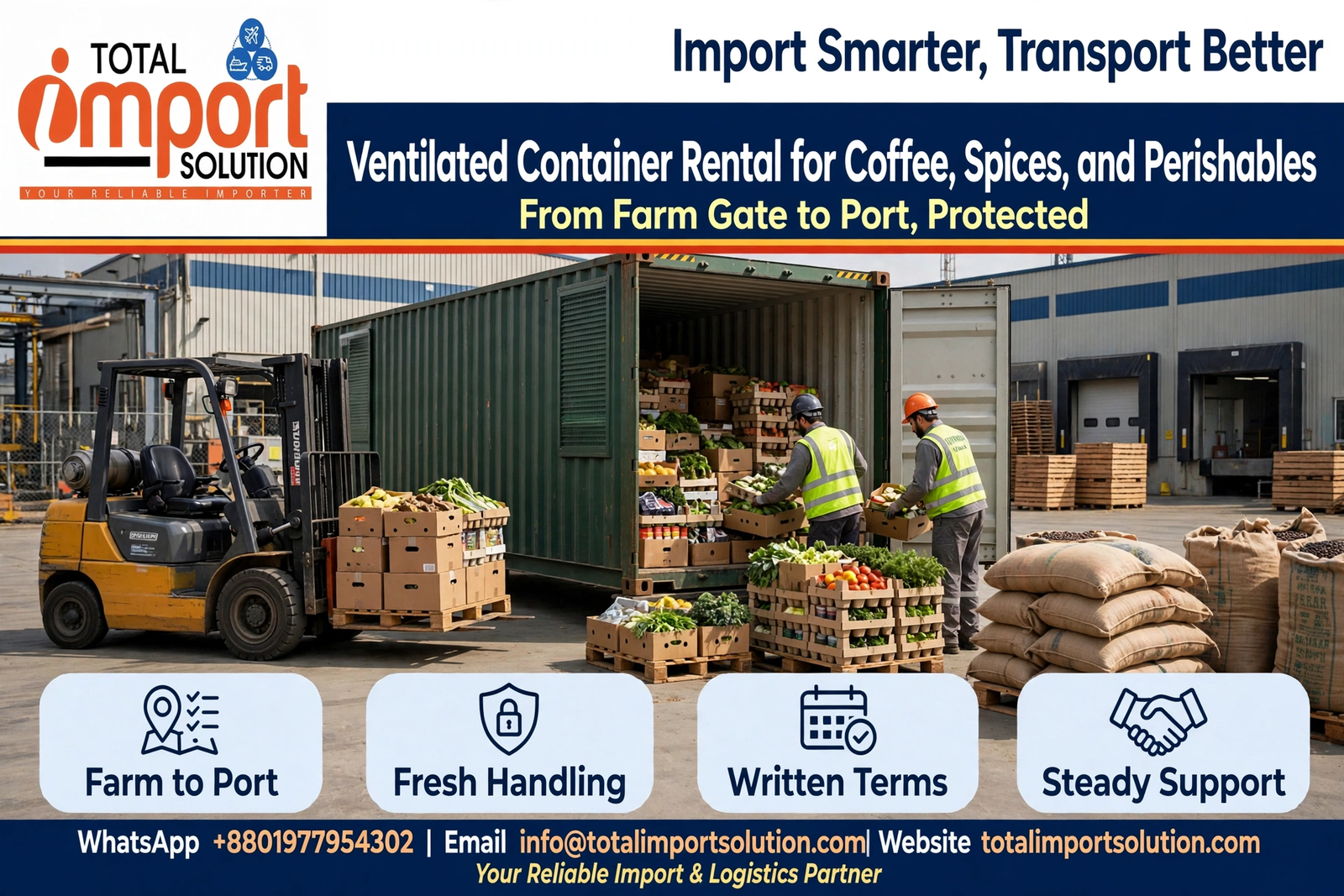
Perishables need the most care of all ventilated cargo, because fresh produce gives off warmth and moisture quickly. The produce should be packed in ventilated cartons that let air pass through, and the cartons should be stacked with gaps between them. The produce should be cool and dry when it is loaded, and the journey should be planned to be as short as the route allows. The importer should ask the agent about the sailing plan and the port handling, so the load does not sit in a hot yard. A ventilated container suits perishables on a short journey with good air flow, but it does not suit goods that need steady cool air, which need a reefer instead.
| Perishable point | What to do | Why it matters |
|---|---|---|
| Ventilated cartons | Air passes through the carton | Warmth and moisture leave the load |
| Gaps between cartons | Air moves around each carton | No hot spot builds up |
| Dry at loading | Produce cool and dry when loaded | Damp produce spoils faster |
| Short journey | Plan the quickest route | Less time for spoilage |
| No sealed wrap | Do not seal cartons in plastic | Sealed cartons trap moisture |
| Quick unloading | Unload soon after arrival | Produce must reach the buyer fresh |
The importer should also plan the delivery stage before the container sails. The truck should be booked in advance, the warehouse should be ready to receive the load, and the unloading team should be told when the container will arrive. Fresh produce that sits in a yard after discharge loses quality with every hour, so the delivery plan matters as much as the packing plan. The agent should be asked to report the vessel arrival in good time, so the truck and the team are ready. A clear delivery plan, made before the shipment starts, is the best way to keep perishables fresh.
9. Documents for a Ventilated Shipment
The documents for a ventilated shipment are the same as for a dry shipment, and they must agree with each other. The commercial invoice shows the goods and their value. The packing list shows the sack count, the carton count, the item names, and the weights. The bill of lading shows the container number, the ports, and the gross weight. The verified gross mass record shows the weighed gross weight given to the carrier. If these papers disagree, the shipment can be held at the port of loading or at discharge while the difference is sorted out. The importer should compare the weights on all four papers before the container sails, and ask the supplier to correct any difference at once.
| Document | What it shows | What to check |
|---|---|---|
| Commercial invoice | Goods, quantity, and value | Item names match the packing list |
| Packing list | Sack and carton counts, weights | Total weight matches the invoice |
| Bill of lading | Container number and gross weight | Gross weight matches the weighing record |
| Verified gross mass record | Weighed gross weight | Given to the carrier in writing |
| Delivery note | Container number and condition on delivery | Weight and seal noted on arrival |
10. Port and Road Stages in Bangladesh
Ports in Bangladesh apply the same checks to a ventilated container as to a dry container. The container is checked against the documents, and the weight shown on the bill of lading and the packing list is compared with the actual weight where a check is made. If the weights do not match, the container can be held while the difference is sorted out. The port may weigh the container, and the importer may be asked for the weighing record from the port of loading. Keeping the verified gross mass record, the packing list, and the bill of lading in agreement is the best way to keep this stage moving. The agent should explain the port process for the shipment in hand.
| Stage | What happens | What the importer should prepare |
|---|---|---|
| Arrival | Container unloaded and moved to the yard | Container number and bill of lading |
| Weight check | Weight compared with the documents | Verified gross mass record |
| Document check | Packing list and bill of lading compared | Papers in agreement with each other |
| Food paper check | Food papers checked where they apply | Certificates sent in good time |
| Release | Container released for customs clearance | All papers ready before this stage |
| Road movement | Container moved by truck to the warehouse | Road transport arranged in advance |
11. Common Mistakes With Ventilated Loads
Several common mistakes cause trouble with ventilated loads. The first is blocking the vents with cartons, which stops the air flow that the load depends on. The second is loading damp goods, which the vents cannot dry fast enough. The third is using a ventilated box for goods that need cooling, which need a reefer instead. The fourth is packing spices next to goods with strong smells, which the spices can take on. The fifth is letting the invoice, the packing list, and the bill of lading disagree on the weight. The sixth is waiting until the last day to book, when no ventilated box may be free. Each of these can be avoided by checking the vents, loading dry goods, and booking early.
| Mistake | Why it causes trouble | What to do instead |
|---|---|---|
| Blocking the vents | Air flow stops, moisture builds up | Keep every vent clear of cartons |
| Loading damp goods | Vents cannot dry a damp load | Load only dry sacks and cartons |
| Wrong box for the goods | Goods needing cool air spoil | Use a reefer for goods needing cooling |
| Smells passing to spices | Spices take on nearby smells | Keep spices apart from strong smells |
| Papers that disagree | Shipment held while the difference is sorted | Compare all weights before sailing |
| Late booking | No ventilated box may be free | Book early, confirm the box in writing |
12. Returning the Ventilated Container
Returning the ventilated container needs the same care as the pick-up. Empty the container fully, sweep the floor, and check the vents, the roof, the walls, and the doors. A vent that is bent or blocked should be noted, and any damage should be reported to the leasing company with photos before the return. Compare the container with the pick-up condition report, and note any new marks. Return the container by the agreed date, because a late return can bring extra charges under the lease. Ask the depot to sign a return condition report, and keep a copy with the shipment file.
Step 1: Empty the container fully. Remove all sacks, cartons, pallets, and rubbish.
Step 2: Clean the container. Sweep the floor and check for damp or smells.
Step 3: Check every vent. Top and bottom vents clear, covers sound, no damage.
Step 4: Report any damage. Tell the leasing company with photos before the return.
Step 5: Return on time. Return by the agreed date and get a signed return condition report.
The return condition report is the record that decides whether the importer owes anything for damage. A container that is returned clean, with clear vents and a signed report, closes the hire without argument. A container that is returned dirty, with a damaged vent, or late can lead to a dispute that takes weeks to settle. The importer should ask the depot to check the container together with the driver, so that both sides agree on the condition at return. A short joint check at the depot, with photos, is the best way to end a ventilated hire in good order.
13. How to Judge a Good Provider for Ventilated Container Hire
A good provider for ventilated container hire is judged by clear terms, a sound container, and honest communication. Look for a provider that asks about the cargo before booking, checks the vents on the actual container, gives the rental terms in writing, and keeps the invoice, packing list, and bill of lading in agreement. Check that the provider plans the road stage as well as the sea stage, and reports a problem at once with a suggested fix. Ask other importers about their experience, and look for a provider that has worked with Bangladesh importers on a regular basis. Total Import Solution has worked with importers in Bangladesh since 2016, and the team aims to give that kind of careful, steady support on every ventilated shipment.
| Quality to look for | What it looks like in practice | How to check it |
|---|---|---|
| Cargo questions | Provider asks what the goods need | Ask how the box is matched to the cargo |
| Vent checking | Vents checked on the actual container | Ask for the vent check in writing |
| Written terms | Rental terms given before signing | Ask for the agreement in advance |
| Papers in agreement | Invoice, packing list, and bill of lading agree | Compare the weights on all papers |
| Road planning | Road limit planned before sailing | Ask about the road route and limit |
| Fast reporting | Problems reported at once | Ask how problems are reported |
| Bangladesh experience | Regular work with Bangladesh importers | Ask about past shipments to Bangladesh |
Frequently Asked Questions
1. What is a ventilated container?
A dry container with vents fitted in the walls that let air move through the box. Fresh air enters at the bottom and warm, moist air leaves at the top, which keeps the load drier than a sealed box.
2. Does a ventilated container cool the cargo?
No. It moves air but it does not cool the cargo. Goods that need steady cool air need a reefer instead, and the importer should be clear about this before booking.
3. Why does coffee need a ventilated container?
Coffee beans give off moisture, and a sealed box traps that moisture against the sacks, which can spoil the flavour and cause mould. Moving air keeps the load drier on the journey.
4. Can spices be shipped in a ventilated container?
Yes, if the sacks are sealed inside cartons and kept apart from goods with strong smells. Spices can take on smells from nearby cargo, so they should be loaded with care.
5. Do perishables suit a ventilated container?
Yes, on a short journey with good air flow, packed in ventilated cartons with gaps between them. Goods that need steady cool air need a reefer instead.
6. How is rental pricing worked out for a ventilated container?
Pricing depends on the route, the lease period, the container type, the season, the return place, and the repair rules. A rate is confirmed only after checking the actual shipment and documents.
7. What should I check before loading a ventilated container?
Check the roof, floor, walls and doors, check every vent top and bottom, check that the doors close well, check the container number, and photograph the box before loading.
8. Why must the vents stay clear?
Because a blocked vent stops the air flow that the load depends on. No carton should sit against any vent, top or bottom, and the load must leave gaps for air.
9. What is the approximate volume of a 20ft container?
As a widely standard approximate figure, about 33 CBM. A 40ft container is about 67 CBM as an approximate figure. The actual figures depend on the container in hand.
10. What documents do I need for a ventilated shipment?
The commercial invoice, the packing list, the bill of lading, and the verified gross mass record. Food goods may also need a certificate from the supplier, and the agent should be asked which papers apply.
11. What happens if a ventilated container is loaded with damp goods?
The vents cannot dry a damp load fast enough, and the goods can spoil. Goods must be dry when they are loaded, and the supplier should confirm this in writing.
12. Can I mix coffee and spices in one ventilated container?
Yes, if each cargo is packed apart and labelled clearly. Spices should be sealed inside cartons so their smell does not pass to the coffee, and air gaps should be left between the rows.
13. What mistakes cause the most trouble with ventilated loads?
Blocking the vents, loading damp goods, using a ventilated box for goods that need cooling, letting the papers disagree, and booking too late when no ventilated box is free.
14. What should I do before returning the container?
Empty it fully, sweep the floor, check every vent for damage, compare it with the pick-up condition report, report any damage with photos, and return it by the agreed date.
15. How do I choose a good provider for ventilated container hire?
Look for a provider that asks about the cargo, checks the vents on the actual container, gives written rental terms, keeps the papers in agreement, plans the road stage, and has regular experience with Bangladesh importers.
16. How can Total Import Solution help with ventilated container rental?
Total Import Solution supports importers with container hire guidance, ventilated load planning, document checking, customs clearance support, and delivery coordination in Bangladesh, with one team from order to delivery.
Contact Total Import Solution
- WhatsApp: +8801977954302
- Email: info@totalimportsolution.com
- Website: totalimportsolution.com
- Service: Ventilated Container Rental for Coffee, Spices, and Perishables
- Company: Total Import Solution — Since 2016, serving importers in Bangladesh.
