
Urgent Container Sourcing for Peak Season Imports in Bangladesh
Peak season changes everything about importing into Bangladesh: containers become scarce, port yards fill up, vessel space is booked well ahead, and a small delay in documents or payment can push a shipment back by days. This guide explains urgent container sourcing for peak season imports: what peak season means, how to prepare, which container types to consider, how booking works, which documents to keep ready, and how to plan for delays. Rates and timing are confirmed at booking, depending on availability, documents, payment and port or depot conditions.

What Peak Season Means for Container Sourcing
Peak season is when import volumes rise sharply and many importers chase the same containers, vessel space and depot slots. Retailers stock up before festivals, garment buyers place larger orders, and traders build inventory. When demand rises, empty container supply does not rise at the same speed, so containers become harder to secure and bookings must be placed earlier.
At the loading port, empty containers of the size and type you need may not be available on the day you want. On the vessel, space fills up earlier, and a late booking may be rolled. At Chittagong Port or Mongla Port, yard congestion grows, and a container may wait longer for discharge, examination or gate-out. Inland, trucks and depot slots are also in higher demand. The importer who plans early and confirms each step in writing has a far smoother season than one who starts late.
Why Urgent Sourcing Needs a Different Plan
Urgent sourcing is not normal sourcing done faster. In a normal month, an importer can ask for a container, wait for a quote, compare options, and book when ready. In peak season, that waiting time is the risk. While one importer is still comparing, another has already booked the container and the vessel slot. Urgent sourcing therefore starts with preparation, not the phone call.
A practical urgent plan has three parts. First, fix the cargo facts: what is being imported, its weight and size, whether it needs a standard, high cube, open top or refrigerated container, and when it must reach Bangladesh. Second, fix the paperwork: the import registration, the supplier invoice and packing list, the payment arrangement, and any product-specific certificates. Third, fix the receiving side: where and by whom the container will be unloaded, and when the empty container will be returned.
Start Early, Even When the Need Feels Urgent
The most useful advice for peak season is also the simplest: start as early as you can, even if the need already feels urgent. Starting two weeks before the cargo must arrive gives more choices than starting two days before. Early action does not fix the arrival date — timing always depends on availability, documents, payment and port or depot conditions — but it gives the sourcing team time to check more than one option and fix document problems early.
Early planning also helps with the supplier. The supplier needs time to prepare, pack and deliver the cargo to the loading port. Tell the supplier the target loading window as soon as the order is placed, and ask for written confirmation of the cargo-ready date. Work backwards from the date the goods are needed in Bangladesh, allowing time for the vessel journey, discharge, customs, transport and unloading, plus extra days for peak season delays.
Choosing the Right Container Size and Type
Choosing the wrong container is one of the most expensive mistakes in peak season, because a replacement container may not be available. A 20-foot container suits heavy, compact cargo where weight limits the load — machinery parts, metal goods, stone and chemicals in drums. A 40-foot container suits lighter, bulkier cargo where volume limits the load — garments, textiles, consumer goods and furniture.
A standard dry container suits most general cargo. An open top container suits cargo loaded from above, such as tall machinery, and a flat rack suits oversized cargo that does not fit inside a standard box. A refrigerated container, or reefer, suits cargo that must stay at a controlled temperature, such as food or certain chemicals, and needs a power supply during transport and storage. A tank container suits liquid cargo, and the scarcer types need the earliest booking. Before booking, measure and weigh the cargo and share the facts in writing, so the choice is based on the real cargo, not a guess.
How Container Sourcing Works, Step by Step
Container sourcing follows a clear sequence. First, the enquiry: the importer shares the cargo facts, origin and destination, preferred loading window and container size and type. The sourcing team checks empty container availability and vessel space, and the rate and timing are confirmed at booking.
The second step is the booking: once the importer confirms, the booking is placed with the shipping line or the container provider, and a confirmation is issued naming the vessel, the ports, the container details and the cut-off dates. The cut-off dates are the real deadlines. The third step is the empty container release, loading and sealing, with the seal number recorded. Then come the vessel journey, arrival, discharge, customs clearance, delivery, unloading and return within the free time allowed.
Documents to Keep Ready Before You Ask
Documents are the most common cause of delay in urgent sourcing, and they are also the easiest to control. Keep a ready folder with the documents below, and check that every one is current before the sourcing call. The import registration certificate and the current trade licence show the importer is registered and the business is current. The supplier’s proforma invoice states the goods, value and terms, and the letter of credit, where used, states the agreed payment terms. The packing list states what is inside each package, and the certificate of origin, where required, states where the goods were made. Product-specific certificates should be checked early, as some take time to issue. The bill of lading is issued after loading and is the key document for taking delivery.
Check the names, quantities and values on every document against each other. A mismatch between the invoice and the packing list, or between the letter of credit and the bill of lading, can hold a container at customs while the correction is made, and corrections take longer in peak season.
Vessel Space, Cut-Off Dates and Rolling
In peak season, vessel space is the second scarce resource after empty containers: a vessel has a fixed number of slots, and early bookings fill the later sailings first. A booking made close to the sailing date may find no space left, and the cargo is then rolled to the next sailing. The way to reduce the risk is to book early and to meet the document and cargo cut-off dates, because a booking that misses its cut-off can also lose its space.
Ask for the cut-off dates in writing at booking, and put them in the calendar with a reminder a day before each one. The document cut-off is the last time shipping documents can be submitted; the cargo cut-off is the last time the loaded container can enter the port. Build the plan around the cut-off dates, not the departure time. If rolling happens, ask at once for the next sailing and the new cut-off dates.
What Happens at the Port in Bangladesh
When the vessel reaches Bangladesh, the container is discharged at Chittagong Port or Mongla Port and moved into the yard or a nearby depot. Customs requires the bill of entry, bill of lading, invoice, packing list and import registration documents, and complete and consistent documents clear faster.
Peak season adds pressure here too, with longer queues at the gate and longer waits for examination and trucks. Prepare the customs file before the vessel arrives, so the bill of entry can be submitted as soon as it berths. Tell the clearing agent the vessel’s arrival in advance, with copies of the documents already shared.
Free Time, Demurrage and Detention in Peak Season
Free time is the number of days a container can stay at the port or in the importer’s hands without an extra charge. Demurrage is the charge for keeping a container inside the terminal beyond the free time; detention is the charge for keeping it outside the terminal, for example at a factory, beyond the free time. Both charges grow with each extra day, and peak season queues can use up the free time quickly.
Ask in writing how many free days apply, when they start and what applies after they end, and keep the answer with the booking confirmation. Then build the receiving plan to fit inside the free time: truck booked, unloading team ready, warehouse space prepared. If a delay appears, tell the shipping line or container provider at once. Photograph the container at gate-out and at return, and keep the gate passes and receipts as evidence if a charge is later disputed.
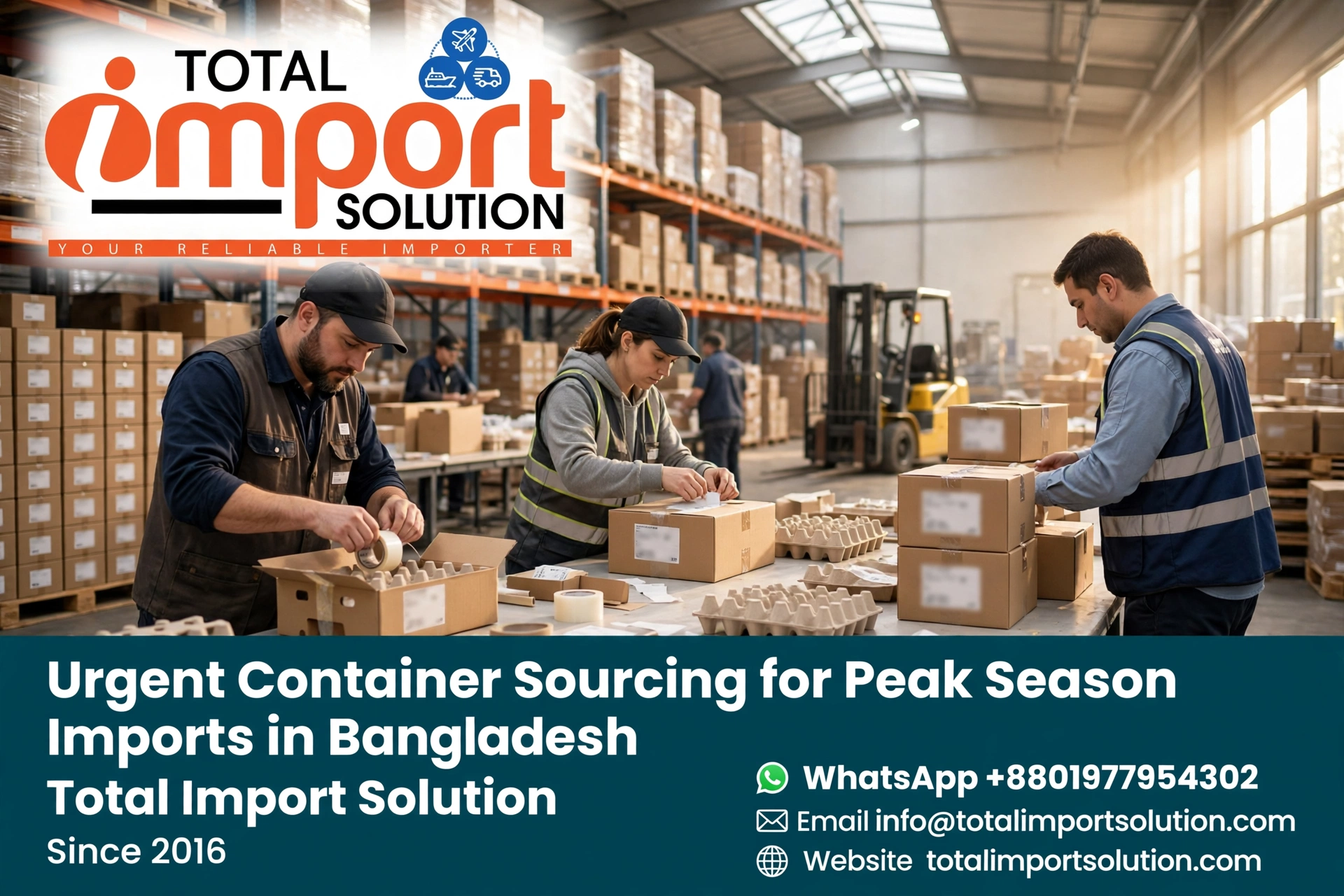
Receiving, Unloading and Returning the Empty Container
Receiving a container needs the same preparation as booking one. Before it arrives, confirm the delivery address, the receiver, the unloading equipment and the storage space. Confirm the unloading equipment, storage space and gate arrangements in advance.
When the container arrives, check the seal number against the bill of lading before opening it, and photograph and report a seal that does not match or looks damaged before unloading. Count the cargo against the packing list as it is unloaded, and note any damage or shortage in writing. Return the empty container promptly, clean and dry, with doors and seals in working order. Deliver it to the depot named in the return instruction, within the free time, and keep the gate-in receipt. A late return can attract detention, and a dirty or damaged container can attract cleaning or repair charges.
Common Peak Season Problems and How to Handle Them
Several problems repeat every peak season. The first is no empty container of the right type: book earlier, ask whether a nearby size or type can safely carry the cargo, and confirm the cargo facts so the sourcing team can check every option. Changing the container type is only safe when the cargo fits it — refrigerated cargo cannot go in a dry container, and oversized cargo cannot be forced into a standard box.
The second is a rolled booking: ask at once for the next sailing and the new cut-off dates. The third is a document mismatch at customs: correct it through the supplier or the bank. The fourth is a transport delay: have a second transport option ready and tell the factory the revised arrival time. The fifth is a supplier who is not ready on the cargo-ready date: agree a new date in writing and adjust the booking if needed. Each problem is solved by a short written update to everyone involved, so all work from the same plan.
Working with a Sourcing Partner During Peak Season
An importer does not have to manage every step alone: a sourcing partner such as Total Import Solution can check container availability, place bookings, follow the vessel, coordinate with the clearing agent and keep the importer informed. The partnership works best when the importer shares complete information: the real cargo facts, the real deadline, and any document problem that already exists.
Ask the partner for written confirmations at each stage and keep them in the shipment file, and ask for any change in writing too. A good partner will also be honest about what cannot be promised: in peak season, no one can promise a container on a fixed date, a fixed sailing, or a fixed port clearance time, because availability, documents, payment and port conditions decide the timing.
A Practical Peak Season Checklist
- Cargo facts fixed: goods, weight, volume, dimensions, container size and type, ports.
- Supplier confirmed the cargo-ready date in writing.
- Import documents checked: registration, trade licence, invoice, packing list, letter of credit where used, product certificates.
- Booking placed early, with confirmation and cut-off dates in the calendar.
- Empty container released, cargo loaded, seal number recorded and matched.
- Customs file prepared before the vessel arrives; clearing agent informed.
- Truck, unloading team and warehouse space booked before the container arrives.
- Free time noted in writing, with the return depot and the gate-in plan ready.
- Container received, seal checked, cargo counted, damage noted in writing if any.
- Empty container cleaned and returned within free time, gate-in receipt kept.
- Every confirmation, receipt and charge notice filed in one folder.
Follow this list and the avoidable mistakes — a missing document, the wrong container, an unbooked truck, a late return — are far less likely.

Frequently Asked Questions
1. What is urgent container sourcing for peak season imports in Bangladesh?
It is finding and booking a shipping container quickly during the busy import season, when containers and vessel space are scarce. It works best when the importer prepares the cargo facts, documents and receiving plan before asking for a booking.
2. When is peak season for imports into Bangladesh?
It is when import volumes rise sharply, often before major festivals, retail seasons and large production orders. The exact busy months vary by year and industry, so ask the sourcing team about current availability.
3. How early should I start sourcing a container in peak season?
As early as possible. Starting early gives more choice of container size and type, more chance of space on the preferred sailing, and more time to fix document problems.
4. Can a container be arranged on a fixed date in peak season?
No fixed date can be promised. Timing is confirmed at booking and depends on container availability, vessel space, documents, payment and port or depot conditions.
5. Which container size should I choose for peak season cargo?
It depends on the cargo. A 20-foot container suits heavy, compact cargo, while a 40-foot container suits lighter, bulkier cargo, and a 40-foot high cube gives extra height. Measure and weigh the cargo first, and share the facts in writing.
6. What if the container size or type I need is not available?
Ask the sourcing team to check the other available options and whether a nearby size or type can safely carry the cargo. Refrigerated, oversized or liquid cargo cannot be forced into a standard dry container, so if no safe option exists, the booking may need to wait.
7. What documents should I keep ready before sourcing a container?
Keep the import registration certificate, trade licence, supplier proforma invoice, packing list, letter of credit where used, certificate of origin where required, and any product-specific certificates. Check that names, quantities and values match across all documents.
8. What are cut-off dates, and why do they matter?
Cut-off dates are the last times for submitting documents and for delivering the loaded container to the port. Missing one can mean losing the booking or being rolled to the next sailing.
9. What does it mean when a booking is rolled?
Rolling means the cargo is moved from one sailing to the next because the vessel had no space left or the cut-off was missed. Ask at once for the next sailing and the new cut-off dates.
10. What is free time, and why does it matter in peak season?
Free time is the number of days a container can stay at the terminal or with the importer without an extra charge. In peak season, queues and delays can use it up quickly, so plan receiving and return to fit inside it.
11. What is the difference between demurrage and detention?
Demurrage is the charge for keeping a container inside the port terminal beyond the free time. Detention is the charge for keeping it outside the terminal, for example at a factory for unloading, beyond the free time. Both grow with each extra day.
12. How can I speed up customs clearance in peak season?
Prepare the customs file before the vessel arrives, check that all documents match each other, and share copies with the clearing agent in advance so the bill of entry can be submitted as soon as the vessel berths.
13. What should I check when the container arrives at my factory or warehouse?
Check the seal number against the bill of lading before opening the container, and count the cargo against the packing list as it is unloaded. Note any damage or shortage in writing on the spot.
14. When and how should I return the empty container?
Return it promptly to the depot named in the return instruction, within the free time, clean and dry, with doors and seals in working order. Keep the gate-in receipt as proof of the return.
15. How can Total Import Solution help with urgent peak season sourcing?
Total Import Solution can check container availability, place bookings, follow the vessel, coordinate with the clearing agent and keep the importer informed at each stage. Share the complete cargo facts, documents and deadline.
Contact Total Import Solution
For urgent container sourcing for peak season imports in Bangladesh, contact Total Import Solution with your cargo details, container size and type, ports and preferred loading window. Rates and timing are confirmed at booking.
Total Import Solution — Since 2016
WhatsApp: +8801977954302
Email: info@totalimportsolution.com
Website: totalimportsolution.com
