
Transparent Shipping Container Rental Contracts: No Hidden Demurrage
For an importer in Bangladesh, the rental rate quoted on the phone is only the beginning of the cost of a shipping container. The real cost is decided by the written contract: how many free days are included, what happens when the container is returned late, who pays for damage or cleaning, and which charges apply at the port or depot.
This guide explains transparent shipping container rental contracts for Bangladeshi importers: what demurrage and detention mean, why extra charges appear, which clauses decide your final cost, how to read a contract before you sign, the hiring steps, the documents to keep, and how to plan your timeline so extra days are avoided. No fixed prices, fees or rates are listed here. Every rate and charge is confirmed at booking, depending on container size, type, condition, duration, delivery location and availability.

What “No Hidden Demurrage” Really Means
“No hidden demurrage” does not mean demurrage can never apply. It means every possible charge is written in the contract in plain language before you sign, so nothing appears later that you were not told about. A transparent contract names the free time, the charge that applies after free time ends, the return conditions, and the responsibilities of each side.
Demurrage, detention and storage are real parts of container shipping in Bangladesh. Containers move through Chittagong Port, Mongla Port, Dhaka depots and inland destinations, and each step takes time. Customs examination, transport delays, factory unloading and depot queues can all add days. A transparent contract brings them into the open at the start, when you can still adjust your plan.
Demurrage, Detention and Storage: Three Different Charges
They describe different situations, and a contract should treat them separately.
Demurrage usually refers to the charge for keeping a container inside a port terminal or depot beyond the free time allowed there. The container has arrived, it is sitting in the terminal, and the free days have run out. The charge is connected to the terminal, and it grows with each extra day the container stays.
Detention usually refers to the charge for keeping a container outside the terminal beyond the free time — for example, when it has been taken to a factory or warehouse for unloading and is returned late. The container is in your hands, not in the terminal, and the charge is connected to the hire period rather than to terminal space.
Storage is a separate charge for the space a container or cargo occupies at a port, depot or warehouse. Some contracts include a storage element, others treat it as a separate service. If one offer includes storage and another does not, the two prices are not directly comparable until the storage term is added. A transparent contract defines each term in its own clause and states how many free days apply to each. If a contract uses the word demurrage without defining it, ask for the definitions in writing before you sign.
Why Extra Charges Appear
Extra charges rarely appear because anyone planned them. They appear because a step in the chain took longer than expected, and the contract had already set a limit on that step. Customs examination can add days when a consignment is selected for checking or documents need correction. Transport can be delayed by road conditions, vehicle availability, or a queue at the port gate. Unloading can take longer than planned when a factory is busy or labour is short. A depot can be crowded, and a return slot may not be available on the day you planned.
A good contract does not pretend these delays never happen. It sets out what happens if they do: how many free days you have, how the charge is counted, who you must inform, and what evidence is needed if you want a delay reviewed. The other common cause of surprise is a term agreed verbally but never written down. If something was promised, it should appear on the page. If it does not appear, ask for it to be added before you sign.
The Contract Clauses That Decide Your Final Cost
A container rental contract is not one price; it is a set of rules. The clauses below most often decide the final amount an importer pays. Read each in full before signing.
Rental period. The clause states when the hire starts and ends — at pickup, delivery, or gate-out from the depot, and at gate-in on return. Keep the gate-out and gate-in receipts so the dates can be checked later.
Free time. The clause states how many free days are included and for what. Free time for demurrage and for detention may be different numbers, starting on different days.
Charge after free time. The clause states what applies after free time ends: the charge, how it is counted, whether the amount changes after a certain number of days.
Return condition. The clause states the state in which the container must be returned: clean, dry, undamaged, with doors and seals in working order, and free of cargo residue. Photograph the container at pickup and at return, inside and outside.
Cleaning. The clause states who is responsible for cleaning and what standard applies. The contract should state whether cleaning is included in the rental or charged separately.
Damage and repair. The clause states how damage is recorded, how repair is priced, and whether you may repair the container yourself or must use the depot’s service.
Delivery and return location. The clause states where the container is picked up and where it must be returned. A return to a different depot may carry an additional charge, and a one-way hire is a different arrangement from a round-trip hire.
Liability. The clause states who bears the risk if the container is lost, stolen or damaged while in your care. If the wording is unclear, ask for a plain-language explanation in writing before you sign.
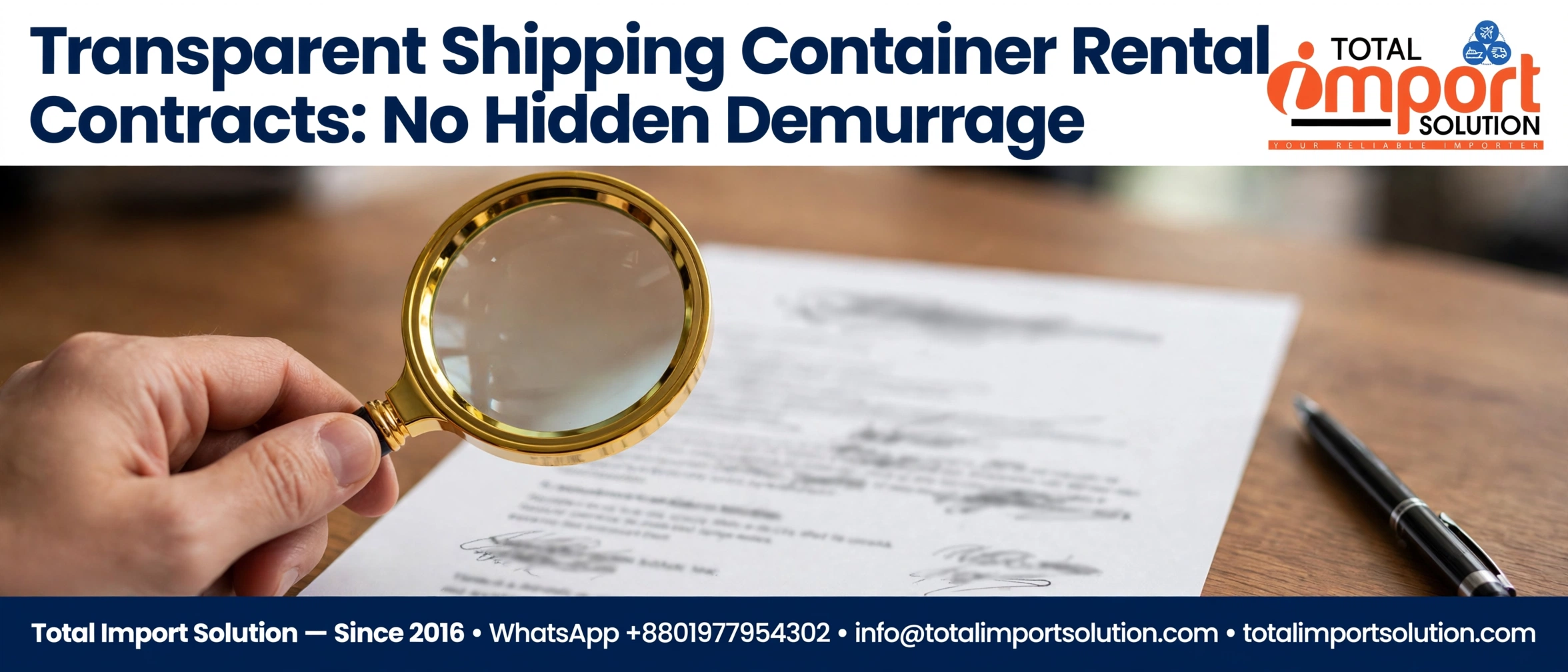
How to Read a Rental Contract Before You Sign
Reading a contract well takes less time than sorting out a disputed charge later. Read it in full, with a pen in hand, and work through the steps below before you agree to anything.
First, check the names, dates and container details: both parties named correctly, container size and type, container number or number of units, pickup and return locations, and the rental period.
Second, read the money clauses in order: the rental charge, the deposit if any, the free time, the charge after free time, the cleaning term, the damage term, and any other charge named. Write down each charge and the condition that triggers it,
Third, read the time clauses: the start and end of the hire, the free days, the depot’s working hours, and the notice required if you need more time. Mark the free-time end date on your calendar on the day you sign.
Fourth, read the responsibility clauses: who inspects the container, who cleans it, who repairs it, and who pays if it is damaged. If a clause places a duty on you that you cannot carry out, raise it before signing and ask for the clause to be adjusted in writing.
Finally, check how the hire is closed: what documents confirm the return, and how long the provider has to raise any further charge after the return. If any clause is unclear, ask for a written explanation, and do not rely on a verbal promise that contradicts the written page.
A Step-by-Step Hiring Process
Start with your requirement in writing: the cargo, the container size and type, the pickup location, the delivery location, the dates you need, and how long you expect to keep the container.
Ask for the offer in writing, with every term named: the rental charge, the free time, the charge after free time, the deposit if any, the cleaning and damage terms, the pickup and return depots, and the closing step. Compare offers on the full set of terms, not on the rental charge alone.
Read the draft contract against the offer. Every term in the offer should appear in the contract, in the same words or with the same meaning. If a term is missing or different, ask for the contract to be corrected before you sign
Inspect the container at pickup, or have it inspected on your behalf. Check the doors, the seals, the floor, the walls and the roof, inside and outside, and note any existing damage on the pickup document before the container leaves the depot.
Plan the transport, unloading and return before the container arrives. Book the truck, confirm the factory or warehouse is ready, and confirm the return depot’s working hours and return slot. Keep the container in good condition while it is in your care: protect the floor from sharp cargo, keep the doors closed when it is not being loaded, and keep the seal intact until unloading is complete.
Return the container on time, clean and in the condition the contract requires. Ask for a written return receipt at the depot, with the date, time and container number Then close the account in writing: confirm the return, ask for a final statement of any charges, and keep the statement with the contract and the receipts.
Documents to Keep for Every Hire
A transparent hire is also a documented hire. Keep these papers together for each container, in a file you can find later: the signed rental contract, the written offer, the pickup receipt with the container number, the photographs taken at pickup, the transport documents, the return receipt, the photographs taken at return, and the final statement of charges.
If documents are exchanged by message or email, keep the messages as well. A written confirmation of a free-time extension, a changed return depot, or a cleaning arrangement is part of the hire in practice, and it should be kept with the contract itself.
Planning Your Timeline to Avoid Extra Days
Most extra charges are not caused by a single large delay; they are caused by a series of small delays that add up past the free time. Plan unloading and return to finish before the last free day. Allow a margin for the unexpected — a day for transport, a day for unloading, and a day for the return journey.
Confirm the factory or warehouse schedule before the container arrives. Unloading should start as soon as the container reaches the site, not the next day, because a day spent waiting at the gate is a day of free time used without progress. Confirm the return depot before the container is loaded for return: depots have working hours, and some require a booked slot. A truck that arrives after closing, or without a slot, may have to wait until the next working day, and that day may fall outside the free time.
Watch the calendar for weekends and public holidays. Free time may count calendar days, including holidays, so a hire that spans a holiday can lose free days without any work being done. If a delay becomes likely, act early: tell the provider as soon as you know, in writing, and ask what can be done.
What to Do If a Charge Appears
Even with careful planning, a charge can appear. First, ask for the charge in writing, with the clause it relies on, the dates it covers, and how it was counted. A charge without a clause, a date range and a counting method cannot be checked, so do not pay it on the basis of a phone call alone.
Second, check the charge against your own records: the contract, the free-time end date, the pickup and return receipts, and the photographs. If the container was returned within the free time, the receipts will show it.
Third, raise any difference in writing, with the documents attached, and ask for a written reply. Keep the tone factual: state the dates, the clause, and the evidence, and ask for the charge to be reviewed. Fourth, if the charge is correct, pay it on time and keep the receipt. If it is not correct and the provider agrees, ask for a corrected statement in writing.
Choosing a Rental Partner
A transparent contract is only as good as the partner behind it. A good partner gives the offer in writing, with all terms named, before asking you to sign. A good partner explains any clause you do not understand, in writing if you ask, and does not rush you to sign a contract you have not read. A good partner inspects the container with you at pickup, notes existing damage on the pickup document, and gives a written return receipt at the end.
Total Import Solution has worked with importers in Bangladesh since 2016, providing container hiring support alongside its import services. When you speak to the team, ask for the full written terms before you sign, compare them with this guide, and keep every document in the file for the hire.
Common Mistakes to Avoid
Signing without reading the contract is the first mistake: a signature is an agreement to every clause, including the ones you did not read. Relying on a verbal promise is the second: a free-time extension, a different return depot, or a cleaning arrangement that is only spoken can be forgotten or disputed.
Forgetting to photograph the container is the third. Planning with no margin is the fourth: a hire planned to the last free day has no room for a transport delay, a busy factory, or a closed depot. Returning the container without a receipt is the fifth, so always ask for the receipt at the depot, with the date, time and container number.
Frequently Asked Questions
1. What does “no hidden demurrage” mean in a container rental contract?
It means every possible charge is written in the contract in plain language before you sign, including free time and the charge after free time ends. It does not mean demurrage can never apply; it means nothing appears later that you were not told about in advance.
2. What is demurrage?
Demurrage is the charge for keeping a container inside a port terminal or depot beyond the free time allowed there.
3. What is detention, and how is it different from demurrage?
Detention is the charge for keeping a container outside the terminal beyond the free time, for example when it has been taken to a factory for unloading and is returned late.
4. What is a storage charge?
Storage is a charge for the space a container or cargo occupies at a port, depot or warehouse.
5. How many free days will I get?
Free time depends on the written contract for your hire, and it may differ for demurrage and detention.
6. Do free days include weekends and public holidays?
That depends on the contract. Some contracts count calendar days, including weekends and holidays, while others count working days.
7. When does the rental period start and end?
The contract should state the exact start and end events, such as gate-out from the depot at pickup and gate-in on return.
8. What happens if I return the container late?
If the container is returned after the free time ends, the charge named in the contract applies for the extra days.
9. Who pays for cleaning the container?
The contract should state who is responsible for cleaning and what standard applies.
10. What condition must the container be in when I return it?
The contract usually requires the container to be returned clean, dry and undamaged, with doors and seals in working order and free of cargo residue.
11. What should I do if I find damage at pickup?
Note the damage on the pickup document before the container leaves the depot, and take photographs inside and outside.
12. Can I return the container to a different depot?
Only if the contract allows it. A return to a different depot may carry an additional charge, and a one-way hire is a different arrangement from a round-trip hire.
13. What documents should I keep for a container hire?
Keep the signed contract, the written offer, the pickup and return receipts, photographs taken at pickup and at return, the transport documents, and the final statement of charges, together in one file for the hire.
14. What should I do if a charge appears that I do not understand?
Ask for the charge in writing, with the clause it relies on, the dates it covers and how it was counted.
15. How can Total Import Solution help with container rental contracts?
Total Import Solution has worked with importers in Bangladesh since 2016. The team can provide the full written terms for a hire before you sign, explain the clauses, and support you through pickup, use and return.
Contact Total Import Solution
For transparent shipping container rental contracts and container hiring support in Bangladesh, contact Total Import Solution.
- Company: Total Import Solution — Since 2016
- WhatsApp: +8801977954302
- Email: info@totalimportsolution.com
- Website: totalimportsolution.com
