
Total import solution machinery in Bangladesh
Importing machinery into Bangladesh takes careful planning, clear documents, and steady coordination from the factory floor in the country of origin to the factory gate in Bangladesh. A single machine can be heavy, tall, wide, or sensitive to moisture and shock, and a small planning gap can lead to a delay, extra handling, or damage that is hard to repair. Total Import Solution works with importers who need a clear and organised way to move machinery from a supplier abroad to a site in Bangladesh, with each step explained in plain language and each document checked before the cargo moves. The company has been serving importers in Bangladesh since 2016, and that experience shapes a practical approach: ask the right questions early, confirm the cargo details in writing, choose a shipping method that fits the size and weight of the machine, and keep the importer informed at each stage. This article explains what machinery import covers, who needs this kind of support, how planning starts, which shipping and packing choices matter, what documents are needed, how customs clearance works, and how delivery to a factory site is arranged. It is written for factory owners, production managers, procurement teams, traders, and project teams who are planning a first machinery import or who want a smoother process for the next one.
1. What Total Import Solution Machinery in Bangladesh Covers
Total import solution machinery in Bangladesh covers the full journey of industrial and factory equipment from a supplier abroad to a delivery point in Bangladesh. The work starts with planning and continues through booking, loading, shipping, customs clearance, and delivery. Machinery comes in many forms, and each form needs its own handling plan. A textile machine, a printing machine, a packaging line, a food processing machine, a generator, a pump set, a woodworking machine, an agricultural machine, and a construction machine all differ in size, weight, shape, and sensitivity. Some machines need a flat rack or an open top container because of height, while others fit inside a standard dry container with careful blocking and bracing. The service covers this range by looking at the cargo first and then shaping the plan around it, rather than forcing every machine into the same box. Planning includes a review of the machine dimensions, the gross weight, the packing type, the loading point, and the delivery point. It also includes a review of the documents that the supplier can provide and the documents that the importer needs for customs clearance in Bangladesh. Shipping covers the sea journey from the load port to Chittagong, and the onward movement to Dhaka or another delivery point. Customs support covers the preparation of the file, the checking of each paper, and coordination with the clearing process so that the cargo can move out of the port in an orderly way. Delivery covers the final leg, where the machine is carried to the factory, the warehouse, or the project site, and handed over in line with the plan agreed with the importer.
2. Who Needs Machinery Import Support in Bangladesh
Machinery import support in Bangladesh is needed by a wide range of buyers, and each buyer has a different reason for bringing in a machine. A garment factory may need a new sewing line, a cutting machine, or a finishing machine to raise output or to replace an old unit. A food processing unit may need a mixer, a filling machine, a packing machine, or a cooling unit to start a new product line. A printing and packaging business may need a press, a cutting machine, or a folding and gluing line. An agricultural business may need a rice mill, a feed mill, a tractor attachment, or an irrigation pump set. A small workshop may need a lathe, a milling machine, a welding set, or a compressor to serve local customers. A trader may import machinery for resale to factories and workshops across the country. In each case, the buyer knows the machine and the work it will do, but may not know the shipping, packing, and customs steps that sit between the supplier and the factory floor. That gap is where import support matters. A first-time importer often needs the most guidance, because the number of papers, the choice of container, and the port process are all new. An experienced importer may need support for a machine that is larger or heavier than anything moved before, or for a shipment that involves several crates, a tight delivery window, or a remote site. A project team may need support because the machine is part of a larger plant, and the delivery must match the construction schedule. The service is built for buyers who want to focus on their factory and their production, while the movement of the machine is handled in a planned and accountable way. Total Import Solution has supported factory and project buyers in Bangladesh since 2016, and that working history shapes the way each shipment is planned.
3. How Machinery Import Planning Starts
Good machinery import planning starts long before the cargo is loaded, and it starts with clear information about the machine itself. The first step is to gather the basic cargo details from the supplier: the name and type of the machine, the number of packages, the dimensions of each package, the gross weight of each package, and the packing type. A machine shipped on a wooden pallet needs a different plan from a machine shipped in a wooden crate, and a machine shipped in parts needs a packing list that shows what is in each crate. The second step is to confirm the commercial details: the supplier name, the loading place, the port of loading, the delivery place in Bangladesh, and the preferred time frame for the shipment. The third step is to confirm the document position: whether the supplier can provide an invoice, a packing list, a certificate of origin, and any other paper the importer needs, and whether the importer has the papers needed on the Bangladesh side. When these details are in place, the planning team can suggest a shipping method, a container type, and a packing improvement if one is needed. Planning also covers the delivery site: the road width, the gate height, the ground condition, the availability of a forklift or a crane, and the space for unloading and storing the crates. Planning ends with a written summary that the importer can review: the cargo details, the shipping plan, the document list, and the delivery plan. This written summary becomes the reference for the whole shipment, and any change to the cargo or the dates is recorded against it so that everyone works from the same plan.
4. Choosing the Right Shipping Method for Machinery
Choosing the right shipping method for machinery depends on the size, weight, value, and urgency of the cargo, and on the delivery point in Bangladesh. Sea freight is the usual choice for heavy and large machines, because it can carry weight and volume that air freight cannot carry at a workable cost. A single heavy machine, a full production line, or several crates of parts all move well by sea when the plan allows enough time for the voyage and the port process. Within sea freight, the choice is between a full container load and a consolidated load. A full container load suits a shipment that fills a container or needs the whole container for one machine, while a consolidated load suits a smaller shipment that shares a container with other cargo. The decision is made from the cargo dimensions and the packing list, not from a general rule, because two machines with the same name can have very different packed sizes. The port of loading and the port of discharge also shape the choice. Most machinery for Bangladesh arrives through Chittagong, and the onward journey to Dhaka or another city is arranged by road after customs clearance. The importer should also think about the delivery schedule at the factory: whether the machine is needed for a new line, a replacement, or a project with a fixed start date. A clear delivery window helps the planning team book a sailing that fits the factory plan, and it gives the site team time to prepare the foundation, the power connection, and the installation crew.
5. Container Choices for Heavy and Oversized Machines
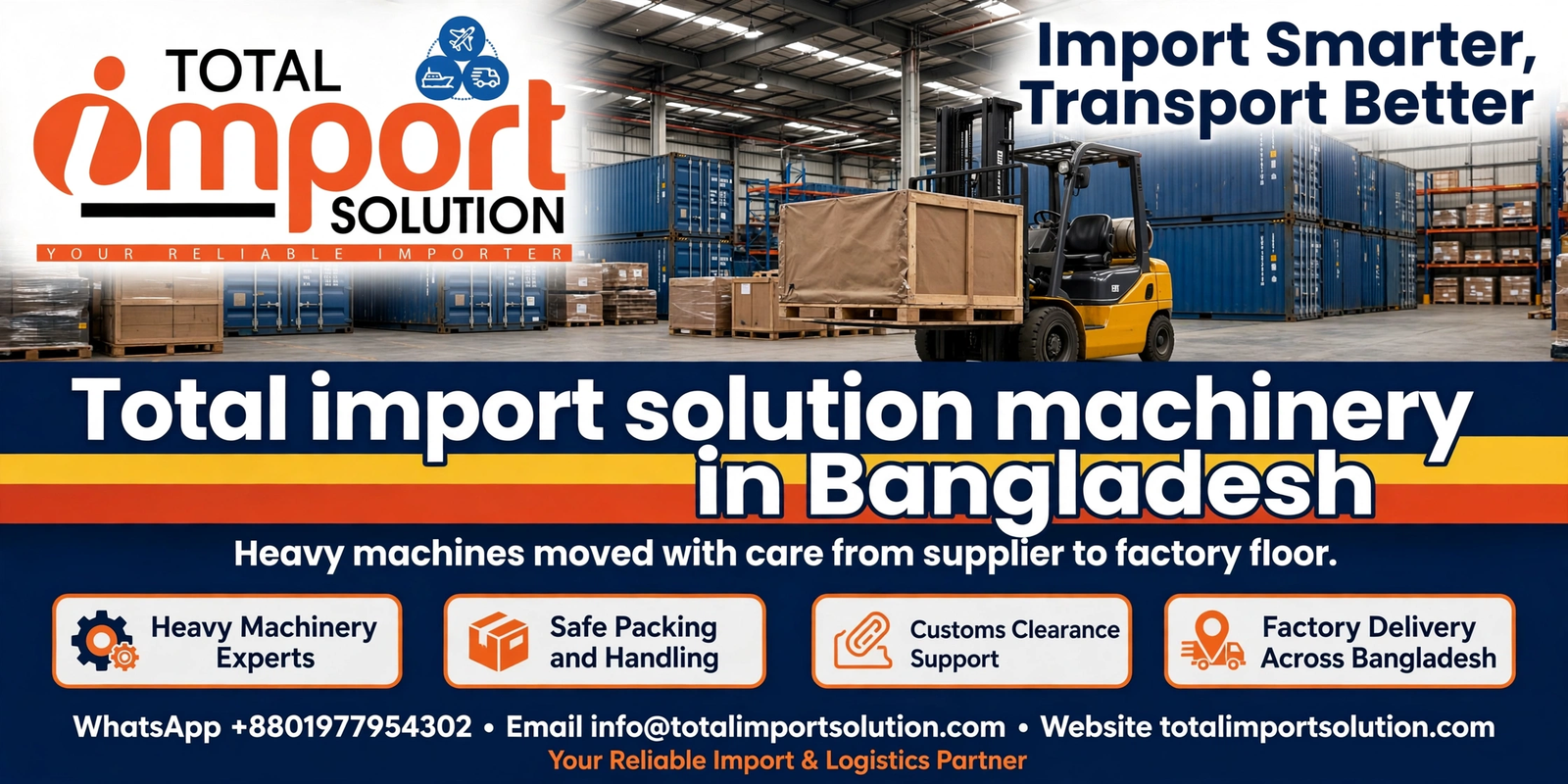
Container choice is one of the most practical decisions in machinery import, because the wrong container can mean a machine that does not fit, a load that is unsafe, or a delay at the loading point. A standard dry container suits many machines that are packed in crates of regular shape and size. A twenty-foot container suits a compact and heavy machine, while a forty-foot container suits a longer machine or a set of crates that belong together. A high cube container gives extra height for a tall crate, and it is often the right choice when the machine is tall but still fits through the door. An open top container suits a machine that is too tall to pass through a standard door but can be lowered into the container from above with a crane. A flat rack suits a machine that is too wide or too tall for a closed container, because the cargo sits on a flat platform with end walls and is secured with lashing and bracing. The choice depends on the exact packed dimensions and on the lifting method at the loading point. The planning team checks the length, width, height, and weight of each package against the container type, and confirms the door opening, the internal size, and the load limit before booking. Weight distribution also matters: a heavy machine must sit in a position that keeps the container balanced and that spreads the load across the floor. Blocking and bracing keep the cargo from shifting during the voyage, and the lashing must be strong enough for the weight of the machine. The importer can help by asking the supplier for the packed dimensions in writing and by sharing photos of the cargo before loading.
6. Packing and Protecting Machinery for the Journey
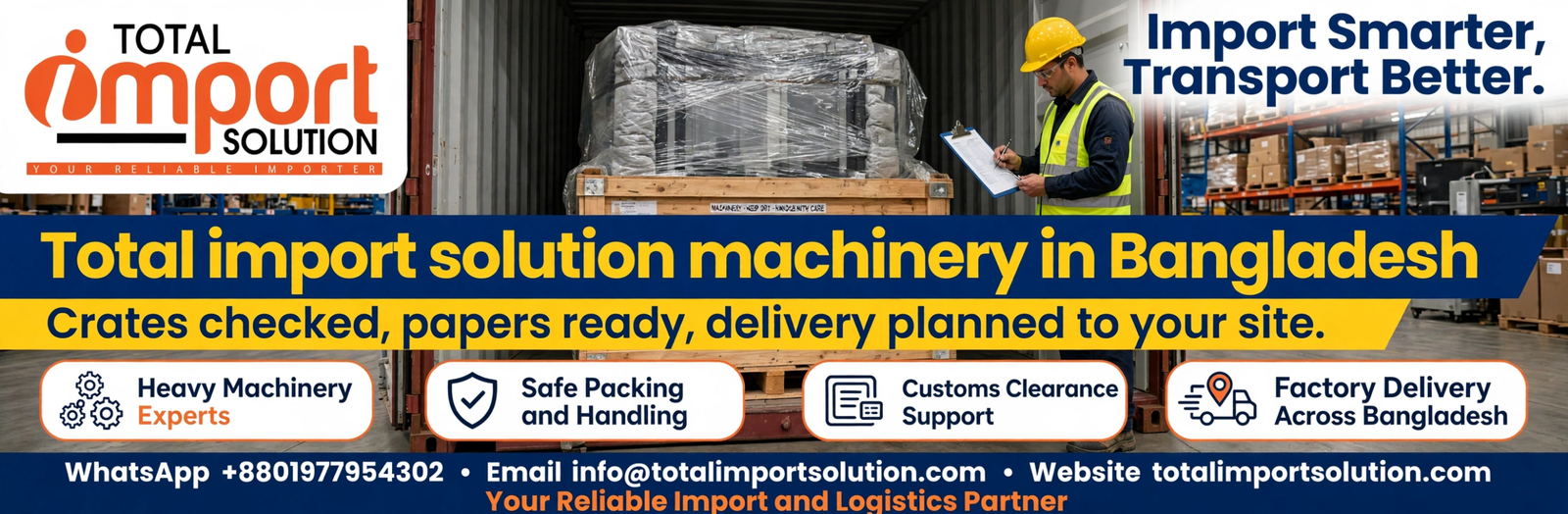
Packing protects a machine on a long sea journey, and good packing is a practical investment in the working life of the equipment. A machine faces moisture, salt air, vibration, and movement during loading, sailing, and unloading, so the packing must be built for that journey rather than for a short local move. Wooden crates are widely used for machinery because they can be built to the exact size of the machine, they can carry the weight, and they can be fitted with internal bracing that holds the machine still. A crate should have a strong base, a frame that can take the lifting force, and a lid that keeps rain out. Inside the crate, the machine should be fixed to the base so that it cannot slide, and sensitive parts such as control panels, glass, and exposed shafts should be covered and cushioned. A moisture barrier inside the crate helps protect metal surfaces from rust during the voyage, and a drying agent inside the sealed packing helps keep the air dry. Marking matters for the whole shipment: each package should carry the package number, the gross weight, the dimensions, the consignee details, and handling marks that show which side is up and where the lifting points are. A clear packing list that matches the marks on the crates makes unloading, checking, and customs examination much easier. The importer should ask the supplier to send photos of the packing before the cargo leaves the factory, and to confirm that the packing is strong enough for sea freight. Good packing, checked before loading, is one of the simplest ways to protect a machinery shipment.
7. Documents Needed for Machinery Import
Documents are the backbone of a machinery import, and a missing or mismatched paper can hold a shipment at the port while the factory waits. The core commercial documents are the commercial invoice and the packing list. The invoice shows the seller, the buyer, the description of the machine, the quantity, the value, and the terms of sale. The packing list shows each package, its contents, its dimensions, and its gross weight. These two papers must agree with each other and with the cargo itself, because any difference between the papers and the physical cargo will be questioned during examination. The bill of lading is the transport document issued for the sea journey, and it shows the shipper, the consignee, the notify party, the port of loading, the port of discharge, and the number of packages. The certificate of origin shows the country where the machine was made, and it is often needed for the customs file. Depending on the machine and the import rules in force at the time, other papers may be needed, such as a catalogue or a technical sheet that describes the machine, its model, its serial number, and its function. The importer should also keep the import papers on the Bangladesh side in order, including the letter of credit or payment papers where they apply, and the import registration papers that relate to the business. A practical habit is to collect the draft copies of the supplier papers before the vessel sails, so that names, addresses, values, and package counts can be checked and corrected while there is still time. When the papers are complete and consistent, the customs process moves in an orderly way, and the importer can plan the delivery with more confidence.
8. Customs Clearance for Machinery in Bangladesh
Customs clearance for machinery in Bangladesh is a step-by-step process, and it works best when the file is prepared before the vessel arrives. The process begins with the arrival of the cargo at Chittagong port and the submission of the customs file with the invoice, packing list, bill of lading, certificate of origin, and other papers that apply to the shipment. The file is checked for completeness and consistency, and the cargo details are matched against the papers. The machinery may be examined by customs, and the examination confirms the description, the quantity, and the condition of the cargo. The importer should be ready for this stage by keeping the packing list and the catalogue at hand, so that any question about the machine can be answered from the papers. Duty and tax assessment follows the rules in force for the type of machine and the value shown in the file, and the importer should understand the assessment basis before the file is submitted. Once the assessment is complete and the payable amount is settled, the cargo can be released from the port. A realistic plan allows a buffer between the vessel arrival and the factory delivery, and the factory team uses that buffer to prepare the site. Communication matters during clearance: the importer, the clearing team, and the transport team should share the same update on the file status, the examination date, and the release date. When the cargo is released, the delivery leg can start without a last-minute search for a vehicle or a labour team.
9. Handling, Loading and Unloading Heavy Machines
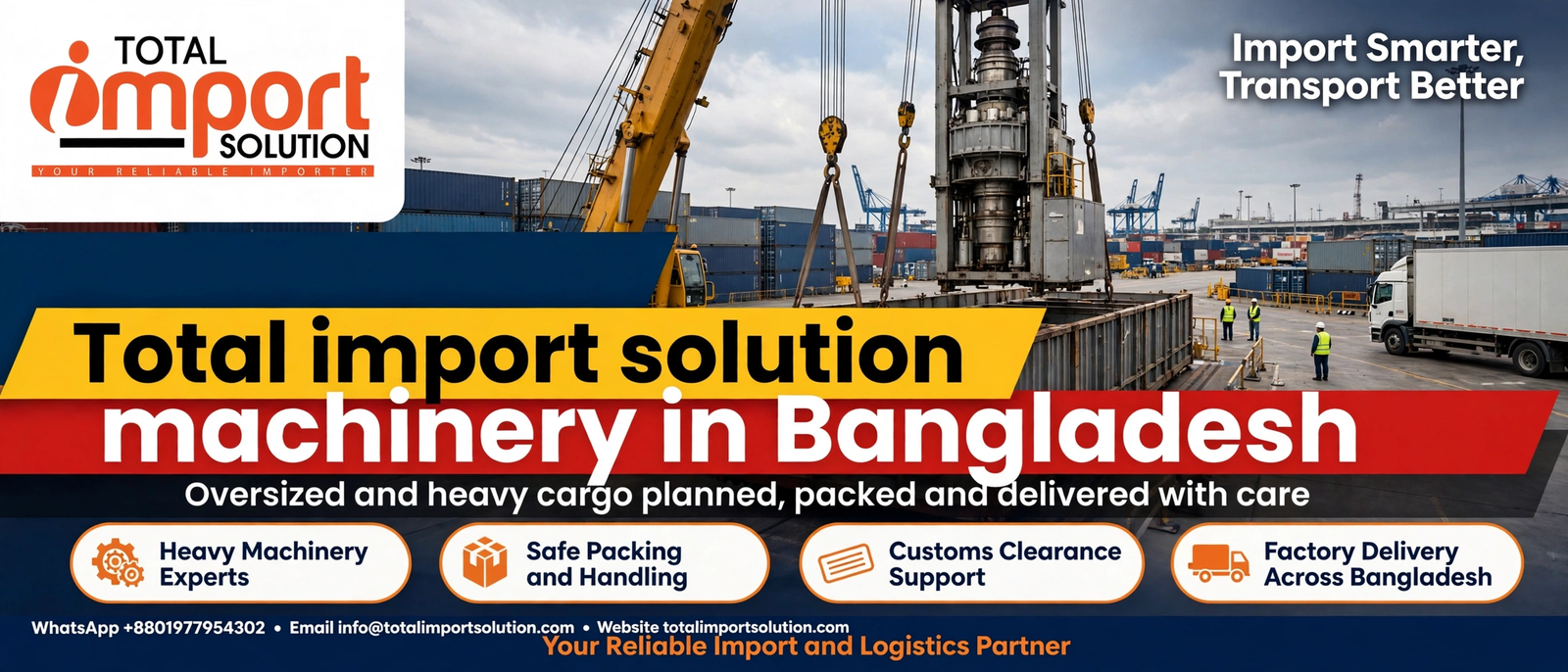
Handling heavy machines needs the right equipment, trained labour, and a clear plan for each lift. A machine that weighs several tonnes cannot be moved by hand, and a wrong lift can damage the machine, the packing, or the people doing the work. At the loading point, the supplier uses a forklift, a crane, or a loading dock to place the machine into the container or onto the flat rack, and the lifting points marked on the packing guide the operator. Inside the container, the cargo is blocked and braced so that it does not shift during the voyage. After release, the container is carried to a warehouse, a depot, or directly to the factory site, where the unloading takes place. Unloading needs the same care as loading. The site team should check the ground, the gate width, the turning space, and the position where the container will be placed. A forklift with enough capacity, a mobile crane where the weight or the shape demands it, and a team that knows the lifting plan are all part of a safe unload. The crates should be opened only in a clean and dry area, and the contents should be checked against the packing list before the machine is moved to its final position. Any damage to the packing should be noted at once, with photos, so that the record is clear. The machine should be moved on a level path, with care around doorways and ramps, and it should be placed on a prepared base or foundation before installation starts.
10. Warehouse Storage and Staging for Machinery
Warehouse storage and staging give a machinery shipment a safe place to rest between port release and factory delivery, and they give the importer time to prepare the site. Not every machine goes straight from the port to the factory. A machine may arrive before the factory floor is ready, before the foundation is cured, or before the installation team is on site. A machine that is part of a larger line may need to wait until the other parts arrive. In these cases, a warehouse provides a dry and secure space where the crates can be stored off the ground, away from rain and dust, and under a roof that protects the packing. Staging is the work of arranging the crates in the order they will be needed, so that the first crate to be installed is easy to reach and the packing list can be checked without moving every crate. The storage plan should record where each crate sits, so that nothing is misplaced when several shipments share the same space. The importer should also think about the storage period: a short stay needs only a basic check of the packing, while a longer stay needs a regular check for moisture, for damage to the crates, and for the condition of the moisture barrier inside the packing. When the site is ready, the machine moves from the warehouse to the factory in the planned order, with the vehicle and the lifting equipment matched to the weight and the size of each crate. An importer who plans storage in advance avoids the cost and the risk of keeping a machine in an open yard or in a place that is not built for heavy cargo.
11. Delivery to Factories and Industrial Sites
Delivery to a factory or an industrial site is the final leg of a machinery import, and it needs the same planning as the sea journey. The delivery vehicle must match the cargo: a truck with the right load capacity, the right bed length, and the right access for loading and unloading. A single heavy crate may need a truck with a crane or a separate crane at the site, while a set of crates may need more than one trip. The route matters too. The driver needs to know the road width, the bridge limits, the turning points, and the gate size at the factory, because a vehicle that cannot enter the site will need to unload outside and move the cargo in by other means. The importer can help by sharing the site details in advance: the address, the contact person, the gate hours, the ground condition, and the lifting equipment available at the site. The delivery should be scheduled at a time when the site team is ready, with labour, a forklift or a crane, and a clear area for unloading. On arrival, the crates are checked against the packing list, the packing is inspected, and any concern is noted before the vehicle leaves. The machine is then moved to its installation position, and the empty packing is cleared so that the work area stays safe. A well-planned delivery ends with the machine in place, the papers handed over, and the factory team ready to start installation.
12. Common Problems in Machinery Import and How to Avoid Them
Common problems in machinery import are often simple problems that could have been avoided with an early check, and knowing them helps an importer plan better. The first problem is a mismatch between the papers and the cargo, such as a packing list that shows a different package count or a different weight from the cargo that arrives. This problem is avoided by checking the draft papers before the vessel sails and by asking the supplier to correct any error while the cargo is still at the factory. The second problem is weak packing, where a crate breaks, a machine shifts inside the crate, or moisture reaches a metal surface. This problem is avoided by asking for strong crates, internal bracing, a moisture barrier, and photos of the packing before loading. The third problem is a wrong container choice, where a machine does not fit through the door or needs a flat rack that was not booked. This problem is avoided by sharing the exact packed dimensions in writing and by confirming the container type before booking. The fourth problem is a delay at the port because the customs file is incomplete or a paper is missing. This problem is avoided by preparing the file early and by keeping a complete set of papers in one place. The fifth problem is a delivery site that is not ready, with a narrow gate, soft ground, or no lifting equipment on the day the truck arrives. This problem is avoided by sharing the site details in advance and by confirming the lifting plan before the delivery date. An importer who follows this habit will find that most machinery shipments move in an orderly way from supplier to site.
13. A Practical Checklist Before You Import Machinery
A practical checklist helps an importer confirm that nothing important has been missed before the machine leaves the supplier. Start with the cargo: confirm the machine name and type, the number of packages, the packed dimensions, the gross weight, and the packing type, all in writing from the supplier. Confirm the supplier details: the loading place, the port of loading, and the contact person at the factory. Confirm the delivery details: the factory address, the site contact, the gate size, the ground condition, and the lifting equipment available. Confirm the documents: the invoice, the packing list, the bill of lading, the certificate of origin, and any catalogue or technical sheet that applies. Check that the names, values, and package counts agree across all papers. Confirm the shipping plan: the container type, the sailing, and the expected arrival at Chittagong. Confirm the customs file: the papers are complete, the file is ready before the vessel arrives, and the clearing team has a copy. Confirm the storage plan: whether the machine goes straight to the factory or waits in a warehouse, and where each crate will sit. Confirm the delivery plan: the vehicle type, the route, the delivery date, and the site team that will receive the cargo. Keep this checklist in one file with the shipment, and update it when any detail changes. When every item on the list is confirmed, the importer can place the order with a clear picture of the work ahead and a plan that the whole team can follow.
Frequently Asked Questions
1. What does Total import solution machinery in Bangladesh cover?
It covers planning, shipping, customs clearance, storage, and delivery of factory and industrial machines from a supplier abroad to a site in Bangladesh.
2. Which machines can be imported with this service?
Textile, printing, packaging, food processing, agricultural, construction, and workshop machines, along with generators, pumps, motors, and other factory equipment.
3. How do I start a machinery import?
Share the machine details, the supplier details, and the delivery place, and the planning team will review the cargo and prepare a written plan for the shipment.
4. What cargo details does the supplier need to share?
The machine name and type, the number of packages, the packed dimensions, the gross weight of each package, and the packing type, all in writing.
5. Which container suits a heavy machine?
It depends on the packed size and weight. A standard dry container suits many machines, while a high cube gives extra height and a flat rack suits wide or tall cargo.
6. What is a flat rack container used for?
A flat rack carries cargo that is too wide or too tall for a closed container, with the machine secured on a flat platform by lashing and bracing.
7. How should machinery be packed for sea freight?
In strong wooden crates with internal bracing, a moisture barrier, clear package marks, and a packing list that matches every crate in the shipment.
8. Which documents are needed for machinery import?
A commercial invoice, a packing list, a bill of lading, and a certificate of origin, plus a catalogue or technical sheet where it applies to the machine.
9. What is a packing list and why does it matter?
It lists every package, its contents, its dimensions, and its gross weight, so the cargo can be checked, examined, and unloaded in the right order.
10. How does customs clearance work for machinery?
The customs file is submitted with the invoice, packing list, bill of lading, and other papers, the cargo is checked, the assessment is completed, and the cargo is released.
11. Can a used machine be imported?
The papers for a used machine may need to show the year of manufacture and the condition of the equipment, so the exact requirement should be confirmed before shipping.
12. Where does machinery arrive in Bangladesh?
Most machinery arrives through Chittagong port, and the onward movement to Dhaka or another delivery point is arranged by road after customs clearance.
13. Can the machine be stored before delivery to the factory?
Yes, the machine can wait in a warehouse when the factory floor is not ready, with the crates stored under cover and arranged in the order they will be needed.
14. How is a heavy machine unloaded at the factory?
With a forklift or a crane matched to the weight of the crate, a clear unloading area, and a site team that follows the lifting plan for each package.
15. What should I check before the machine leaves the supplier?
Check the cargo details, the packing, the draft papers, the container type, and the delivery site, and confirm that the papers agree with the physical cargo.
16. How do I get a quote for machinery import?
Contact Total Import Solution on WhatsApp with the cargo description, container size and type, loading place, date range, and destination, and the team will respond with a quote.
Contact Total Import Solution
- Company: Total Import Solution, serving importers in Bangladesh since 2016
- Service: Total import solution machinery in Bangladesh
- WhatsApp: +8801977954302
- WhatsApp direct link: https://wa.me/8801977954302
- Phone: +8801977954302
- Email: info@totalimportsolution.com
- Website: totalimportsolution.com
Get a quote in 1 minute:
- Cargo description
- Container size and type
- Loading place
- Date range
- Destination
