
Pangaon Inland Container Terminal: Short-Haul Container Solutions
Introduction
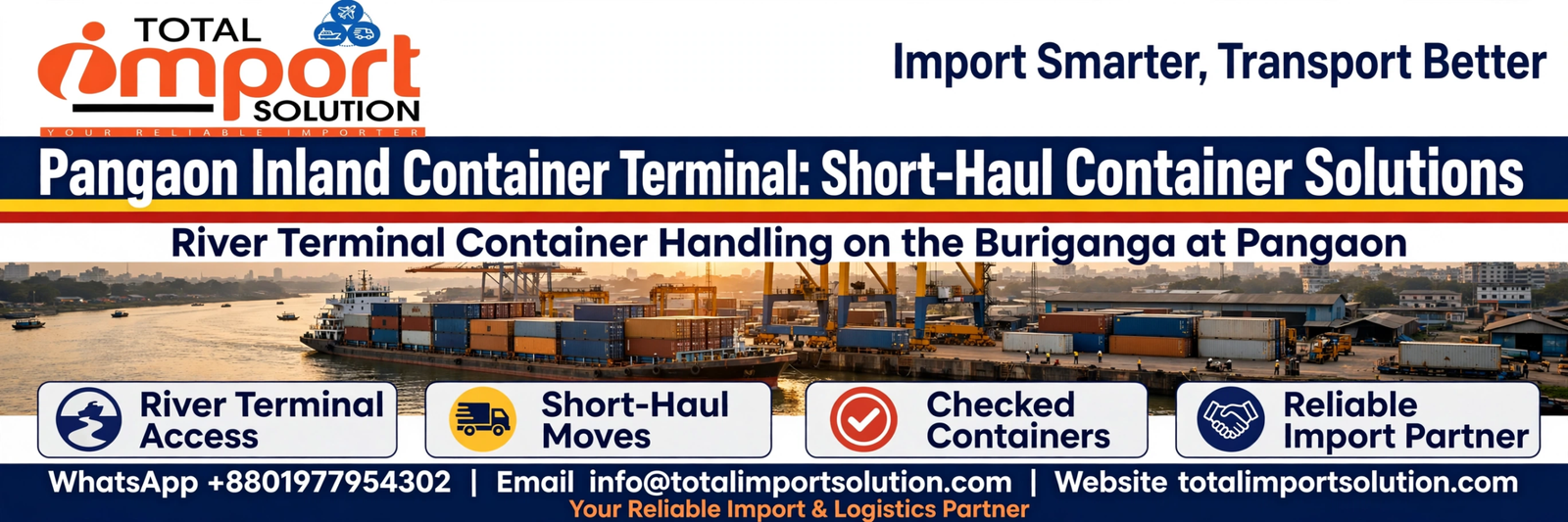
Pangaon Inland Container Terminal is a river container terminal on the Buriganga river, close to Dhaka. Containers that arrive at a seaport can move by river to Pangaon, where they are unloaded from barges, checked, stored and handed over for the short road journey to factories and warehouses in the Dhaka area. For importers and exporters who work in and around the capital, this river link opens a useful option: instead of moving every container all the way by road from the seaport, part of the journey can be made by river.
Short-haul container solutions are the services built around that final, shorter leg. They cover the container itself, the handling at the river terminal, the short road move to the destination, the documents that travel with the cargo, and the return of the empty container. A short haul is easier to plan than a long haul, but it still needs the same care: the right container, a clear handover, correct papers and a receiver who is ready.
This guide explains the process in plain language. It covers what Pangaon terminal is, how short-haul moves work, which containers suit river and road handling, how to book a move step by step, which documents to keep, and how to avoid the problems that cause delay. It does not quote a price, a rate or a fee. A rate or a fee is confirmed only after checking the actual shipment and documents, because every container, cargo and route is different. Since 2016, Total Import Solution has been helping importers in Bangladesh, and this guide follows the same practical approach used in real import work: check the cargo first, check the container second, and keep every step in order.
1. What Pangaon Inland Container Terminal Is
Pangaon Inland Container Terminal is an inland river terminal where containers are transferred between river barges and road trucks. It stands on the Buriganga river, near Keraniganj, a short distance from Dhaka city. The terminal has a jetty where barges berth, a yard where containers are stacked and stored, handling equipment to lift containers on and off barges and trucks, and office space where documents are checked.
The idea behind the terminal is simple. The seaports of Bangladesh handle the deep-sea vessels, and the river carries containers inland to Dhaka. A barge can carry many containers in one trip, which keeps the road leg short. The terminal therefore works as a meeting point: river transport brings the container close to Dhaka, and road transport carries it the last short distance to the factory, warehouse or buyer.
For a Dhaka-area importer, the terminal matters for several reasons. First, it brings containers closer to the place of use, so the final road journey is shorter and easier to plan around city traffic. Second, it gives the importer a place where containers can be held while documents are completed. Third, it adds a river option to the supply chain, so the business is not dependent on one road route alone.
The terminal is a working industrial site. Barges, cranes, trucks and stacked containers all operate in the same yard, so visitors must follow the site rules and keep to the marked walkways and waiting areas.
2. What Short-Haul Container Solutions Mean
A short-haul container solution is a complete service for a short container move. It starts when the container is ready at the terminal and ends when the empty container is returned. Between those two points it covers the container, the handling, the transport, the documents and the communication with everyone involved.
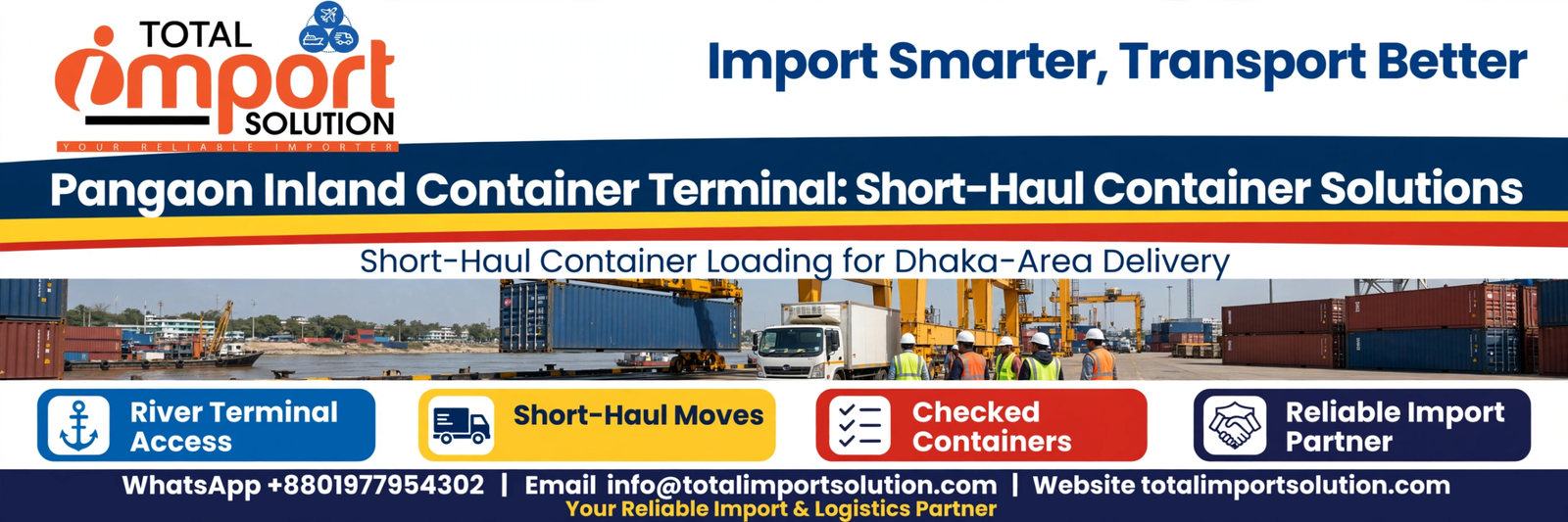
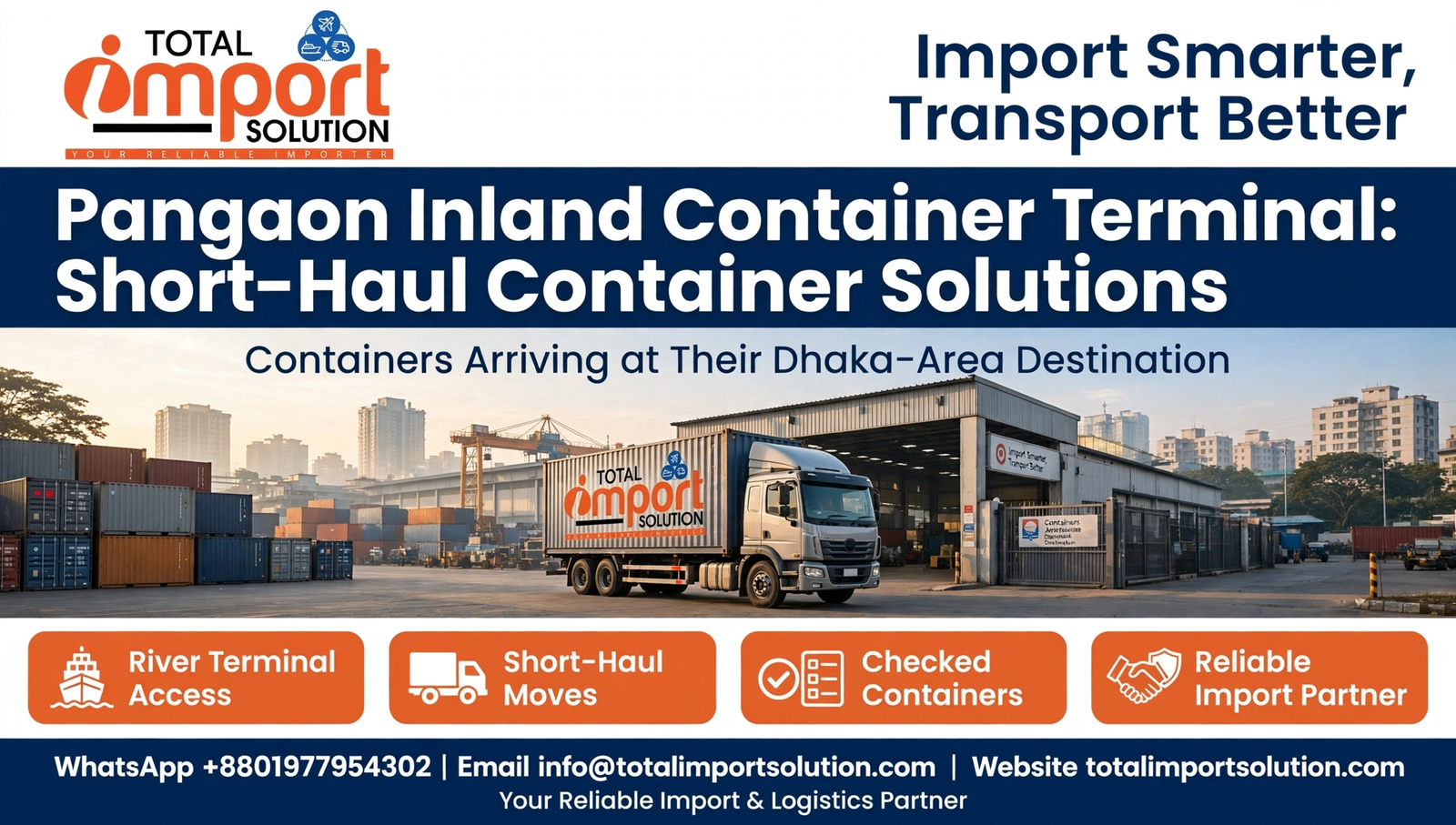
The short haul from Pangaon usually means a road move from the terminal to a destination in Dhaka or a nearby district, such as a factory in Keraniganj, Narayanganj, Gazipur or Savar, or a warehouse inside Dhaka city. The distance is short, but the move still needs a truck that suits the container size and weight, a route that suits a loaded container truck, and a destination with space for the truck to enter, turn and be unloaded.
There are two common patterns. In the first, an imported container is collected from the terminal, delivered to the factory, unloaded, and the empty container is returned to the terminal or another agreed depot point. In the second, an export container is collected empty, taken to the factory for loading, and then brought back to the terminal to join a barge. Both patterns need the same care with inspection, seals and papers.
A good short-haul solution is judged by its planning. The provider should confirm the container number, the pick-up time, the truck details, the route and the receiver contact before the truck moves, and the receiver should have the unloading team and space ready.
3. Container Types for River and Short-Haul Road Moves
Not all containers suit every short-haul job. The type decides what cargo can go inside, how it is loaded, and what care it needs at the river terminal and on the road. Write down the cargo details before you ask for a container.
| Container type | Common use | What to check before accepting |
|---|---|---|
| Standard dry container, 20-foot | General cargo, cartons, pallets, machinery parts | Doors, floor, roof, wall panels and seals |
| Standard dry container, 40-foot | Large loads, bulky goods, full factory orders | Doors, floor, roof, wall panels and seals |
| High cube container | Tall cargo that needs extra height | Internal height and door opening height |
| Open top container | Cargo loaded from above, such as long items | Roof cover, top rails and lashing points |
| Flat rack container | Heavy or wide cargo that does not fit inside a box | Deck condition, corner posts and lashing points |
| Refrigerated container | Cargo that must stay cool | Cooling unit, power supply and temperature record |
| Tank container | Liquid cargo in bulk | Valves, seals, frame and test papers |
| Special or modified container | Project cargo and site storage | Modifications, fittings and door operation |
Container sizes use widely standard approximate figures. A 20-foot container is approximately 6 metres long, and a 40-foot container is approximately 12 metres long. Internal space and load capacity vary by maker and age, so treat every figure as approximate and check the actual container before loading. The container plate and the handover papers give the details for that exact unit, and those are the figures to trust.
A dry container is the most common choice for general cargo on a short haul. It protects goods from rain and dust, it can be sealed, and it can be handled by standard terminal equipment. A refrigerated container needs a power supply at the terminal, on the truck and at the destination, so confirm power at each point before loading.
4. Step-by-Step: Booking a Short-Haul Move from Pangaon
Follow these steps in order. Each step depends on the one before it, and skipping a step is the most common cause of delay.
Step 1. Write down the cargo details. List the goods, the number of cartons or pallets, the weight, the size of the largest piece, and any special needs such as ventilation, cooling or top loading.
Step 2. Confirm the container at the terminal. Ask which container holds your cargo, or which empty container is available for loading. Note the container number, type and condition, and ask for the condition report.
Step 3. Choose the road transport. Share the destination, the date and the time window with the transporter. Confirm the truck suits the container size and weight, and that the route suits a loaded container truck.
Step 4. Check the documents. Make sure the packing list, the commercial invoice, the bill of lading or transport note and the seal record are ready and match the container number. A missing paper at the terminal is easier to fix than a missing paper on the road.
Step 5. Inspect the container. Check the doors, floor, roof, walls, seals and corner castings. Look for daylight through the roof, soft spots in the floor and any smell inside. Take photos of anything you find.
Step 6. Confirm the seal. Note the seal number on the record and check it matches the seal on the doors. Photograph the seal and the container number before the truck leaves.
Step 7. Confirm the receiver. Tell the receiver the truck details, the expected arrival time and the container number. Make sure the unloading team, the space and any equipment are ready.
Step 8. Move the container. Keep the driver, the terminal team and the receiver in contact. Note the departure time from the terminal in your file.
Step 9. Unload and check. At the destination, check the seal again before opening, then check the cargo against the packing list as it comes out. Note any damage to cargo or container at once.
Step 10. Return the empty container. Clean the inside, remove all dunnage and labels, return it to the agreed point, and get a signed return note that states the condition on return.
5. How Containers Move: Barge, Terminal Yard and Truck
A container that comes to Pangaon by river follows a clear chain. First the barge carries the containers up the river and berths at the terminal jetty. Then terminal equipment lifts each container from the barge to the yard, where it is stacked and stored. Then a truck collects the container from the yard and carries it the short road leg to the destination.
Each link in the chain needs its own check. At the barge, the terminal team checks the container numbers against the barge manifest. In the yard, the container is placed where it can be reached by the truck that will collect it, and the seal and condition are checked again. On the truck, the container is locked to the trailer, the seal number is recorded, and the driver is given the delivery details.
The yard is a busy place, so timing matters. Trucks should arrive at the agreed time, because a truck that arrives early may have to wait for space, and a truck that arrives late may miss its slot. The terminal team will guide the driver to the right stack and the right container, and the driver should confirm the container number before the container is lifted onto the trailer.
For export cargo the chain runs in reverse. An empty container is collected, taken to the factory, loaded, sealed and brought back to the terminal yard, where it waits for the next barge. In both directions the rule is the same: confirm the number, check the seal, record the time, and keep the papers with the container.
6. Documents You Need for a Short-Haul Container Move
Documents are the backbone of a short-haul move. The terminal, the transporter and the cargo owner all work from paper, so keep the full set in one file and check every paper against the container number.
| Document | Why it matters | Check this before the truck moves |
|---|---|---|
| Bill of lading or transport note | Shows the cargo movement and the parties | Container number and route are correct |
| Packing list | Shows the cargo inside the container | Cartons, weight and marks match the cargo |
| Commercial invoice | Shows the seller, buyer, value and goods | Goods and value match the order |
| Container handover note | Proves the container number, type and condition | Number, type, condition and date are correct |
| Condition report with photos | Records faults that already exist | Every fault you saw is listed |
| Seal record | Records the seal number fitted to the doors | Seal number matches the seal on the doors |
| Terminal release note | Shows the terminal has released the container | Container number and release time are stated |
| Delivery note | Proves the container reached the destination | Receiver signature, date and time are recorded |
| Return note | Proves the empty container was returned | Condition on return is stated and signed |
Keep the originals safe and keep copies with the driver and at the office. If a document is missing, ask for it before the truck leaves the terminal, because a missing paper at the destination is much harder to fix.
A rate or a fee is confirmed only after checking the actual shipment and documents. Do not agree a figure on the basis of a verbal promise alone. Ask for the terms in writing, read them, and keep them in the file with the other papers.
7. Loading and Unloading at a River Terminal
Loading and unloading at a river terminal need the same care as at any depot, with a few extra points that come from the riverside setting. The yard surface, the weather and the barge schedule all affect the work, so plan with the terminal team, not around them.
When a container is loaded at a factory for export, spread the weight evenly across the floor and keep the centre of gravity low. Brace the cargo so it cannot shift on the road or on the river, and use timber, straps or dunnage that suit the cargo. Keep the weight within the limit shown on the container plate, seal the doors, and photograph the loaded container and the seal before the truck leaves.
When a container is unloaded at the destination, open the doors carefully, because cargo can shift during the journey. Check the cargo against the packing list as it comes out, and note any damage at once with photos. If the cargo is wet, stained or broken, stop and inform the provider and the transporter in writing on the same day.
At the terminal itself, keep to the marked walkways, follow the instructions of the terminal staff, and keep clear of lifting equipment while it is working. Never stand under a lifted container, and never enter a container while it is being lifted. If rain is falling, check the container roof and seals again before loading, because a small leak on a short haul can still damage cartons.
8. Short-Haul Routes to Dhaka-Area Destinations
The short haul from Pangaon serves destinations in and around Dhaka. The most common are factories and warehouses in Keraniganj, Narayanganj, Gazipur, Savar and Dhaka city itself. Each destination has its own road conditions, gate size and unloading space, so the route and the truck must be planned for that exact place.
Before the move, confirm these points with the transporter and the receiver: the exact delivery address, the gate width and height, the space for the truck to enter and turn, the unloading equipment available, the name and phone number of the person who will receive the container, and the time window when unloading can happen. A truck that arrives at a gate it cannot enter must wait or turn back, and that wastes the day.
City traffic is part of the plan. Dhaka roads are busy, and a loaded container truck moves slowly through traffic. Agree a realistic time window with the receiver, and keep the receiver informed if the truck is delayed. A receiver who knows the truck is coming late can adjust the unloading team; a receiver who hears nothing will assume the truck is not coming.
Plan the return at the same time as the delivery. An empty container that waits at a factory for days takes up space and may run past the agreed period. Arrange the return truck in advance, clean the container after unloading, and get the signed return note.
9. Costs, Charges and How to Judge a Fair Offer
A short-haul move from Pangaon involves several kinds of charges, such as the terminal handling charge, the road transport charge, the container use charge and any cleaning or repair charge. Each charge depends on the container type, the distance, the waiting time and the work done, so no single figure fits every job. Ask for each charge to be listed on its own line, in writing, before you agree.
A fair offer is one you can understand. It should state what is included, what is not included, how long the container may be kept, what happens if it is returned late, and who pays for damage. If an offer leaves these points unclear, ask for them to be written down. A provider that explains its charges clearly is easier to work with than one that leaves them vague.
Judge a provider by how it works, not by a single low figure. A good provider answers questions in writing, checks containers before handover, keeps condition reports with photos, confirms times in advance and returns calls when a problem arises. A provider that rushes the handover, skips the inspection or avoids written terms will cost more in trouble later.
Keep a record of every charge for every move. Over time this record shows the real cost of your short-haul container use, and it helps you plan the next order with a clear picture of what each move involves.
10. Common Problems and How to Avoid Them
Most short-haul problems are easy to avoid when the handover and the documents are done properly. The list below covers the problems that appear most often and the simple step that prevents each one.
| Problem | Why it happens | How to avoid it |
|---|---|---|
| Wrong container collected | Number not checked at the yard | Confirm the number before lifting |
| Wet or damaged cargo | Roof or wall leak not checked | Inspect inside for daylight and damp |
| Dispute over damage | Fault not written on the report | List every fault with photos before signing |
| Seal number mismatch | Seal changed without a record | Check the seal against the record before opening |
| Truck cannot enter the gate | Gate size and turning space not checked | Confirm gate, space and route in advance |
| Late delivery | Traffic and timing not planned | Agree a realistic window and keep the receiver informed |
| Overloaded container | Weight not checked against the plate | Weigh the cargo and respect the plate limit |
| Missing papers | Documents left at the terminal | Keep one file and check it before the truck moves |
| Late empty return | Return not planned at delivery | Book the return truck when you book the delivery |
If a problem happens during the move, act at once. Photograph the container and the cargo, note the time and place, and inform the provider and the transporter in writing on the same day.
11. Safety Rules for River Terminals, Loading and Short-Haul Roads
A river terminal is a busy industrial site, and a loaded container can weigh many tonnes, so safety rules are not optional. At the terminal, follow the staff instructions, keep to the marked walkways, wear the safety gear the terminal asks for, and keep clear of cranes, barges and moving trucks.
Only trained people should operate lifting equipment, and only the agreed equipment should be used to lift a container. Never stand under a lifted container, and never enter a container while it is being lifted or moved. Keep the yard area around a lift clear, and wait for the signal from the terminal staff before approaching.
When loading, spread the weight evenly, keep the centre of gravity low, and brace the cargo so it cannot shift on the river or the road. Keep the doors clear so they can be closed and sealed without force. Do not load cargo that presses against the roof or the doors, because it may fall out when the doors open.
On the road, the driver must follow the agreed route and the traffic rules, and the container must be locked to the trailer before the truck moves. At the destination, check that the ground is firm and level before the container is set down, keep people clear while the container is lifted off the truck, and lock the doors when the container is not being loaded or unloaded.
12. Planning Your Short-Haul Container Needs for the Months Ahead
A business that uses Pangaon terminal often should plan beyond the next shipment. Look at your orders for the next few months and list the containers you will need, the types, the dates and the destinations. Share this plan with your terminal and transport providers, so they can plan yard space, trucks and handling in advance.
Keep a simple record for each month: the number of containers moved, the types, the destinations, the problems faced and the lessons learned. This record helps you see patterns, such as a destination that often runs late, a type that is often short, or a cargo that often needs a larger container. With that picture you can book earlier, choose a better type, or change the loading plan.
Build a relationship with one or two providers who know your cargo, your destinations and your receivers. A provider who knows your factory gate, your unloading team and your cargo will plan better than a new provider who must learn it all on the first job.
Since 2016, Total Import Solution has worked with importers who plan this way, and the pattern is steady: the businesses that plan ahead, keep clear files and inspect every container face fewer delays and fewer disputes than those that arrange each move at the last minute.
13. How to Judge a Good Short-Haul Container Provider
A good provider is judged by its work, not by its words. The checks below show what to look for when you choose a provider for Pangaon short-haul container solutions.
| What to check | A good sign | A warning sign |
|---|---|---|
| Container inspection | Container shown and checked before handover | Handover rushed with no inspection |
| Condition reports | Written report with photos for every container | No report, or a report with no photos |
| Written terms | Period, return point and duties stated clearly | Verbal terms only, nothing in writing |
| Communication | Questions answered in writing, on time | Calls not returned, answers vague |
| Terminal coordination | Times confirmed with the terminal in advance | No plan, no confirmed time |
| Transport planning | Right truck, planned route, named driver | No plan, no confirmed time |
| Problem handling | Problems recorded and solved promptly | Problems ignored or blamed on the customer |
| Record keeping | Handover and return notes kept and shared | No notes, or notes that cannot be found |
Ask for references from businesses with similar cargo, and ask how the provider handles a damaged container, a late return or a seal problem. The answers will show whether the provider works in an orderly way. Choose the provider before you need the container urgently, when you can compare calmly and check a container or two.
Frequently Asked Questions
1. What is Pangaon Inland Container Terminal?
Pangaon Inland Container Terminal is a river container terminal on the Buriganga river, near Keraniganj and close to Dhaka. Containers move by barge to the terminal, are lifted to the yard, and then travel by road the short distance to factories and warehouses in the Dhaka area.
2. What is a short-haul container solution?
A short-haul container solution is a complete service for a short container move. It covers the container, the handling at the terminal, the short road move to the destination, the documents that travel with the cargo, and the return of the empty container.
3. Which container size should I choose for a short haul?
Choose the size that fits your cargo with room to load safely. A 20-foot container is approximately 6 metres long and a 40-foot container is approximately 12 metres long. Check the actual container and its plate before loading, because internal space varies by maker and age.
4. How do containers reach Pangaon terminal?
Containers reach Pangaon by river barge from the seaport. The barge berths at the terminal jetty, terminal equipment lifts the containers to the yard, and trucks then carry them the short road leg to the destination.
5. How do I inspect a container before accepting it?
Walk around it, open the doors, look inside for daylight, damp or smell, walk on the floor, check the door seals and locking rods, and check the corner castings. Take photos and make sure every fault is written on the condition report.
6. What documents travel with a short-haul container?
Keep the bill of lading or transport note, the packing list, the commercial invoice, the handover note, the condition report with photos, the seal record, the terminal release note, the delivery note and the return note in one file, and check each one against the container number.
7. What should I check before the doors are opened at the destination?
Check the seal number against the record first. If it is different, stop and call the terminal team and the transporter before opening. Photograph the seal, the container number and the doors before unloading.
8. Can a refrigerated container be used for a short haul from Pangaon?
A refrigerated container can be used if one is available. Ask the terminal team to run the cooling unit and show the temperature reading before loading, and confirm the power supply at the terminal, on the truck and at the destination.
9. How do I avoid overloading a container?
Weigh the cargo, spread the weight evenly, keep the centre of gravity low, and respect the maximum load shown on the container plate. If the cargo is close to the limit, split the load or use a second container.
10. What is a condition report and why does it matter?
A condition report is a written record of the container condition at handover, with photos of faults. It protects both sides, because a fault listed on the report cannot be blamed on the user later.
11. What happens if the container is damaged while I use it?
Report the damage at once with photos, inform the provider and the transporter in writing on the same day, and keep the handover report that shows the condition before use. Damage that was already listed on the report is not your damage.
12. What should I do if the seal number does not match?
Do not open the doors. Photograph the seal and the container number, note the time, and call the terminal team and the transporter at once. Wait for their instruction before opening, and keep the record in your file.
13. Which Dhaka-area destinations can a short haul from Pangaon serve?
A short haul from Pangaon can serve factories and warehouses in Keraniganj, Narayanganj, Gazipur, Savar and Dhaka city. Confirm the gate size, turning space and unloading equipment at each destination before the truck moves.
14. How far in advance should I book a short-haul move?
Book as early as you can, and earlier for a special type such as an open top, flat rack or refrigerated unit. Early booking gives the terminal and transport teams time to plan yard space, trucks and handling.
15. What is a terminal release note?
A terminal release note shows that the terminal has released the container for collection. It states the container number and the release time, and the driver should carry it with the other documents on the road leg.
16. How can Total Import Solution help with short-haul container moves from Pangaon?
Total Import Solution helps importers plan short-haul moves, check documents, inspect containers and arrange the road leg from the terminal to the factory or warehouse. Contact the team with your cargo details, and a rate or a fee is confirmed only after checking the actual shipment and documents.
Contact Total Import Solution
- WhatsApp: +8801977954302
- Email: info@totalimportsolution.com
- Website: totalimportsolution.com
- Service: Pangaon Inland Container Terminal: Short-Haul Container Solutions
- Company: Total Import Solution — Since 2016, serving importers in Bangladesh
