
Generator transformer shipping from China to Bangladesh
Shipping a generator or a transformer from China to Bangladesh is a heavy and careful job. These machines are large, heavy, and sensitive. A small mistake in packing, lifting, or documents can cause damage, delay, or extra cost at the port. A good plan protects the machine, the people who handle it, and the schedule of the project at the destination.
Since 2016, Total Import Solution has served importers in Bangladesh. The team works with buyers who bring in machinery from China for factories, power projects, workshops, and commercial sites. The aim of this guide is to help a buyer ask the right questions, prepare the right papers, and plan each stage before the machine leaves the factory.
This guide does not give a rate or a fee for any shipment. A rate or a fee is confirmed only after checking the actual shipment and documents. Size, weight, packing, route, port, and papers all affect the work, so no fixed figure can apply to every generator or transformer.
1. What generator and transformer shipping means
Generator and transformer shipping means moving a large power machine from a factory in China to a site in Bangladesh in a safe and planned way. It is not only sea transport. It includes factory pickup, packing, lifting, loading, sea movement, port handling, customs clearance, and road delivery to site.
A generator set often includes an engine, an alternator, a fuel system, a cooling system, a control panel, and a frame. A transformer often includes a core, windings, a tank, oil, bushings, a conservator, and control parts. Some parts are strong and heavy. Other parts are fragile and need protection from shock, water, and dust.
The shipment may travel as break bulk cargo, in a flat rack, on a flat bed, or in an open top container, depending on size and shape. The choice depends on the actual measurements of the packed machine, the lifting points, and the handling method at each port. A shipping agent checks these points with the factory before booking space.
| Stage | Main work | Who checks it |
|---|---|---|
| Factory pickup | Loading, packing check, photos | Supplier and agent |
| Port in China | Lifting, lashing, loading on vessel | Port team and agent |
| Sea movement | Stowage, care during voyage | Vessel team |
| Port in Bangladesh | Unloading, port handling | Port team and agent |
| Customs clearance | Papers, inspection, release | Agent and buyer |
| Road delivery | Transport, site unloading | Transport team and agent |
2. Types of generators and transformers
Generators and transformers come in many types. The type affects packing, handling, and documents. A buyer should know the type before asking for shipping help.
Generators can be grouped by use and by fuel. Some are used as a main power source for a site. Some are used as standby power when the main supply stops. Some are used in factories, some in commercial buildings, and some in remote sites. The fuel type, the cooling method, and the control system also change how the machine is packed and handled.
Transformers can be grouped by use and by construction. Some are used to step voltage up or down for a factory or a building. Some are oil filled and some are dry type. Some are made for indoor use and some for outdoor use. The presence of oil, the type of tank, and the position of bushings change the packing plan and the handling plan.
| Machine group | Common examples | Handling note |
|---|---|---|
| Generator set | Diesel set, gas set, standby set | Protect control panel and fuel system |
| Power transformer | Distribution unit, power unit | Protect bushings and tank |
| Dry type transformer | Indoor unit, resin unit | Keep dry and protect windings |
| Oil filled transformer | Outdoor unit, tank unit | Check oil, seals, and tank |
| Control and parts | Panels, cables, spares | Pack separately and label clearly |
3. Heavy-lift handling
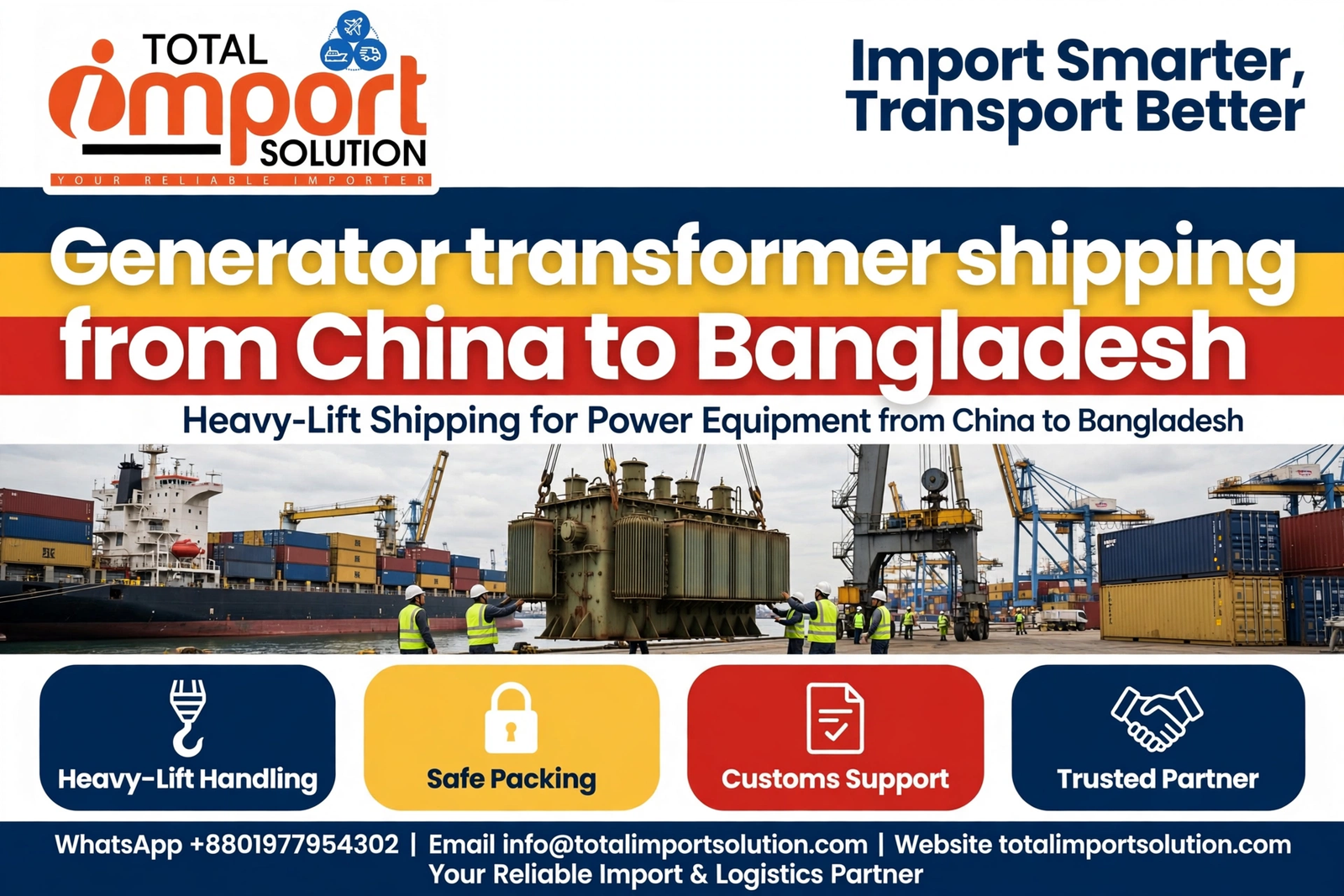
Heavy-lift handling is the careful lifting and moving of a machine that is too large or too heavy for normal cargo handling. A generator or a transformer often needs a crane, a forklift of suitable capacity, or special lifting gear. The lifting plan must match the weight, the centre of gravity, and the lifting points given by the factory.
Before lifting, the team checks the lifting points, the slings, the shackles, and the crane capacity. The team also checks the ground, the space around the machine, and the weather. A lift should never start without a clear plan and a person in charge.
Step by step, heavy-lift handling follows this order:
- Check the packing list and the factory lifting drawing.
- Check the lifting points and mark them clearly.
- Choose slings and gear that match the load and the lifting points.
- Check the crane, the forklift, and the ground where the lift will take place.
- Lift slowly, keep the load level, and watch for swing or tilt.
- Place the machine on the transport vehicle or in the stowage position.
- Lash the machine firmly and check the lashing again before movement.
4. Packing and lashing
Packing protects the machine from shock, water, dust, and movement. Lashing holds the machine in place during transport. Both must be planned together. Good packing without good lashing is not enough, and good lashing cannot fix weak packing.
The factory usually packs the machine in a wooden case, a steel frame, or a shrink wrapped frame, depending on the type and the route. The packing should cover fragile parts, seal openings, and protect the control panel, the bushings, and the exposed pipes. Desiccant and waterproof covering help protect against moisture during sea movement.
A buyer should ask for packing photos before the machine leaves the factory. The photos should show the case, the frame, the markings, and the lifting points. If the packing looks weak, the buyer should ask the supplier to improve it before loading.
Lashing uses chains, straps, or wire ropes to hold the machine to the vehicle or the vessel deck. The lashing points should be strong and should not press on fragile parts. Wooden blocks and dunnage stop the machine from sliding. The lashing should be checked after loading and again after the first stage of movement, where a check is possible.
| Packing item | Purpose | Check point |
|---|---|---|
| Wooden case or frame | Protect body and parts | No crack, no loose board |
| Waterproof cover | Protect from rain and sea spray | No tear, sealed edges |
| Corner protection | Protect edges during handling | Fitted on all corners |
| Desiccant | Reduce moisture inside case | Placed inside, sealed |
| Marking and labels | Show lifting points and handling | Clear, correct, visible |
| Lashing and dunnage | Hold load in place | Tight, correct points |
5. Documents needed
Documents are the backbone of an import shipment. Without the right papers, a machine can wait at the port while the buyer, the supplier, and the agent try to fix the gap. A buyer should collect every paper before the vessel sails.
The core papers for a generator or transformer shipment usually include a commercial invoice, a packing list, a bill of lading, a certificate of origin, and the import papers required in Bangladesh. The buyer should also keep the letter of credit papers, where a letter of credit is used, and any inspection papers that apply to the shipment.
The invoice should describe the machine clearly. The packing list should show each package, its contents, and its marks. The bill of lading should show the shipper, the consignee, the notify party, the port of loading, the port of discharge, and the description of the cargo. Every paper should match the others. A mismatch in name, quantity, or description can cause questions at customs.
| Document | What it shows | Common check |
|---|---|---|
| Commercial invoice | Seller, buyer, machine, value | Description matches packing list |
| Packing list | Packages, contents, marks | Count matches actual packages |
| Bill of lading | Shipment, ports, parties | Consignee and ports correct |
| Certificate of origin | Country of origin | Issued by the right authority |
| Import papers | Buyer import registration | Valid and in buyer name |
| Letter of credit papers | Payment terms, if used | Terms match invoice and shipment |
| Inspection papers | Inspection result, if needed | Matches machine and papers |
A buyer should ask the supplier to send draft papers before the final papers are issued. Draft papers give the buyer and the agent time to check spelling, quantities, and descriptions. A small spelling error is easy to fix in a draft and hard to fix after the vessel has sailed.
6. HS classification in general terms
HS classification is the system used to place a product under a code for customs. The code helps customs identify the product, check the papers, and apply the rules that relate to that product group. For a generator or a transformer, the correct HS code depends on the type of machine, its main function, and its construction.
A buyer should not guess the code. The supplier, the agent, and the customs consultant should check the machine description together and select the code that fits the actual machine. A wrong code can cause questions, delay, or a need to correct the papers.
| Item | Classification point | Why it matters |
|---|---|---|
| Main machine | Type and function | Sets the main code group |
| Control panel | Function and use | May need separate checking |
| Spare parts | Part type | May fall under a different code |
| Cables and fittings | Material and use | Listed separately on packing list |
| Oil and fluids | Type, if shipped with machine | Check rules before shipping |
A rate or a fee is confirmed only after checking the actual shipment and documents. The HS code alone does not fix a rate or a fee. The duty and tax treatment depends on the code, the value, the origin, and the rules in force at the time of clearance. The agent should explain the process in general terms and confirm the figures only after the papers are checked.
7. Step-by-step process from order to delivery
A clear process helps a buyer follow the shipment from order to site. Each step has a task, a paper, and a person in charge. When a step is missed, the next step becomes harder.
Step 1. Confirm the machine and the site need. The buyer checks the power need, the space, the road, and the lifting facility at site. The buyer confirms the machine type with the supplier.
Step 2. Confirm the supplier and the order terms. The buyer agrees the machine description, the packing method, the payment terms, and the delivery terms with the supplier. The buyer keeps a written order confirmation.
Step 3. Arrange the shipping agent. The buyer shares the machine details, the packing photos, and the draft papers with the agent. The agent plans the route, the port, and the handling method.
Step 4. Prepare the papers. The supplier prepares the invoice, the packing list, and the certificate of origin. The buyer prepares the import papers. The agent checks the drafts for matching details.
Step 5. Pack and inspect at the factory. The supplier packs the machine, marks the case, and sends photos. The buyer or the agent checks the packing and the lifting points. An inspection is arranged where one is needed.
Step 6. Move to the port in China and load. The machine is moved to the port, lifted, lashed, and loaded. The agent confirms the loading and collects the bill of lading.
Step 7. Sea movement and tracking. The agent tracks the vessel and updates the buyer on the expected arrival. The buyer prepares the customs papers during this time.
Step 8. Arrive at the port in Bangladesh and unload. The machine is unloaded, checked for visible damage, and moved to the port yard. The agent records the condition on arrival.
Step 9. Customs clearance. The agent submits the papers, answers questions, and arranges inspection where needed. The buyer pays the assessed charges through the proper channel after the assessment is confirmed.
Step 10. Release and road transport. After release, the machine is loaded on a suitable truck or trailer, lashed, and moved to site. The route is checked for height, width, and weight limits.
Step 11. Site unloading and handover. The machine is unloaded at site, checked, and handed over to the buyer or the installation team. The buyer signs a receipt after checking the condition and the packing list.
| Step | Task | Paper or proof |
|---|---|---|
| 1 to 2 | Confirm machine and order | Order confirmation |
| 3 to 4 | Agent and papers | Draft invoice and packing list |
| 5 to 6 | Pack, inspect, load | Photos, bill of lading |
| 7 to 8 | Sea move, arrival | Vessel update, arrival check |
| 9 to 10 | Clearance, road move | Release papers, transport plan |
| 11 | Site handover | Signed receipt |
8. Customs clearance
Customs clearance is the process of submitting the import papers, having them checked, and getting release for the machine. The process needs correct papers, a clear description, and a patient approach. A buyer who prepares early will face fewer questions.
During inspection, the officer may ask for the technical sheet, the catalogue, or the name plate photo. The agent should have these ready. A clear explanation of what the machine does helps the officer complete the check. If a part is not listed on the packing list, the officer may ask for a correction.
A rate or a fee is confirmed only after checking the actual shipment and documents. The buyer should ask the agent to explain each charge in plain terms after the assessment. The buyer should keep receipts for every payment made through the proper channel.
| Clearance stage | What happens | Buyer action |
|---|---|---|
| Paper submission | Bill of entry and papers filed | Share correct papers early |
| Paper checking | Officer checks description and value | Answer queries through agent |
| Inspection | Cargo checked at port | Keep technical sheet ready |
| Assessment | Charges assessed on papers | Ask for plain explanation |
| Payment and release | Payment through proper channel | Keep receipts, confirm release |
9. Delivery to site
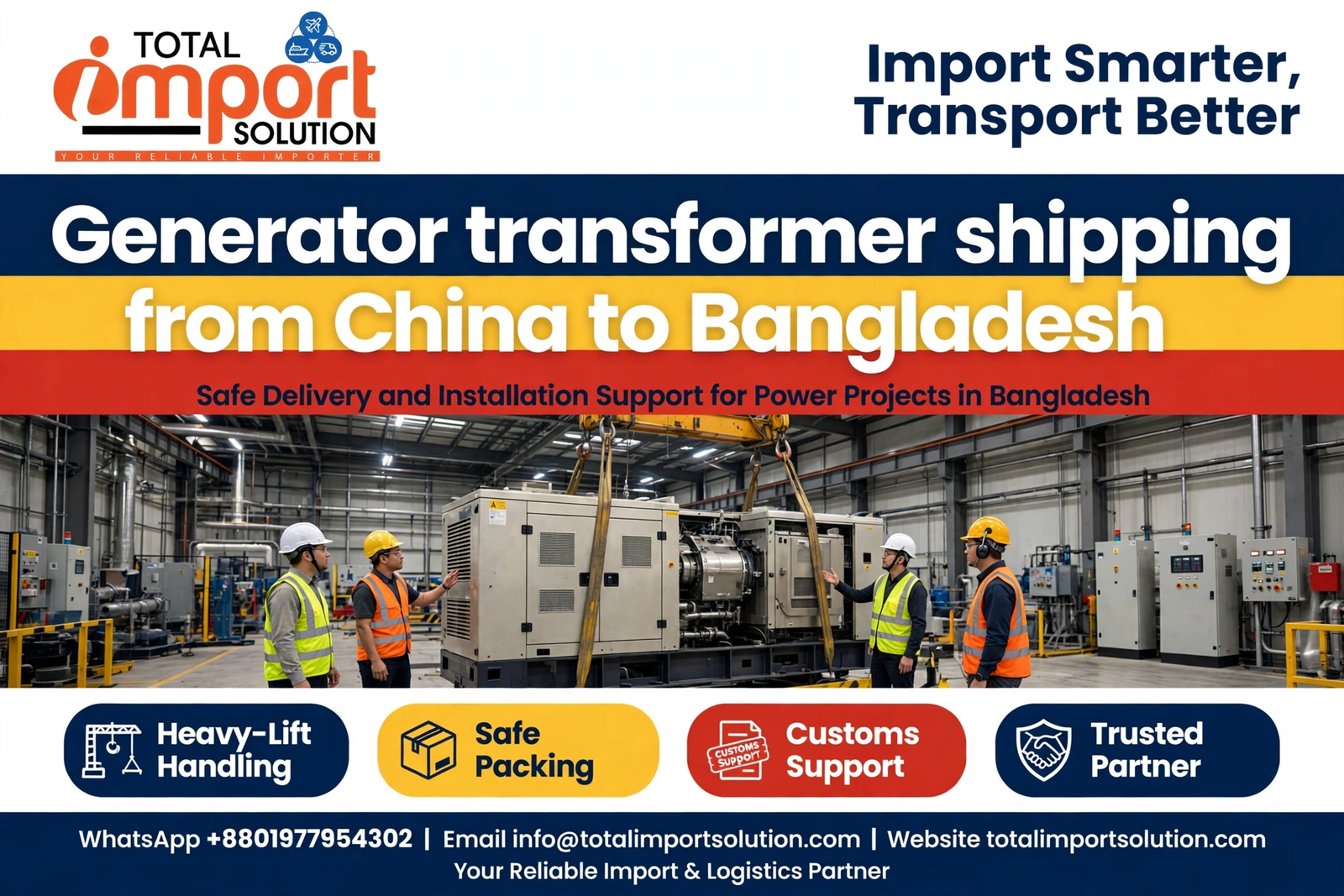
Delivery to site is the last leg of the journey and it needs as much care as the sea leg. A heavy machine on a truck needs a safe route, a suitable vehicle, and a ready site. A buyer who plans the site early will avoid a truck waiting at the gate with no place to unload.
The agent and the transport team check the route before the truck leaves the port. The check covers road width, bridge limits, overhead wires, turning space, and the condition of the road to the site. The team also checks the gate width, the yard space, and the ground where the machine will be unloaded.
Step by step, site delivery follows this order:
- Confirm the route, the vehicle, and the site contact.
- Load the machine at the port and lash it firmly.
- Move to site with a planned route and a site contact on call.
- Arrive at site and check the unloading area and the lifting gear.
- Unload slowly, keep the load level, and place it in the planned position.
- Check the packing, the machine, and the accessories against the packing list.
- Sign a receipt after the check and keep a copy with the shipment file.
10. Common problems and fixes
Even a well planned shipment can face problems. The key is to find the problem early and fix it with a clear plan. The table below lists common problems and practical fixes.
| Problem | Likely cause | Fix |
|---|---|---|
| Packing damage on arrival | Weak case, rough handling | Photo record, inform agent, check machine |
| Oil leak from transformer | Loose seal, tilt during lift | Stop work, check seals, follow factory advice |
| Missing paper at port | Draft not checked, supplier delay | Ask supplier for correct paper, inform agent |
| Description mismatch | Invoice and packing list differ | Correct papers with supplier before clearance |
| Port congestion | Vessel bunching, yard full | Plan buffer time, keep agent updated |
| Road not ready for heavy load | Route not checked in advance | Check route, use suitable vehicle, plan alternate route |
| Site crane not available | Booking not confirmed | Confirm crane before truck leaves port |
| Control panel damage | Poor protection, shock | Check panel, test with supplier advice |
| Spare parts missing | Not listed on packing list | Check list, ask supplier for proof |
| Customs query on code | Technical sheet missing | Share catalogue and name plate photo |
If damage is found, the buyer should take photos from several angles, keep the packing as it is, and inform the agent in writing. The agent can advise on the next step, which may include a survey, a claim process, or a repair plan with the supplier.
11. How to judge a good shipping agent
A good shipping agent for generators and transformers is judged by planning, communication, and care, not by promises. A buyer should look for an agent who asks detailed questions about the machine, the packing, and the site before giving a plan.
The buyer should check the agent’s experience with heavy machinery. The agent should have handled generators, transformers, or similar heavy cargo before. The buyer can ask for examples of past heavy machinery shipments and how problems were solved. A clear answer shows experience. A vague answer is a warning sign.
| Quality | What to look for | Question to ask |
|---|---|---|
| Planning | Written plan for lift, port, and site | Can you show the plan for my machine |
| Communication | Regular updates, clear replies | How will you update me at each stage |
| Paper checking | Draft check before sailing | Will you check my drafts before loading |
| Heavy cargo experience | Past generator or transformer work | What heavy machines have you handled |
| Port and site knowledge | Route and crane planning | Have you planned this route before |
| Honest costing | Cost confirmed after paper check | When will the cost be confirmed |
A buyer should also check how the agent handles a problem. A good agent informs the buyer early, suggests a fix, and follows up until the fix is done. A buyer should avoid an agent who hides problems or who gives a cost without checking the papers.
12. Working with your agent and mistakes to avoid
Working well with a shipping agent starts with sharing full and correct information. The buyer should share the machine type, the packing photos, the draft papers, the site address, and the site contact at the start. When the agent has the full picture, the agent can plan the lift, the port work, and the road delivery without guesswork.
Mistakes to avoid are simple but common. The first mistake is ordering without checking the site. The second mistake is accepting weak packing to save time. The third mistake is sending final papers without a draft check. The fourth mistake is planning road delivery only after the vessel arrives. The fifth mistake is hiding a problem from the agent.
Step by step, good cooperation looks like this:
- Share machine details, photos, and drafts at the start.
- Agree the plan, the timeline, and the contact person in writing.
- Reply to queries the same day where possible.
- Confirm the crane, the vehicle, and the site readiness before the truck leaves the port.
- Check the machine on arrival and sign a receipt only after the check.
- Keep a file of every paper, photo, and receipt for the shipment.
Since 2016, Total Import Solution has worked with machinery importers in Bangladesh, and the team has seen how small early checks prevent large later problems. A buyer who plans the site, checks the packing, and shares drafts early will usually have a smoother shipment than a buyer who leaves these checks to the last day.
13. How Total Import Solution helps
Since 2016, Total Import Solution has helped buyers bring generators and transformers from China to Bangladesh with a planned and practical service. The team works as an import and logistics partner for factories, power projects, and commercial buyers who need heavy machinery moved with care.
The help starts before the machine leaves the factory. The team checks the machine description, the packing photos, and the draft papers with the buyer and the supplier. The team plans the heavy-lift handling, the port work, and the road delivery to site. The team also explains the customs process in plain terms so the buyer knows what to expect.
At the port in Bangladesh, the team supports customs clearance by preparing the bill of entry with the buyer papers, answering queries, and arranging inspection where needed. After release, the team arranges road transport to site with a suitable vehicle and a checked route. At site, the team supports unloading and handover with a clear check against the packing list.
| Service area | What the team does |
|---|---|
| Planning | Machine check, packing check, route and site plan |
| Papers | Draft check, bill of entry support, file keeping |
| Heavy handling | Lift plan, lashing check, port coordination |
| Customs support | Submission, query handling, inspection support |
| Delivery | Vehicle, route check, site unloading support |
| Updates | Stage updates, problem alerts, receipt file |
A rate or a fee is confirmed only after checking the actual shipment and documents. The team will not give a fixed figure before seeing the machine details and the papers. This careful approach protects the buyer from a wrong estimate and helps the team plan the real work needed for the shipment.
Frequently Asked Questions
1. What is generator transformer shipping from China to Bangladesh?
It is the planned movement of a generator or a transformer from a factory in China to a site in Bangladesh, including packing, lifting, sea movement, customs clearance, and road delivery.
2. Can a generator and a transformer travel in the same shipment?
They can travel together only if the packing, the lifting plan, and the papers allow it. Each machine needs its own packing list entry and its own handling check.
3. What papers do I need before the vessel sails?
You need the commercial invoice, the packing list, the bill of lading, the certificate of origin, and the buyer import papers. Drafts should be checked before the final papers are issued.
4. Why is packing so important for a transformer?
Packing protects the tank, the bushings, the windings, and the control parts from shock, water, and dust. Weak packing can cause damage that is hard to repair at site.
5. How is a heavy generator lifted safely?
The team checks the lifting points, the slings, and the crane capacity, lifts slowly, keeps the load level, and lashes the machine firmly after placement.
6. What is HS classification in simple terms?
It is the system used to place a product under a code for customs. The code depends on the type, the function, and the construction of the machine.
7. Who checks the HS code for my machine?
The supplier, the agent, and the customs consultant check the machine description together. The buyer should share the catalogue and the name plate photo for this check.
8. How does customs clearance work for heavy machinery?
The agent submits the bill of entry with the papers, the officer checks the description and the cargo, an inspection may follow, and release is given after the assessment and the proper payment.
9. What should I check at the site before delivery?
Check the road, the gate width, the yard space, the ground, and the crane or forklift. Confirm the site contact and the unloading area before the truck leaves the port.
10. What if my machine is damaged on arrival?
Take photos from several angles, keep the packing as it is, and inform the agent in writing at once. The agent will advise on the survey and the next step.
11. Can spare parts travel with the main machine?
Yes, spares can travel with the main machine if they are packed separately and listed clearly on the packing list with their own description.
12. Why should I share draft papers with my agent?
Draft papers give the agent time to check spelling, quantities, and descriptions. A small error is easy to fix in a draft and hard to fix after the vessel has sailed.
13. How do I choose a good shipping agent for heavy cargo?
Look for clear planning, regular updates, draft checking, and past experience with heavy machinery. Ask the agent to explain the lift, port, and site plan in plain terms.
14. What is the most common mistake in generator shipping?
The most common mistake is poor planning at the site. A buyer orders the machine without checking the road, the gate, or the crane, and the truck cannot unload on arrival.
15. How can Total Import Solution help with my shipment?
The team checks the machine and papers, plans the lift and the route, supports customs clearance, arranges road delivery, and updates the buyer at each stage.
16. How do I start a generator transformer shipment with Total Import Solution?
Contact the team with the machine type, the packing details, and the site address. The team will review the details and explain the next steps in plain terms.
Contact Total Import Solution
- WhatsApp: +8801977954302
- Email: info@totalimportsolution.com
- Website: totalimportsolution.com
- Call +8801977954302 for help with generator transformer shipping from China to Bangladesh.
