
Should you lease a shipping container for a short time, or for a long time? It depends on how often you ship, how long you need the container, where it will be used, and how much flexibility you need if your plans change. A first-time importer with one trial shipment has different needs from a manufacturer that exports every month.
This guide explains both options in plain terms: what each means, how they compare, when to choose each, how to switch, extend or return, sizes and types, documents, inspection, delivery, and cost factors. No fixed prices are listed here. A rate is confirmed at booking, depending on size, type, condition, duration, delivery location and availability.
What Is Container Leasing?
Container leasing means you use a container owned by someone else for an agreed period and purpose, and return it at the end. You do not own the container. The lease normally covers the container itself. Transport, loading, unloading, port handling and customs work are often separate, so ask clearly what is included before you agree.
Leasing differs from buying. When you buy, you own the unit and handle storage, maintenance and resale. When you lease, you pay for use over a set period and return it when it ends. It suits a temporary need, a single shipment, or a requirement that changes month to month. A flexible lease lets you choose a fitting duration and change it within the agreed terms. Read those terms before you sign, and keep a copy. Before you enquire, note the cargo, volume and weight, delivery location, duration, and whether it will stay or move.
What Is Short-Term Container Leasing?
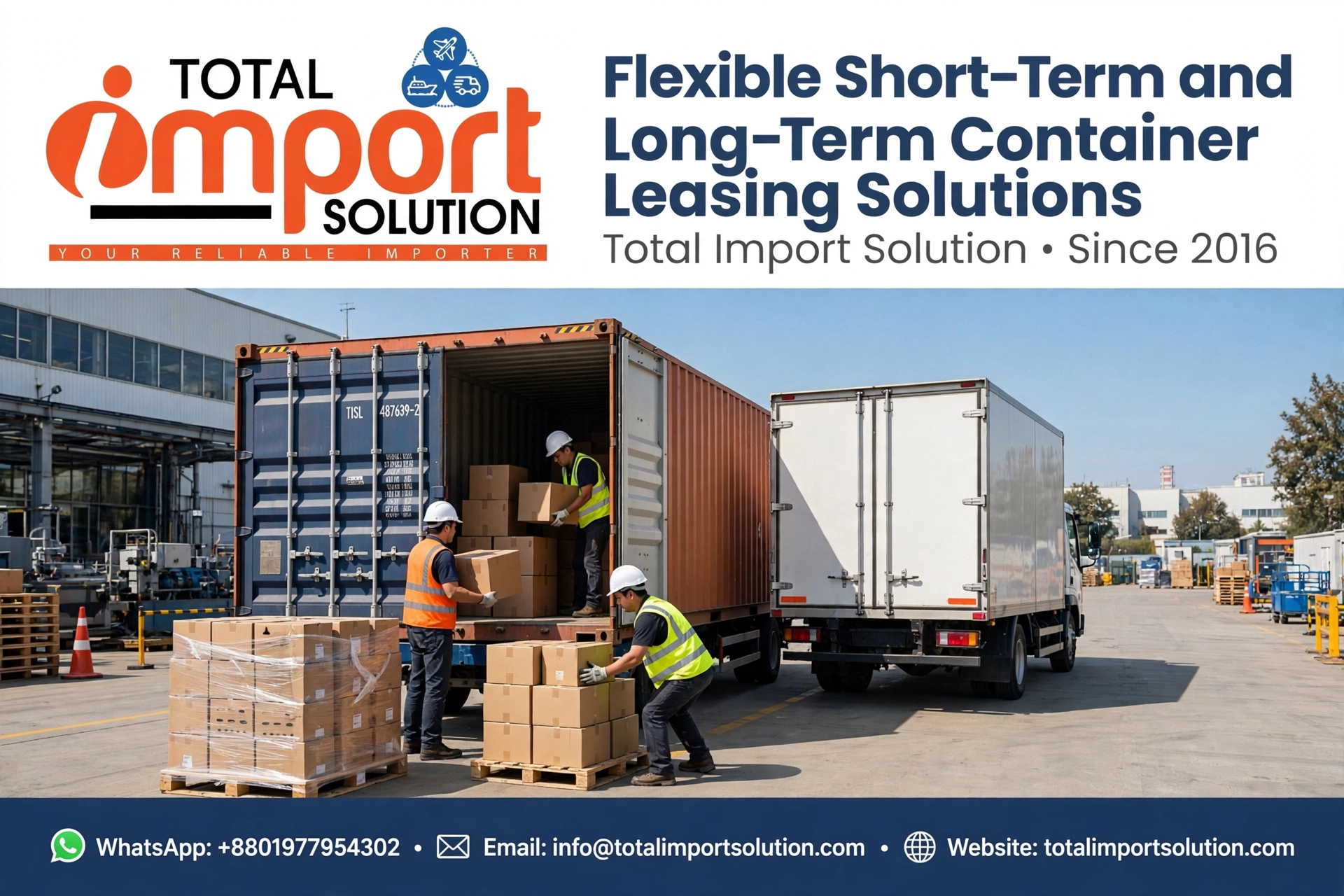
Short-term leasing means leasing for a short period, often days or a few weeks, sometimes one or two months. It is used for a single purpose with a clear end date, such as one import shipment, one export loading, short storage at a factory, or a project lasting a few weeks.
It suits a first-time importer starting with one trial order, a trader needing extra storage in a busy season, a construction company needing a container for one phase of work, or a business testing a new route or supplier. The advantage is flexibility: you are not tied to a container for many months. Ask what happens at the end: can you extend it, how much notice is needed, and what is the rate if you keep it longer? Ask where it should be returned, who arranges transport, and whether it must be cleaned. Inspect it on delivery and take photos.
What Is Long-Term Container Leasing?
Long-term leasing means leasing for several months or longer, when the need is repeated or continuous. A manufacturer that exports every month, a warehouse storing stock all year, or a business with a steady flow of imports through Chittagong Port may need the same arrangement month after month.
It suits predictable, repeated demand and gives stability, because the container will be available for the agreed period without a new lease for every shipment. It also suits site storage, where a container stays for months as a store for tools, materials or stock. Check the doors and locks, and place it on a firm, level, dry surface. Ask how the lease is charged, what is included, whether there is a deposit, when payment is due, and what happens on early return or extension. Keep the lease note in writing, with size, type, period, delivery date, location and rate.
Short-Term vs Long-Term: A Side-by-Side Comparison
| Feature | Short-term leasing | Long-term leasing |
|---|---|---|
| Typical period | Days, a few weeks, or one to two months | Several months or longer |
| Best for | One shipment, a trial order, a short project, seasonal storage | Repeated shipments, steady storage, regular export or import |
| Flexibility | High — return at the end of a short period and change next time | Lower — a longer commitment, with terms for extension or early return |
| Planning | Less advance planning, useful when the need is sudden | More advance planning, useful when demand is predictable |
| Return | Return at the end of the short period, as agreed | Return at the end of the long period, or extend if agreed |
| Cost pattern | Cost is usually assessed for the short period you use | Cost is usually assessed per month over the longer period |
| Risk if plans change | Lower — a short commitment is easier to end | Higher if you return early without checking the terms first |
Do not choose by duration alone. A short-term lease suits a business that ships once, but it is inconvenient if you must arrange a new lease every few weeks. A long-term lease suits a business that ships every month, but it is a poor fit if demand stops after one month. Think about how often you will need a container in the next three to six months, not just this week.
When to Choose Short-Term Leasing
Choose short-term leasing when your need has a clear end date: a single import or export shipment, a trial order, a short project, or seasonal storage. Choose it when you are unsure how much space you will need later and want to start small, when the site is temporary, or when you want to test a supplier, route, or product before committing for longer. It also suits a specialist type needed once, such as an open-top container for top-loaded cargo or a flat-rack for oversized cargo, so you do not hold a specialist unit you will not use again soon. Enquire early for specialist types, as availability varies. Before you confirm, ask the exact period and return date, how extension works and is charged, and the return arrangement.
When to Choose Long-Term Leasing
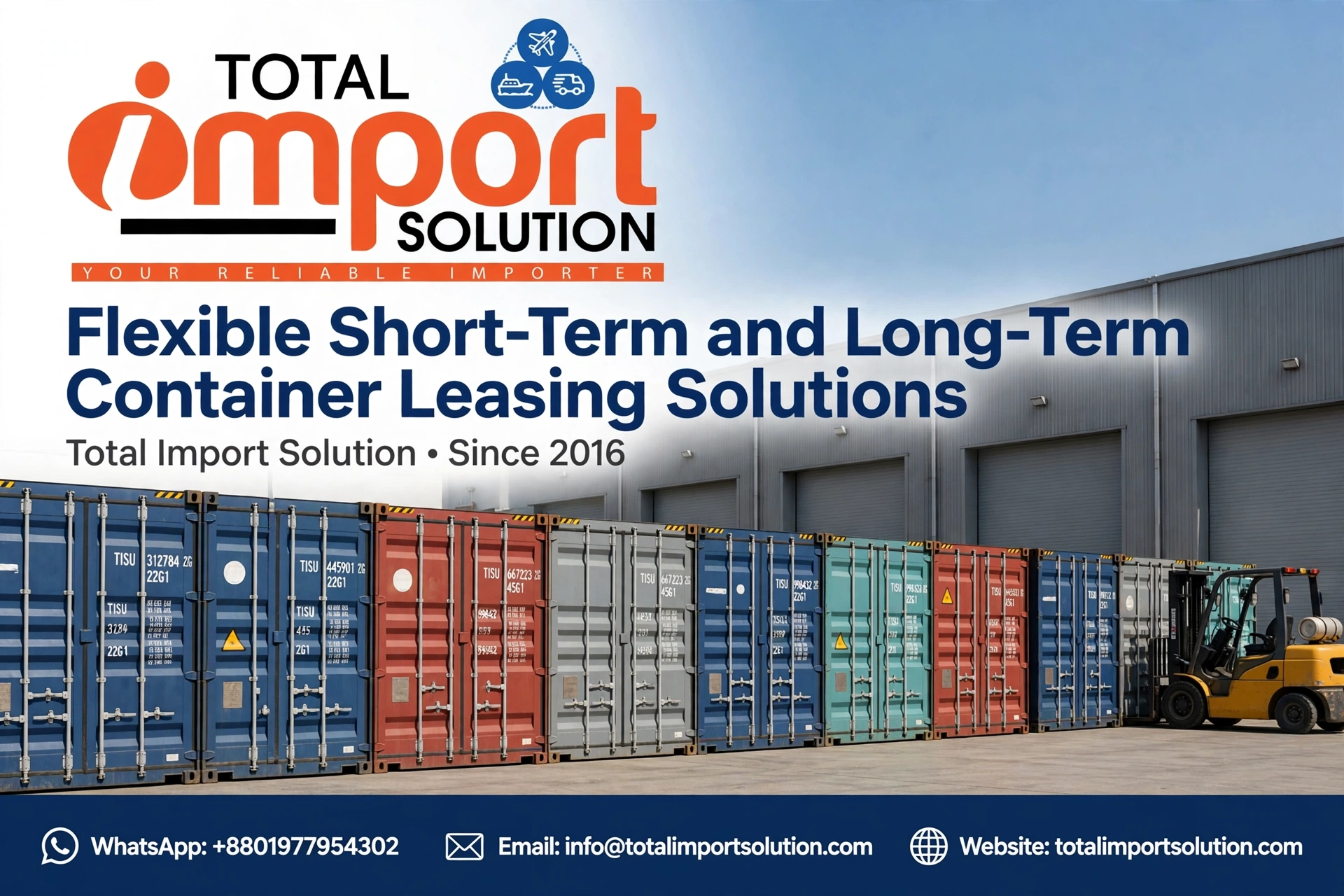
Choose long-term leasing when your need is repeated or continuous: a manufacturer exporting every month, an importer receiving goods every month, a warehouse storing stock all year, or a business with a steady flow through Chittagong Port. It is more practical than arranging a new short-term lease for every shipment, and it gives stability. It also suits site storage at a construction site, factory yard, or warehouse yard, where a container stays for months as a secure store. Choose a unit in good condition, check the doors and locks, place it on a firm, level surface where water does not collect, and keep the area clear so the doors open fully and a truck can reach it. Before you confirm, ask the full period and charging, the early-return and extension terms, and who handles inspection and maintenance.
How to Choose Between Short-Term and Long-Term
Step 1: Write down your requirement. Note the cargo, rough volume and weight, size and type, delivery location, date, and how long you need it. Share cargo details and ask for advice if you are unsure about the size.
Step 2: Look ahead for three to six months. If you need a container once, a short-term lease is often the first option to check. If you need one every month, a long-term lease may be more practical. If unsure, start short-term and learn before committing for longer.
Step 3: Compare the total cost, not just the period. Ask the rate for each option, how it is charged, what is included, and what is not included, such as delivery, transport, loading or port charges. Ask about any deposit, payment timing, and late-return terms. A rate is confirmed at booking, depending on size, type, condition, duration, delivery location and availability, so ask for it in writing.
Step 4: Check the delivery site. Measure the approach road, gate, turning space and placement area. A 40ft container needs a longer approach than a 20ft container. A narrow road, sharp turn, low gate, or small yard can make delivery difficult. A container staying for months needs a firm, level surface and space for access.
Step 5: Check the terms for change. Ask what happens if you need to extend, switch, or return early. A flexible lease has clear terms before you start. Ask how much notice is needed, whether the rate changes on extension, and whether early return costs extra. Get the terms in writing.
Step 6: Confirm and book. Once you agree on duration, size, type, delivery date, address and a contact person, confirm the booking. Make sure someone will be at the site to receive the container, and share gate or opening-time details in advance. Book early for a specific date, as availability in Chittagong changes with shipping demand.
How to Switch, Extend, or Return a Container
Plans change, and a good lease allows for that within clear terms. If a short-term lease runs on, you may want to extend it or switch to a long-term lease. If a long-term need stops, you may want to return early. In both cases, tell the supplier before the period ends, not after. Early notice allows time to arrange an extension, a replacement, or a collection, and avoids extra cost from keeping a container beyond the agreed period without notice.
To extend, share the new end date and ask whether the rate changes, and confirm the new terms in writing. To switch to long-term, ask for a fresh comparison and check whether the same container can stay. To return, arrange collection, make sure it is empty and clean as agreed, and confirm in writing that the lease is closed. If it is damaged in your care, raise it at once and take photos.
Sizes and Types in Brief
A 20ft container is compact, easier to place in a smaller yard and to move on a smaller road. A 40ft container is longer and holds roughly twice the volume in general terms, useful for a larger volume in one unit. Width and height are generally the same for both sizes, unless you choose a high-cube version, which is taller and gives extra volume for light, bulky cargo.
A standard dry container is the most common type: a closed steel box for general dry cargo such as packed goods, cartons and textiles. A reefer has a cooling unit for temperature-sensitive goods and needs power. An open-top has a removable roof for top-loaded cargo. A flat-rack has no side walls or roof for oversized cargo. Not every type is always available, so enquire early. Do not choose by length alone: a 20ft can suit dense, heavy cargo, while a 40ft can suit bulky, light cargo. Confirm the exact internal size of the unit offered, as the data plate is the reference.
Documents to Keep Ready
Keep the basic documents ready so the process does not stop. For a business lease, keep your trade licence or business registration, the delivery address, and the contact details of the person receiving the container. For an import, keep the bill of lading, commercial invoice and packing list ready. For an export, keep the export documents ready. Keep a lease note with the size, type, period, delivery date, location and rate, plus the container and seal number if used. If customs clearance is involved, your clearing and forwarding agent normally handles it, so share the container details with your agent in good time.
Inspection Checklist Before You Accept a Container
Check these points on delivery, and note anything wrong before you sign. First, the doors: open and close them, check the locking rods, handles and seals, and look for gaps. Second, the roof and walls: look for holes, dents, rust and daylight coming through. Third, the floor: check for broken boards, soft spots, stains and a strong smell. Fourth, the inside: check for water marks and previous cargo residue. Note the container number, take photos inside and outside, and if you find a problem that affects the cargo, raise it at once and ask for a replacement unit.
The same checklist applies to both lease types. For a long-term lease, check the container again from time to time, especially after heavy rain. If you notice a leak, a broken door, or floor damage, raise it at once and do not load cargo into a unit that is not suitable.
Chittagong Port, Customs, and Delivery
Chittagong Port is the main seaport for Bangladesh’s import and export cargo. For an import, the vessel arrives, the container is discharged, customs clearance is completed by your clearing and forwarding agent, and after clearance the container can be released for delivery to your warehouse or yard. For an export, the container is loaded at your factory or warehouse, sealed, sent to the port, and loaded on the vessel. Confirm the vessel cut-off time with your agent and plan transport so you do not miss it.
Delivery from the port is normally by road, so the truck must suit the container size and the driver must know the address and contact person. Delivery to Dhaka, Gazipur, Narayanganj and other cities is normally possible by road, but confirm the cost and timing for your address. Customs and port charges are separate from the lease cost in most cases, so ask which charges are included and which you will pay separately.
What Affects the Lease Cost?
No fixed price is given here, because the lease cost depends on several factors. Duration matters: a longer lease is usually assessed per month, while a short lease is assessed for the short period you use. Size matters: a 40ft container normally costs more than a 20ft container. Type matters: a reefer, open-top or flat-rack normally costs more than a standard dry container. Condition, delivery location and availability at the port also affect the cost. Always compare the total cost, including delivery and any deposit, and confirm it in writing before you book.
A rate is confirmed at booking, depending on size, type, condition, duration, delivery location and availability. Do not compare two quotes unless they cover the same size, type, period and delivery location. A low initial figure may exclude delivery, port handling or inland transport, so ask what is included before you decide.
Common Mistakes to Avoid
The most common mistake is choosing a duration without looking ahead. A business that books a short-term lease for one shipment, then needs the same container again next week, must arrange a new lease from scratch. A business that books a long-term lease for a need that ends after one month is left with a container it no longer needs. Look ahead for three to six months before you choose. Other mistakes are booking the wrong size, not measuring the site, loading without inspection, and keeping a container beyond the agreed period without notice.
Frequently Asked Questions (FAQs)
1. What is short-term container leasing?
Leasing for a short period, often days, a few weeks, or one to two months, for one shipment, a trial order, or a short project.
2. What is long-term container leasing?
Leasing for several months or longer, for repeated shipments, steady storage, or regular import and export work.
3. Which is better, short-term or long-term leasing?
It depends on your work. Short-term suits a single need; long-term suits repeated need.
4. Can I switch from short-term to long-term leasing?
In many cases, yes, if agreed in advance. Tell the supplier before the short period ends and ask for a fresh comparison.
5. Can I extend a container lease?
It depends on the terms and availability. Inform the supplier before the period ends.
6. What happens if I return a container early?
It depends on the terms. Ask about early return before you agree.
7. Which size should I choose, 20ft or 40ft?
A 20ft suits smaller or heavy loads and tight sites; a 40ft suits larger, bulky loads. Measure the site first.
8. Can I lease a high-cube container?
High-cube containers are available in general, but availability varies. Confirm the type and size at booking.
9. What documents do I need to lease a container?
Keep your trade licence, delivery address, contact details, and shipping documents ready.
10. Do I need customs clearance for a leased container?
If it is part of an import or export shipment, your clearing and forwarding agent normally handles customs clearance.
11. Can a leased container be delivered to Dhaka?
Yes, delivery by road is normally possible. Confirm the delivery cost and timing for your address.
12. How do I check a container before accepting it?
Check the doors, seals, roof, walls, and floor, look for leaks and damage, and take photos inside and outside.
13. What affects the lease cost?
Size, type, condition, duration, delivery location, and availability. A rate is confirmed at booking.
14. Is there a deposit for container leasing?
It depends on the terms. Ask about any deposit and how it is settled before you book.
15. How do I arrange a container lease with Total Import Solution?
Contact Total Import Solution by WhatsApp or email with your size, type, cargo, location, duration, and dates.
Total Import Solution — Contact Us
Total Import Solution, since 2016, provides sourcing and import support for businesses, including flexible short-term and long-term container leasing enquiries connected to shipments through Chittagong Port. For availability and a rate for your requirement, contact us:
- WhatsApp: +8801977954302
- Email: info@totalimportsolution.com
- Website: totalimportsolution.com
