
China to Bangladesh Trade Corridors
For many importers in Bangladesh, China is the first place they look when they need goods. Garments and textiles, machinery and spare parts, electronics, raw materials and household goods are sourced from Chinese suppliers every week. The goods are real, the supplier is ready, and the order is agreed — and then the importer faces the question that decides whether the order arrives smoothly or becomes a long series of problems: which corridor should the cargo take from China to Bangladesh?
A trade corridor is the whole route the cargo follows, from the supplier’s factory or warehouse in China to the importer’s warehouse in Bangladesh. It includes the export port, the sea leg, the arrival port, customs clearance, and the final delivery by road or river. A rate and a timing are confirmed at booking, depending on the cargo, the route, availability, documents, payment and port conditions.
What a Trade Corridor Really Means
A corridor begins before the cargo leaves China, with the supplier’s location. A factory in Guangzhou, Shenzhen, Ningbo or Shanghai sits close to a major export port, so the goods can move from the factory to the port by road in a short local leg. A factory further inland needs a longer road or rail leg to reach the port, and that leg adds cost, handling and time. The first question is therefore simple: where exactly is the supplier, and how far is that place from the port the cargo will leave from?
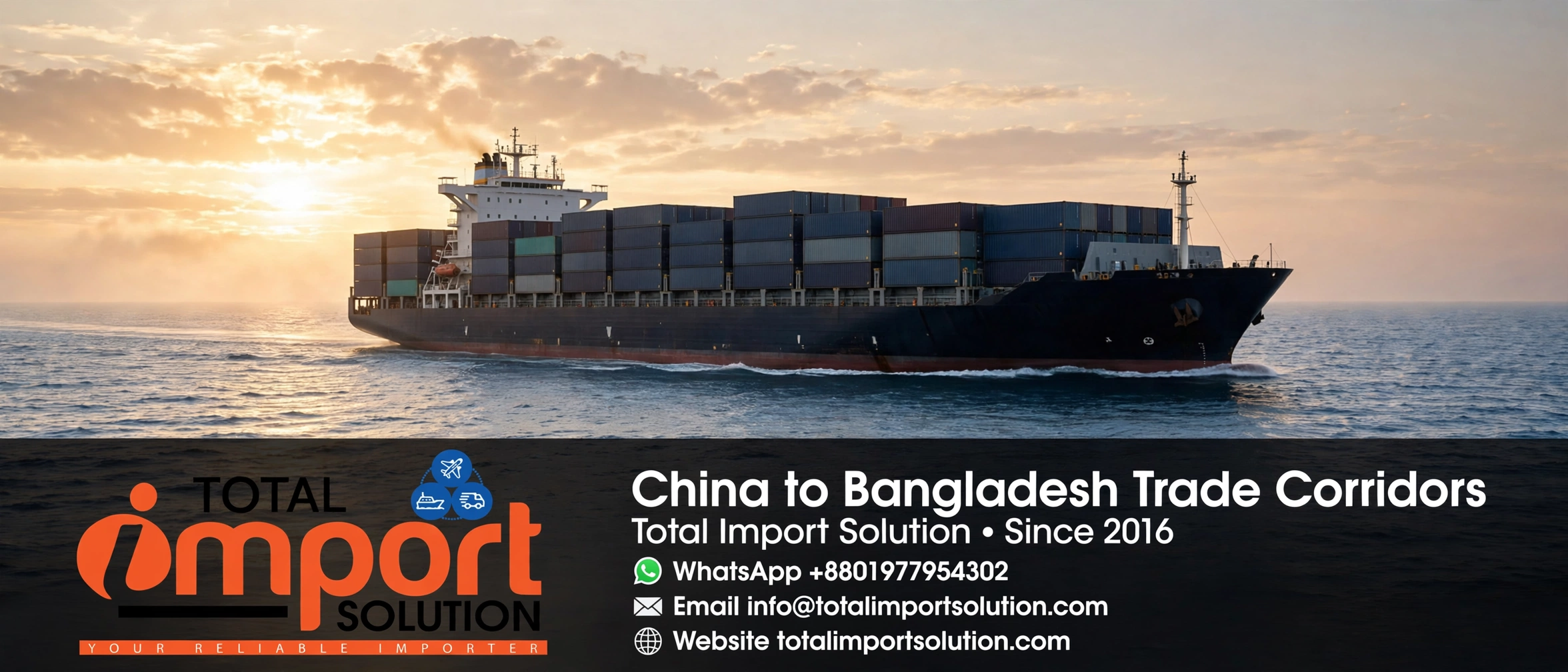
The second part is the main leg, which for most cargo between China and Bangladesh is by sea. Containers are loaded at a Chinese port, carried by vessel, and discharged at a Bangladeshi port. The third part is what happens after arrival: the container is discharged, customs formalities are completed, duties and charges are settled, and the cargo is released for the final leg by road to Dhaka or another destination, or by river where that suits. A good corridor is one where every leg is planned together, as one plan.
The Main Sea Corridor from China to Bangladesh
The main sea corridor runs from the export ports on the China coast to the seaports of Bangladesh. On the China side, the best-known export ports include Shanghai, Ningbo, Shenzhen and Guangzhou. The right export port is usually the one closest to the supplier.
On the Bangladesh side, the main seaport is Chittagong, which handles the bulk of the country’s container trade. Mongla is the other seaport, serving importers in the south-west and other parts of the country where it is the nearer gateway. The choice between them depends on where the cargo is going, what the buyer needs, and what the shipping arrangement allows. Direct and transhipment services both exist on this corridor. A direct service carries the container from the export port to the arrival port without an intermediate discharge, while a transhipment service discharges it at a hub port and loads it onto another vessel for the final leg. Ask for the full routing in writing.
Ports and Gateways on Both Sides
A port is more than a place where ships stop. It is a working area with yards, gates, warehouses, customs offices and transport links, and each port works in its own way. On the China side, the export port receives the container from the supplier, checks it in, and loads it onto the vessel. The supplier or the export agent prepares the export documents, and the container is sealed before it enters the port. A container that arrives late or with incomplete documents can miss its sailing.
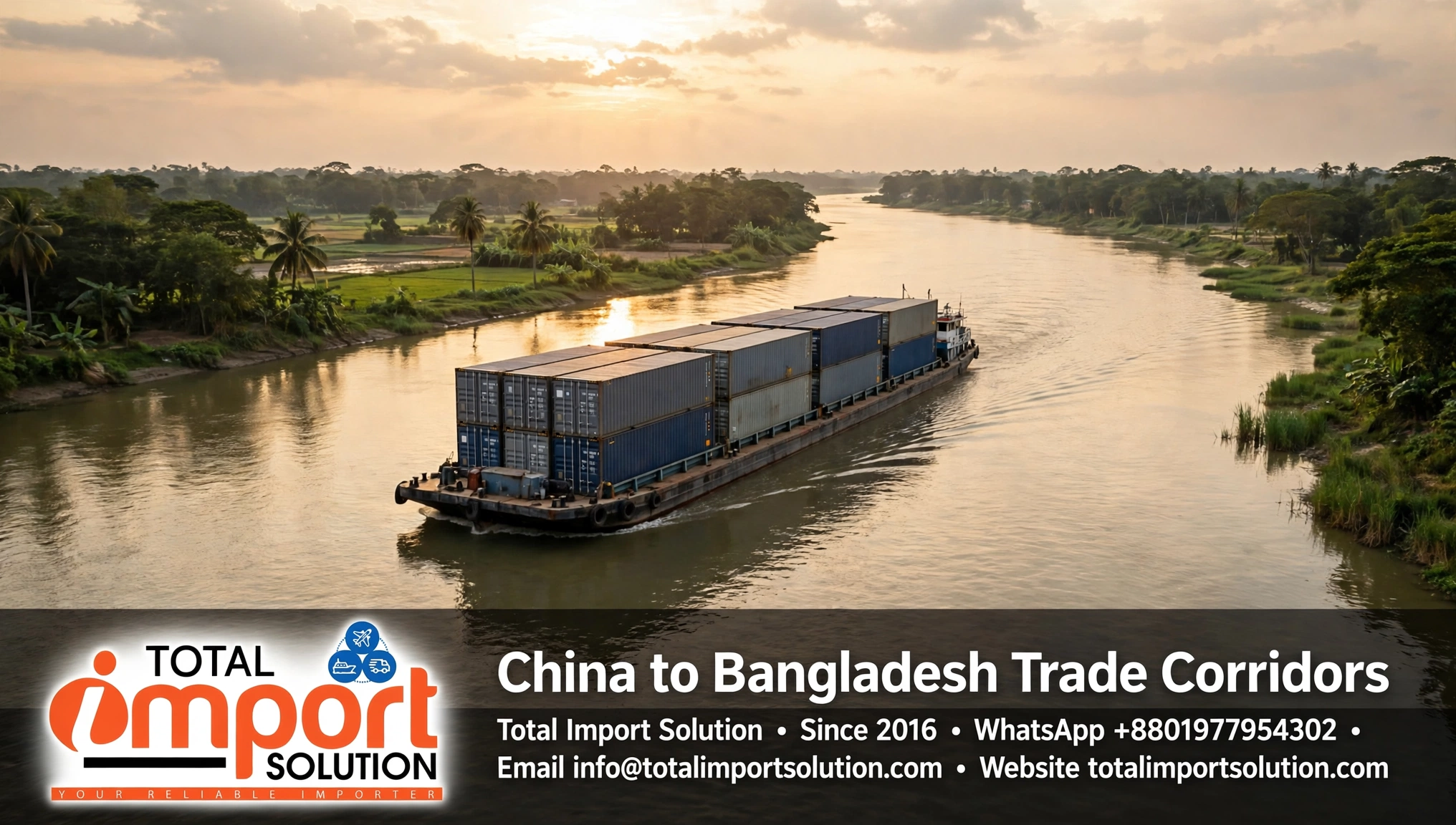
On the Bangladesh side, Chittagong Port receives the container, and the importer’s clearing agent works through the import formalities. The container is held in the yard while documents are checked and duties are settled, so the importer should stay in contact with the clearing agent. Mongla Port offers an alternative gateway, smaller than Chittagong, suiting cargo whose final destination is nearer to it. An importer should not choose a port only because it looks nearer on a map: the road to the warehouse, the availability of transport, and the clearing arrangements at that port all matter. Containers discharged at Chittagong can move inland by road, or by river where that suits the cargo.
How Cargo Moves Step by Step
A shipment follows a sequence, and each step depends on the one before it. First, the order is agreed with the supplier: the goods, the quantity, the packing, the price terms and the delivery terms are confirmed in writing, because the delivery terms decide who arranges the transport and who pays for which leg. Second, the supplier packs the goods for sea transport, loads and seals the container, and prepares the invoice, packing list and any certificates.
Third, the container moves to the export port and is loaded onto the vessel. The shipping line or its agent issues the bill of lading, the key transport document. The importer should receive a copy and check the shipper, the consignee, the port of loading, the port of discharge, the container number, the seal number, and the description of the goods. Fourth, while the vessel is at sea, the importer prepares the import documents and the payment arrangement. Fifth, the vessel arrives and the container is discharged at Chittagong or Mongla; the clearing agent files the import declaration, customs checks the documents and the goods, duties and charges are assessed and paid, and the container is released. Sixth, the container moves to the warehouse, and the goods are checked against the packing list. A delay at one step pushes the whole shipment later.

Choosing the Right Corridor for Your Cargo
Not every corridor suits every cargo. Full container loads suit importers who have enough cargo to fill a container on their own: the container is loaded with one importer’s goods, sealed at the factory, and opened only at the destination warehouse. Consolidated cargo suits importers with smaller quantities: several importers’ goods share one container, and the goods are separated at the destination. The importer should confirm how the goods will be separated and what charges apply.
The type of goods also shapes the choice. General dry goods — garments, textiles, household items, packaged products — travel in a standard dry container. Machinery needs careful packing and sometimes a flat rack or an open-top container, depending on its size and shape. Goods that need a steady temperature need a reefer container, and the importer should confirm that it holds its temperature through the journey. Fragile goods need extra packing and clear marking. The destination matters too: Dhaka-area importers usually plan around Chittagong, while south-west importers may look at Mongla.
Documents and Customs: What to Prepare
Documents are where many China to Bangladesh shipments slow down. The goods can be ready, the vessel can be on time, and the shipment can still wait at the port because a paper is missing or a detail does not match. The commercial invoice is the supplier’s statement of what was sold, to whom, at what price, and on what terms. The packing list states what is inside each package: the number of cartons, the contents, the weight and the measurements. The bill of lading is the transport document issued by the shipping line. These three documents should agree with each other. If the invoice and the packing list disagree, customs will ask questions.
The importer also needs the documents for the Bangladesh side: the import registration, the letter of credit or other payment document, the insurance document where it applies, and any certificate the goods require. Check before the goods leave China whether any certificate is needed. Customs in Bangladesh checks the declaration against the documents and, where needed, inspects the goods. The importer should give the clearing agent complete and honest information: the true description, the true quantity, and the true value. A clear and honest declaration is usually the fastest way through customs. Keep a full file for each shipment.
What Shapes the Cost
Importers often ask for a single rate for the corridor. In practice, the total cost is made up of several parts, and each part moves for its own reasons. The sea freight is the charge for carrying the container from the export port to the arrival port, and it depends on the route, the container size and type, the volume of trade at the time, and availability. Ask for the sea freight in writing, with the port pair and container type stated.
The local charges at the export port cover handling, documentation and the movement of the container inside the port, while the local charges at the arrival port cover discharge, yard handling, and the port’s own fees. Customs duty is assessed on the goods by classification and value; ask the clearing agent for an estimate before the goods sail. The final delivery charge covers the truck or river leg to the warehouse. Allow for storage, demurrage, insurance and the clearing fee, and keep a small reserve. A rate is confirmed at booking, depending on cargo, route, availability, documents, payment and port conditions.
What Shapes the Timing
Timing on this corridor is shaped by many small factors, and the importer should plan with room for them. The factory’s production time comes first: the supplier needs time to make or prepare the goods, pack them, and load the container. Confirm the production time in writing.
The booking and the sailing come next. The container must be booked on a vessel, delivered to the port, and loaded before the vessel’s closing time. A booking made late, or a container delivered after the closing time, will miss the sailing and wait for the next vessel. The sea leg depends on the route and whether the service is direct or transhipment. Do not plan around a single arrival date. Have the documents ready before the vessel arrives, and add a margin for steps that cannot be controlled.
Common Problems and How to Avoid Them
Most problems on this corridor happen again and again, for the same reasons. The first is a document mismatch: the invoice, the packing list and the bill of lading disagree on a quantity, a description or a value. The fix is to check the three documents against each other before the goods leave China, and to ask the supplier to correct any mistake while the goods are still at the factory. The second problem is poor packing: cartons that are not strong enough, goods that are not secured inside the container, and cargo that can move when the vessel rolls can all arrive damaged. Confirm that the packing suits sea transport.
The third problem is a missed sailing: the container reaches the port after the closing time, or the booking was not confirmed, and the container waits for the next vessel. The fourth problem is a delay at the Bangladesh port: the container is discharged, but the documents are not ready, the duty money is not ready, or the clearing agent has not been given the full file, so the container waits in the yard and storage charges build up. The fifth problem is a surprise charge: the importer compares two offers by the headline rate, and finds later that one offer left out port charges, documentation, or the final delivery. The sixth problem is a wrong port choice, made because a port looks nearer on a map without checking the road, the transport, or the clearing arrangements. Plan the whole corridor to the warehouse door.
Cargo Types and Working with a Partner
Each cargo type needs its own care. Garments, textiles and fabrics are light for their size, fill a container by volume before they reach the weight limit, and need dry, clean containers: a damp or unclean container can damage a whole load. Machinery and spare parts are heavy and can be awkward in shape, so they need to be secured so that they do not move, and small parts should be packed in strong cartons or crates with a clear packing list. Electronics need dry, cushioned packing, and industrial goods need care with classification and certificates. Whatever the cargo, the packing should suit the sea journey, the container should suit the cargo, and the documents should describe the cargo honestly.
Few importers handle every step on their own. Most work with a supplier in China, a shipping arrangement, and a clearing agent in Bangladesh, and often with an importer or trade service that brings the whole chain together. Agree the scope in writing — who books the vessel, who prepares which documents, who clears customs, who arranges the final delivery, and what each part costs — so that no step is left to assumption. Total Import Solution has worked as an importer since 2016, and the same principles apply to its work: plan the corridor as one journey, check the documents early, and keep the importer informed at each step.
A Practical Checklist Before You Confirm
Before confirming a shipment, work through this checklist. First, confirm the supplier, goods and delivery terms in writing. Second, confirm the corridor as one plan, including the final road or river leg. Third, confirm the documents agree and are ready before the vessel sails.
Fourth, confirm the costs in writing and keep a reserve. Fifth, confirm the timing and add a margin. Sixth, confirm the container suits the cargo and record the seal number. Seventh, confirm the communication: agree who will update the importer at each stage, and how. This plan makes a shipment easier to manage when something goes wrong.
Frequently Asked Questions
1. What is a China to Bangladesh trade corridor?
It is the whole route a shipment follows, from the supplier in China to the importer’s warehouse in Bangladesh, including the export port, the sea leg, the arrival port, customs clearance, and the final delivery by road or river.
2. Which is the main arrival port in Bangladesh for cargo from China?
Chittagong is the main seaport and handles the bulk of the country’s container trade. Mongla is the other seaport.
3. Which export ports in China are used for Bangladesh cargo?
The best-known export ports include Shanghai, Ningbo, Shenzhen and Guangzhou, along with other ports along the coast. The right export port is usually the one closest to the supplier.
4. Should I choose a direct service or a transhipment service?
A direct service carries the container to the arrival port without an intermediate discharge and is simpler to follow. A transhipment service discharges at a hub port and loads onto another vessel, and it can offer more sailing options. Ask for the full routing in writing before confirming.
5. What documents do I need for a shipment from China to Bangladesh?
The key documents are the commercial invoice, the packing list and the bill of lading, along with the import registration, the payment documents, and any certificate the goods require. They should agree with each other.
6. How do I avoid a delay at customs in Bangladesh?
Prepare the import file while the vessel is at sea, give the clearing agent complete and honest information, and make sure the description, quantity and value on the declaration match the invoice and packing list.
7. What is a full container load, and when does it suit my order?
A full container load means one importer’s goods fill a container on their own. It suits importers with enough cargo to fill a container.
8. What is consolidated cargo, and when does it suit a smaller order?
Consolidated cargo means several importers’ goods share one container, and the goods are separated at the destination. It suits a smaller order.
9. How is the cost of a shipment worked out?
The total cost is made up of the sea freight, the port charges at both ends, customs duty and other government charges, the clearing fee, and the final delivery charge. Rates are confirmed at booking.
10. How long does a shipment from China to Bangladesh take?
The total time depends on production time, the booking and sailing, the sea leg, customs and port handling, and the final delivery. Plan with a margin for the steps that cannot be controlled.
11. What should I check on the bill of lading?
Check the shipper, the consignee, the port of loading, the port of discharge, the container number, the seal number, and the description of the goods. Check it early.
12. Can cargo move by river after it arrives in Bangladesh?
Yes, river transport carries containers and other cargo to destinations along Bangladesh’s rivers where that is practical. Ask whether road or river suits each shipment.
13. What packing should I ask the supplier for?
Ask for packing that suits sea transport: strong cartons, goods secured inside the container, and protection for fragile or damp-sensitive goods. Confirm the packing suits the sea journey.
14. What happens if my container misses its sailing?
The container waits for the next vessel, and the whole shipment moves later. Book early and deliver the container before the closing time.
15. How can Total Import Solution help with a China to Bangladesh shipment?
Total Import Solution, an importer since 2016, can help plan the corridor, arrange the shipment, prepare and check the documents, work through customs clearance, and arrange delivery to the warehouse. Contact the team to discuss a shipment.
Contact Total Import Solution
Total Import Solution — Your Reliable Importer, since 2016.
WhatsApp: +8801977954302
Email: info@totalimportsolution.com
Website: totalimportsolution.com
Share the supplier location, goods, quantity and destination warehouse to discuss the route, documents and steps.
