
China factory pickup and shipping to Bangladesh
When a buyer in Bangladesh orders goods from a factory in China, the shipment does not begin at the port. It begins at the factory gate, where cartons are counted, checked, packed, and loaded onto a truck. That first stage is called factory pickup, and it shapes everything that follows. If the pickup is planned well, the goods arrive at the port in good order and the documents match the cargo.
This guide explains China factory pickup and shipping to Bangladesh in practical, step-by-step terms. It covers what factory pickup means, who uses it, how it works, packing and marking, documents, consolidation, container loading, customs clearance, delivery, and the common problems to avoid. Total Import Solution, since 2016, supports importers in Bangladesh with factory pickup coordination, shipment planning, documentation, customs clearance support, and delivery. No fixed prices, rates, duty percentages, or fees are given here. A rate or fee is confirmed only after checking the actual shipment and its documents.
1. What China Factory Pickup and Shipping to Bangladesh Means
China factory pickup and shipping to Bangladesh means collecting goods directly from the supplier’s factory in China and moving them through to the buyer in Bangladesh. A truck is arranged to the factory address, the goods are brought out from the factory floor or warehouse, each carton or pallet is counted and checked against the order, and the goods are loaded onto the truck. From there, the truck carries the goods to a warehouse or to the port in China for container loading.
Factory pickup is different from collecting goods from a supplier’s warehouse or from a market. A factory pickup is arranged with the maker of the goods, so the buyer or the buyer’s agent can see the packing as it leaves the production floor, check the quantity while the goods are still at the factory, and raise any question with the factory before the truck leaves. The full chain has several stages: order and production, pickup at the factory, the move to the port in China, container loading, the sea journey, arrival and customs clearance in Bangladesh, and delivery to the buyer’s warehouse or shop.
| Stage | Where it happens | What is checked |
|---|---|---|
| Order and production | Factory in China | Item, quantity, packing, ready date |
| Factory pickup | Factory gate in China | Carton count, labels, condition |
| Container loading | Port or warehouse in China | Loading plan, seal, photos |
| Delivery | Port to buyer’s warehouse | Truck, unloading, final count |
2. Who Uses Factory Pickup and Why
Factory pickup is used by many kinds of buyers in Bangladesh. A wholesaler who orders a large quantity from one factory uses it to collect the full order in one movement. A retailer who orders a smaller quantity uses it to collect goods that would be hard to gather from a market. A factory owner who buys machinery or spare parts uses it to collect heavy or delicate items that need careful handling.
The main reason buyers choose factory pickup is control. At the factory, the buyer or the buyer’s agent can count the cartons, look at the packing, read the labels, and take photos before anything is loaded. If a carton is damaged, if the count does not match the order, or if a label is wrong, the problem can be raised with the factory at once, while the goods are still there. Once the truck has left, the same problem is harder to prove and harder to fix.
| Buyer type | Typical order | Why factory pickup suits them |
|---|---|---|
| Wholesaler | Large order from one factory | Full order collected in one movement |
| Retailer | Small to medium order | Goods collected at the source and counted |
| Factory owner | Machinery or spare parts | Heavy or delicate items handled with care |
| Project buyer | Materials for a project | Goods collected in a set order |
3. How Factory Pickup Works, Step by Step
A factory pickup follows a set of steps, and each step has a clear purpose. The buyer places an order with the factory and agrees on the items, the quantity, the packing, and the date the goods will be ready. The buyer or the buyer’s agent then arranges the pickup, which means booking a truck of the right size, confirming the factory address and the pickup time, and sharing the order details with the driver and the loading team.
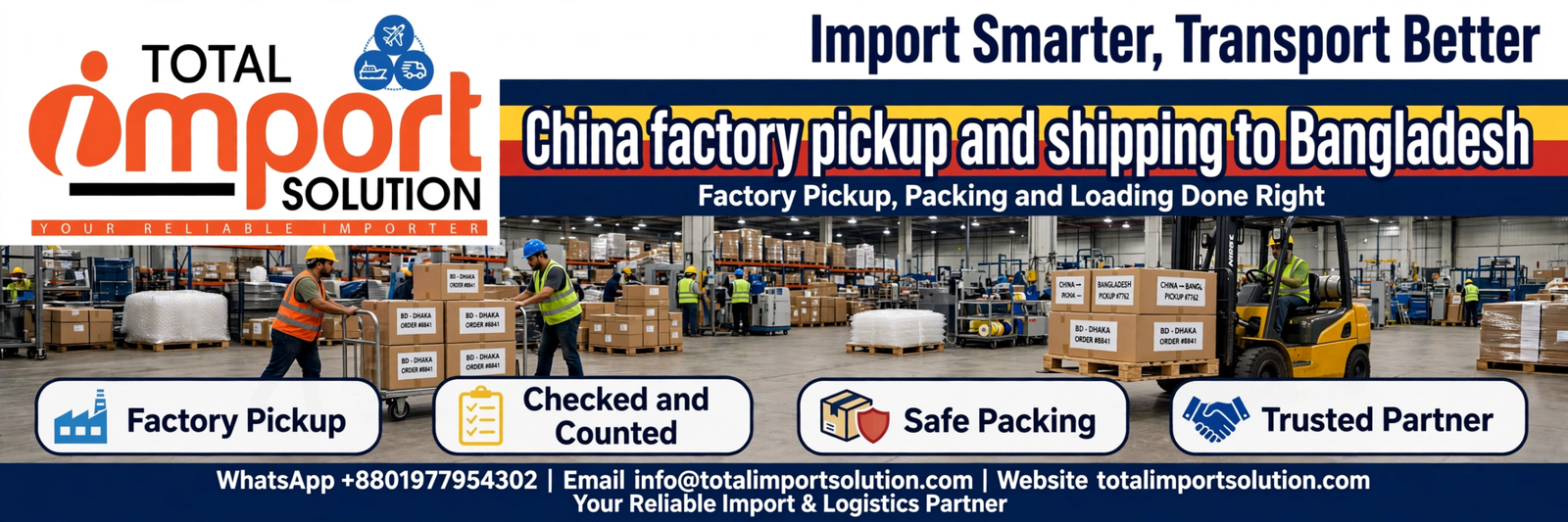
On pickup day, the truck arrives at the factory at the agreed time. The factory staff bring the goods out from the production floor or the factory warehouse. Each carton or pallet is counted and compared with the packing list. The labels on the cartons are read and checked, any damage to the cartons is noted, and photos are taken of the goods, the labels, and the loading. Once the count and the checks are done, the goods are loaded onto the truck in a planned order: heavy items at the bottom, lighter items on top, and fragile items protected. The truck is then closed and the goods are taken to the next stage.
- Place the order and agree on items, quantity, packing, and the ready date.
- Arrange the pickup, book a truck of the right size, and confirm the factory address and time.
- Share the order details and the packing list with the driver and the loading team.
- Arrive at the factory at the agreed time and meet the factory contact.
- Count each carton or pallet and compare the count with the packing list.
- Read the labels, check the condition of the cartons, and note any damage.
- Take photos of the goods, the labels, and the loading for the shipment record.
- Load the truck in the planned order, with heavy items below and fragile items protected.
- Close the truck, record the pickup details, and send the goods to the next stage.
4. What to Confirm With the Factory Before Pickup Day
A smooth factory pickup is decided before pickup day. The buyer should confirm the ready date with the factory in writing, so that the truck does not arrive before the goods are packed or long after they are ready. The factory should confirm the number of cartons, the weight and the size of the load, and the type of truck that can enter the factory area.
The buyer should also confirm who the factory contact person is, with a name and a phone number, and the exact factory address, including any building or gate number. It is also wise to confirm the packing in advance: how the goods are packed, how many pieces are in each carton, and how the cartons are marked. A buyer who works with a new factory should ask how to check the factory’s business standing, for example by asking for the factory’s business licence details and checking them through the buyer’s own channels, or by arranging a visit or an inspection before the first order. No claim about a factory’s standing should be taken as fact from a sales message alone.
| Item to confirm | Why it matters | How to confirm it |
|---|---|---|
| Ready date | Truck arrives when goods are packed | Written confirmation from the factory |
| Carton count and load size | Right truck size is booked | Packing list from the factory |
| Factory address and gate | Driver finds the site without delay | Full address with gate or building number |
| Factory contact person | Someone meets the truck on arrival | Name and phone number in writing |
5. Packing, Marking and Counting at the Factory
Packing at the factory is the first protection the goods get, and it must suit the road journey, the container loading, and the sea journey that follow. Cartons should be strong enough for the weight inside them, and the tape and strapping should hold through handling at several stages. Goods that can move inside a carton should be wrapped or cushioned, so that they do not knock against each other. Fragile items should be marked as fragile on the carton.
Marking is as important as packing. Each carton should carry a clear label with the buyer’s name or mark, the item name or code, the carton number, and the number of pieces inside. Cartons in one shipment should be numbered in order, such as carton 1 of 20, carton 2 of 20, and so on, so that a missing carton is noticed at once. Counting is done at the factory, carton by carton, and the count is written down at once. Counting at the factory is the only count that can be checked with the factory present, so it should never be skipped or guessed.
| Packing and marking point | What good practice looks like | What goes wrong if it is skipped |
|---|---|---|
| Carton strength | Strong cartons, firm tape, strapping | Cartons break during handling |
| Inner protection | Wrapping and cushioning inside | Goods knock together and get damaged |
| Fragile marking | Clear fragile mark on the carton | Fragile goods handled like ordinary goods |
| Carton labels | Buyer mark, item, carton number, pieces | Cartons cannot be identified or counted |
6. Loading the Truck at the Factory Gate
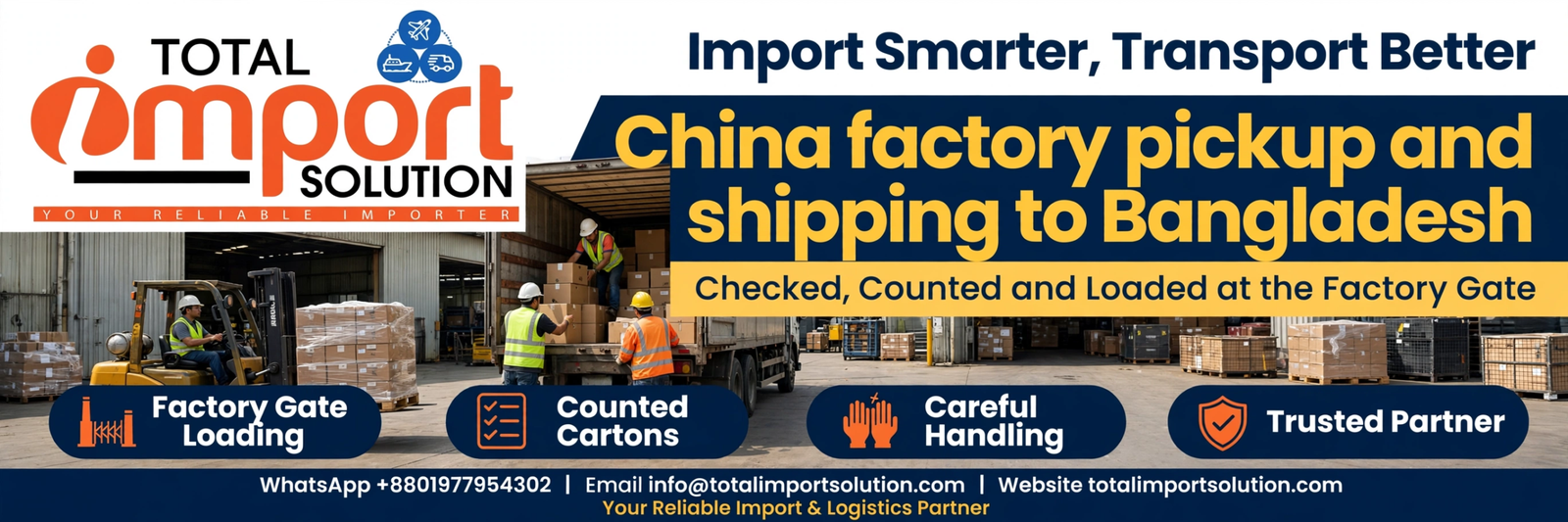
Loading the truck at the factory gate is a planned job, not a rushed one. The loading team should know the order of loading before the first carton is lifted. Heavy cartons go at the bottom, near the front of the truck, so that the weight is spread evenly and the load stays steady on the road. Lighter cartons go on top. Fragile cartons go where they will not be pressed by heavier cartons, and they are marked so that the team can see them. Cartons are stacked straight and tight, with no large gaps, so that they do not shift when the truck turns or brakes.
Pallets need care as well. If the goods are on pallets, the pallets should be in good condition, with no broken boards, and they should be placed so that they sit flat on the truck floor. The loading team should check each pallet before it is lifted.
- Agree on the loading order before the first carton is lifted.
- Place heavy cartons at the bottom, near the front of the truck.
- Put lighter cartons on top and fragile cartons where they will not be pressed.
- Stack cartons straight and tight, with no large gaps between them.
- Check pallets for broken boards and place them flat on the truck floor.
- Cover the goods if it is raining and close the truck as soon as loading is done.
- Check the load from the back, take a photo, and record the loading time.
7. Moving Goods From the Factory to the Port in China
After the truck leaves the factory, the goods travel to the next point in the chain, which is usually a warehouse for consolidation or a port in China where the container is loaded. The route depends on where the factory is. A factory near the port may send goods straight to the port. A factory far inland may send goods to a warehouse first, where they are held until the container is ready.
The truck booking should match the load. A small load needs a small truck, and a large load needs a large truck or more than one truck. Overloading a truck is a risk, because it can damage the goods and cause trouble on the road. The driver should have the factory address, the destination address, and the contact numbers for both ends. Road conditions and weather can change the plan. A road closure, a long queue at a warehouse gate, or heavy rain can slow the truck. A good plan allows time for such delays, rather than setting the pickup and the container loading so close together that any delay breaks the plan.
| Move | What to check | Why it matters |
|---|---|---|
| Factory to warehouse | Truck size, warehouse address, arrival time | Goods arrive ready for consolidation |
| Factory to port | Port name, container booking, cut-off time | Goods reach the port before loading closes |
| Multi-factory collection | Order of pickups, time at each factory | All goods arrive at one point together |
| Long inland route | Road conditions, weather, rest stops | Delay is noticed early and planned for |
8. Documents You Need for a Factory Pickup Shipment
A factory pickup shipment needs a clear set of documents, and each document has a job. The commercial invoice is the seller’s bill for the goods, showing the buyer, the seller, the items, the quantity, and the value. The packing list shows what is inside each carton, with the carton numbers, the item names, and the number of pieces. The bill of lading or the transport document is issued by the shipping line or the transport provider and is the record of the sea or road movement. The certificate of origin, where needed, states where the goods were made.
The packing list deserves special care, because it is the document that is compared with the goods at every stage. It must match the cartons that were counted at the factory, with the same carton numbers and the same piece counts. If the factory changes the packing after the list is made, the list must be updated to match. A packing list that does not match the cartons causes questions at the port in China and at customs in Bangladesh, and it can slow the clearance of the goods. The buyer should keep a copy of every document, in paper and in digital form, and share copies with the agent handling the shipment.
| Document | What it shows | Who prepares it |
|---|---|---|
| Commercial invoice | Buyer, seller, items, quantity, value | Seller or factory |
| Packing list | Carton numbers, items, pieces per carton | Seller or factory |
| Bill of lading | Sea movement, ports, container details | Shipping line or transport provider |
| Certificate of origin | Country where the goods were made | Seller, where needed |
9. Consolidation: When Your Goods Share a Container
Consolidation means combining goods from more than one buyer, or more than one factory, into a single container. It is used when a buyer’s order is too small to fill a container on its own. The buyer’s goods are brought to a warehouse, stored with other cargo bound for the same port in Bangladesh, and loaded into one container together.
When goods arrive at the warehouse from the factory, they are counted again and compared with the packing list from the pickup. Any damage is noted. The goods are then stored in a marked area, so that they are not mixed with other cargo. Each buyer should have a separate packing list and a separate set of documents, even though the goods travel in one container.
| Consolidation point | What happens | What the buyer should receive |
|---|---|---|
| Arrival at warehouse | Goods counted again and compared with the list | Warehouse receipt |
| Storage | Goods kept in a marked area, separate from other cargo | Storage note with the location |
| Loading plan | Order of loading agreed, first-out goods near the doors | Copy of the loading plan |
| Documents | Separate packing list and papers for each buyer | Copies of the buyer’s own documents |
10. Container Loading, Sealing and Photos
Before loading begins, the container itself should be checked. The container should be clean inside, with no dirt, no smell, and no damage to the floor or the walls. The doors should close properly and the locking rods should work. If the container is not in good condition, the loading team should ask for another one.
Heavy goods go at the bottom, lighter goods on top, and fragile goods where they will not be pressed. Cartons are stacked straight and tight, and gaps are filled with padding or bracing, so that the load does not move during the sea journey. Goods that belong to different buyers in a consolidated container are kept in their own groups, with their labels facing out. When the loading is finished, the container doors are closed and a seal is fixed. The seal number is written down and shared with the buyer and the agent.
- Check the container inside: clean floor, no damage, doors closing properly.
- Load heavy goods at the bottom and lighter goods on top.
- Keep each buyer’s goods in a separate group, with labels facing out.
- Fill gaps with padding or bracing so the load does not move at sea.
- Close the doors and fix the seal, then write down the seal number.
- Take photos of the container before, during, and after loading, and of the seal.
11. Sea Journey, Arrival and Customs Clearance in Bangladesh
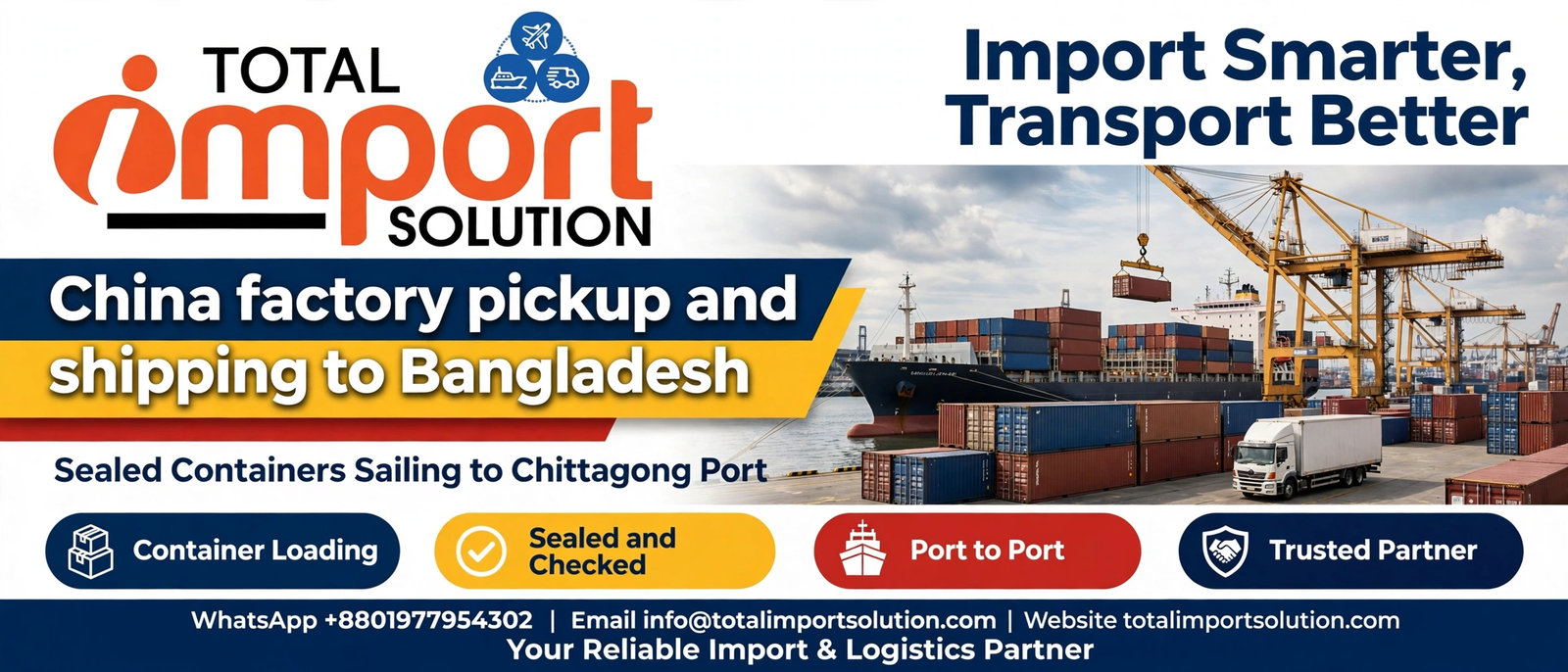
Once the container is loaded and sealed, it is taken to the vessel for the sea journey to Bangladesh. The buyer or the agent should know the vessel details and the expected arrival port, which is commonly Chittagong Port, with Pangaon port used for some cargo.
On arrival in Bangladesh, the container is unloaded at the port and the goods enter the customs process. The buyer’s agent prepares and submits the customs papers, including the commercial invoice, the packing list, the bill of lading, and the other import papers the buyer holds. The customs officers check the documents against the goods, and they may open the container for inspection. Duty and tax are assessed by the customs authority under the rules in force at the time of import. No fixed duty percentage or fee is given in this guide, because the amount depends on the goods, their classification, their value, and the rules in force at that time. After the duty and tax are settled and the papers are cleared, the goods are released for delivery.
| Arrival stage | What happens | What the buyer should have ready |
|---|---|---|
| Vessel arrival | Container unloaded at the port in Bangladesh | Copy of the bill of lading |
| Customs papers | Agent submits invoice, packing list, and import papers | Full set of documents, checked for errors |
| Inspection | Customs may open the container and check the goods | Packing list that matches the cartons |
| Assessment | Duty and tax assessed under the rules in force | Agent’s note of the assessed amount |
12. Delivery From the Port to Your Warehouse in Bangladesh
After clearance, the goods are delivered from the port to the buyer’s warehouse or shop. The agent books a truck of the right size for the load and arranges the pickup time at the port. The buyer should confirm the delivery address, the contact person at the warehouse, and the unloading hours, so that the truck is not kept waiting.
When the truck arrives at the warehouse, the goods are counted again, carton by carton, and the count is compared with the packing list and with the count taken at the factory. This final count is the last check in the chain, and it should match the first count. If a carton is missing or damaged, the buyer notes it at once, takes photos, and tells the agent, so that the matter can be raised while the delivery is still fresh.
- Book a truck of the right size and agree on the pickup time at the port.
- Confirm the delivery address, the warehouse contact, and the unloading hours.
- Prepare labour and equipment for unloading, by hand or by forklift.
- Count the cartons at the warehouse and compare with the packing list.
- Check the condition of the cartons and open any that are damaged.
- Note any missing or damaged cartons at once, with photos, and tell the agent.
- Sign the delivery note and keep it with the shipment file.
13. Common Problems and How to Avoid Them
The most common problem in a factory pickup shipment is a count that does not match the order. This happens when the count at the factory is skipped, when the packing list is made before the packing is finished, or when cartons are added or removed without updating the list. The fix is simple: count at the factory, write the count down at once, and update the packing list to match before the truck leaves.
Another common problem is poor packing. The fix is to agree on the packing with the factory before production is finished, to use strong cartons and firm tape, and to mark fragile cartons clearly. A third problem is documents that do not match the cargo. The fix is to use one set of facts for all the documents and to compare the packing list with the cartons at the factory. A fourth problem is a missed container booking, which happens when the pickup is late or the truck is delayed. The fix is to allow time between the pickup and the container loading and to ask for updates while the truck is on the road.
| Problem | How it starts | How to avoid it |
|---|---|---|
| Count does not match | Count skipped or list made too early | Count at the factory and update the list at once |
| Poor packing | Weak cartons, no cushioning inside | Agree packing in advance, use strong cartons |
| Documents do not match | Documents made from different facts | Use one set of facts, check every document |
Frequently Asked Questions
1. What is China factory pickup and shipping to Bangladesh?
It means collecting goods directly from the supplier’s factory in China and moving them through to the buyer in Bangladesh. The pickup covers counting, checking, and loading the goods at the factory gate.
2. Who can use factory pickup for a China to Bangladesh shipment?
Any buyer who orders goods from a factory in China can use factory pickup.
3. How do I arrange a factory pickup in China?
Place an order with the factory and agree on the items, the quantity, the packing, and the ready date. Then you or your agent books a truck of the right size, confirms the factory address and the pickup time,
4. What should I check at the factory on pickup day?
Count each carton or pallet and compare the count with the packing list. Read the labels and check that they match the list. Look at the condition of the cartons and note any damage.
5. What documents do I need for a factory pickup shipment?
The main documents are the commercial invoice, the packing list, the bill of lading or transport document, and the certificate of origin where needed, plus the import papers for Bangladesh customs. The packing list must match the cartons counted at the factory.
6. How are goods packed for factory pickup?
Goods should be packed in strong cartons with firm tape and strapping, with wrapping and cushioning inside so that items do not knock against each other. Heavy items should be packed in smaller cartons where possible. Fragile items should be marked as fragile.
7. What is consolidation, and when does it apply to factory pickup?
Consolidation means combining goods from more than one buyer, or more than one factory, into a single container. It applies when a buyer’s order is too small to fill a container on its own.
8. How is a container loaded and sealed for Bangladesh?
Before loading, the container is checked to make sure it is clean inside, with no damage and doors that close properly. Heavy goods are loaded at the bottom and lighter goods on top, with gaps filled so the load does not move.
9. Which ports in Bangladesh receive goods from China?
Goods from China commonly arrive at Chittagong Port, and some cargo arrives through Pangaon port. The arrival port depends on the shipping arrangement and the type of cargo.
10. How does customs clearance work after arrival in Bangladesh?
After the container is unloaded at the port, your agent prepares and submits the customs papers, including the commercial invoice, the packing list, the bill of lading, and the other import papers.
11. How long does the full process take from factory pickup to delivery?
The time depends on the factory location, the distance to the port in China, the sailing schedule, the arrival port, and the customs process in Bangladesh. No fixed transit time is given here, because the time changes with the shipment and the conditions at the time.
12. What happens if the carton count at delivery does not match the factory count?
If the count at delivery does not match the count taken at the factory, note the difference at once, take photos of the cartons that are present, and tell your agent while the delivery is still fresh.
13. Can I pick up goods from more than one factory for one shipment?
Yes, goods can be collected from more than one factory and brought together at one warehouse for consolidation, so that several small orders travel as one shipment.
14. How do I check a new factory in China before the first order?
You can ask for the factory’s business licence details and check them through your own channels, ask for references from other buyers, or arrange a visit or an inspection before the first order.
15. What is the best way to avoid damage during factory pickup and shipping?
Agree the packing with the factory before production is finished, use strong cartons and firm tape, cushion the goods inside, and mark fragile cartons clearly.
16. How can Total Import Solution help with China factory pickup and shipping to Bangladesh?
Total Import Solution, since 2016, supports importers in Bangladesh with factory pickup coordination, shipment planning, documentation, customs clearance support, and delivery to the buyer’s warehouse. You can reach the team on WhatsApp at +8801977954302 or by email at info@totalimportsolution.com.
Contact Total Import Solution
- Service: China factory pickup and shipping to Bangladesh
- WhatsApp: +8801977954302
- Email: info@totalimportsolution.com
- Website: totalimportsolution.com
- Company: Total Import Solution — an importer and logistics partner based in Bangladesh, serving importers since 2016
