
Agriculture & Fertilizer Imports: Bulk Dry Van Container Leasing
Agriculture and fertilizer imports keep farms, dealers and distributors in Bangladesh supplied through the year. Fertilizer bags, seed, animal feed, grain and other farm inputs arrive in large volumes, and most of them travel in dry van containers. A dry van is a closed steel box that keeps rain, dust and sea spray away from the cargo inside. When the container is leased in bulk, an importer books several containers at once for a season or for a series of shipments, instead of arranging one container at a time. That simple change makes planning easier, because the importer knows how many containers are coming, when they are coming, and what condition they must be in.
This guide explains bulk dry van container leasing for agriculture and fertilizer imports in plain language. It covers how to choose containers, how to judge a leasing provider, how to protect cargo from moisture, how to load with care, which documents to prepare, how customs clearance works, and how delivery to warehouses and farms is arranged. Since 2016, Total Import Solution has served importers in Bangladesh, and this guide follows the same working order used in a real shipment: plan first, check the container, prepare the documents, load with care, ship, clear customs, deliver, and check again after delivery.
1. What Bulk Dry Van Container Leasing Means for Agriculture and Fertilizer Imports
Bulk dry van container leasing means hiring a number of closed dry containers together under one plan, for fertilizer and agriculture cargo bound for Bangladesh. The importer agrees the number of containers, the sizes needed, the loading dates and the ports involved, and the provider supplies containers that meet an agreed condition. Leasing in bulk is different from booking a single container for a single shipment. With a single booking, every shipment starts from the beginning. With a bulk plan, the importer, the supplier and the provider work to the same schedule across many shipments, so the same checks are repeated in the same order each time.
Fertilizer is a demanding cargo. Many fertilizer products absorb moisture from the air, and a bag that gets damp can cake, harden or lose quality. A dry van protects all of these cargoes because it is a sealed box with solid walls, a solid roof and doors that close tight.
| Shipment pattern | Why bulk leasing fits | What to agree in writing |
|---|---|---|
| Regular monthly orders | Same containers, same checks, same order of work | Number of containers, sizes, loading dates |
| Seasonal fertilizer stock | Many containers in a short window before the season | Delivery dates, container condition, loading plan |
| Mixed farm inputs | Different cargoes sharing the same container type | Cargo list per container, packing method, labels |
2. Why Dry Van Containers Suit Fertilizer and Agriculture Cargo
A dry van container is the standard closed container used for most general cargo. It has a steel frame, corrugated steel walls, a wooden or steel floor, and double doors at one end that lock with steel rods. When the doors are closed and sealed, the inside stays dry in rain and protected from dust and spray. That protection is the main reason fertilizer and agriculture importers choose dry vans. A fertilizer bag that stays dry keeps its shape, pours well and stores well.
Dry vans also make loading and unloading simple. Forklifts and workers can move palletised bags through the wide rear doors, and the flat floor lets bags be stacked in even layers. The container can be lifted by crane at the port, placed on a truck, and taken straight to a warehouse or a farm store. The container also protects the cargo during handling. The doors lock, the walls are solid, and a seal is fitted after loading so that anyone opening the doors later can be noticed.
| Cargo | Main risk in transit | How a dry van helps |
|---|---|---|
| Fertilizer bags | Damp, caking, torn bags | Sealed box keeps rain and spray out |
| Seed bags | Damp, heat, pests | Dry, closed space with clean floor |
| Grain and feed | Damp, dust, contamination | Solid walls and roof, clean interior |
| Farm inputs in cartons | Crushing, damp, dust | Even stacking on a flat floor |
3. How to Judge a Good Container Leasing Provider
A good container leasing provider is judged by evidence, not by promises alone. Start by asking how the provider checks each container before it is offered for loading. A provider who can describe the check in clear steps, and who can show a written condition report for the container, is easier to trust than one who only says the containers are fine.
Next, ask how the provider handles a container that fails the check. A good provider takes a failed container out of the loading plan and offers another one, without argument and without delay. Also check the provider’s record with agriculture and fertilizer cargo. Ask whether the provider has supplied containers for fertilizer, seed or feed before, and ask what the provider does to keep containers clean and dry between uses. Since 2016, Total Import Solution has served importers in Bangladesh, and the lesson from that work is simple: a clean, dry, well-checked container is the foundation of a good fertilizer shipment, and no loading plan can make up for a poor container.
| What to check | Good sign | Warning sign |
|---|---|---|
| Condition report | Written report for each container | No report, only verbal assurance |
| Failed container | Replaced quickly with another unit | Pressure to load the failed unit anyway |
| Cleaning between uses | Swept, cleaned and dried before loading | Dust, smell or stains left inside |
| Communication | Clear answers, named contact person | Slow replies, no single contact |
4. Container Sizes and How to Match the Container to the Cargo
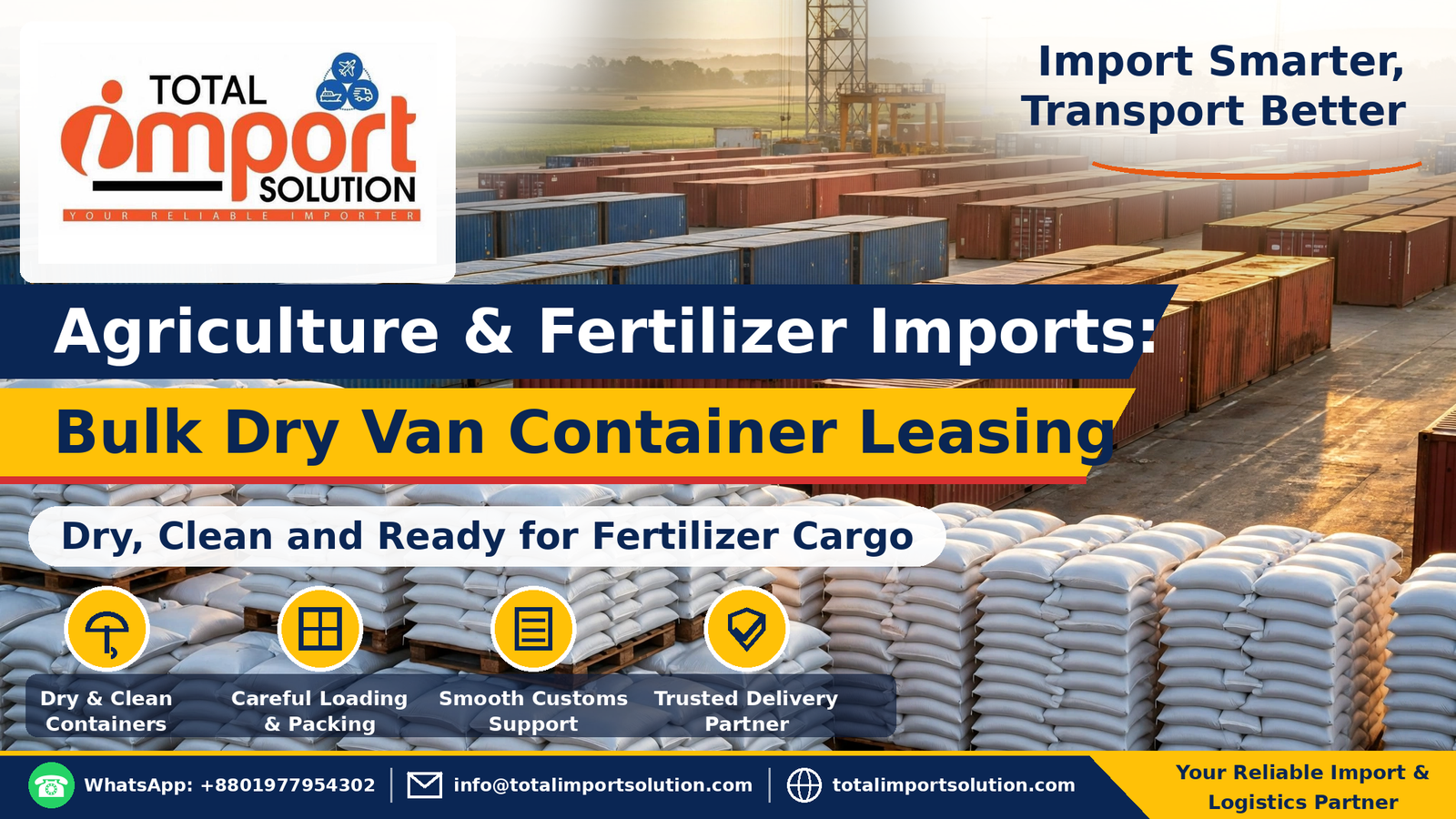
Dry van containers come in standard sizes, and the two most common are the 20-foot container and the 40-foot container. A standard 20-foot dry van has an approximate internal volume of about 33 cubic metres, and a standard 40-foot dry van has an approximate internal volume of about 67 cubic metres. A 40-foot high cube container is taller than a standard 40-foot container and has an approximate internal volume of about 76 cubic metres. These figures are widely used approximate figures for planning only.
Matching the container to the cargo starts with the weight and the volume of the bags. Fertilizer bags are heavy for their size, so a container often reaches its safe weight limit before it is full by volume. The loading team should know the weight of each bag, the number of bags, and the total weight of the load before loading starts, and should compare that total with the safe loading limit marked on the container. The size choice also affects delivery.
| Container type | Approximate internal volume | Best fit for fertilizer and farm cargo |
|---|---|---|
| 20-foot dry van | About 33 cubic metres, approximate | Small warehouses, farm stores, heavy bagged fertilizer |
| 40-foot dry van | About 67 cubic metres, approximate | Large warehouses, full loads of bagged cargo |
| 40-foot high cube dry van | About 76 cubic metres, approximate | Light, bulky cargo such as feed or seed where height helps |
5. Container Condition: What to Check Before Loading
Every container should be checked before a single bag is loaded. The check is done in daylight, with the doors open, and it follows the same order every time so that nothing is missed. Start outside. Look at the roof for dents and patches, look at the walls for holes and rust, and look at the corner posts and the frame for bends or cracks. Then open the doors and check the locking rods. Each rod should move freely, and the handles should lock firmly.
Step inside and look at the light. Close the doors and look for daylight coming through the walls or the roof. Any line of light means a hole or a gap, and that container must be repaired or replaced. Open the doors again and check the floor. The floor should be flat, dry, clean and free of nails, splinters and holes. Smell the inside of the container. A clean dry van smells of clean steel and wood, while a smell of chemicals, oil, damp or mould is a warning.
- Check the roof, walls and frame from outside.
- Open the doors and test the locking rods and handles.
- Close the doors and look for daylight inside.
- Check the floor for soft spots, nails, holes and damp.
- Smell the interior and look for stains or residue.
- Check the door seals and the seal points.
- Record the container number and the check result, with photos.
6. Moisture and Damp Protection for Fertilizer Cargo
Moisture is the main enemy of fertilizer cargo. Fertilizer absorbs water from damp air, from a wet container floor, from rain during loading, and from condensation that forms inside a container when the temperature changes. Damp fertilizer cakes into hard lumps, sticks to the bag, and becomes hard to spread on the field. Preventing moisture is therefore a central part of the whole shipment, not a small detail at the end.
Protection starts with a dry container. The floor must be dry, the walls must be dry, and there must be no water standing anywhere inside. Some importers place a layer of clean, dry material on the floor, such as pallets, boards or a clean liner, to keep the bags off the floor and away from any damp. Loading in rain needs care. When rain is falling, loading should stop, or the loading area should be covered so that rain cannot fall on the bags or into the open container. Inside the container, bags should not touch the walls where condensation can form.
| Moisture source | How it reaches the cargo | How to prevent it |
|---|---|---|
| Wet container floor | Bags sit on damp wood or steel | Check the floor is dry, use pallets or a liner |
| Rain during loading | Rain falls on bags or into the open doors | Stop loading in rain, cover the loading area |
| Condensation inside | Temperature change forms water on walls and roof | Leave air gaps, keep bags off walls, load dry cargo |
7. Packing Fertilizer Bags and Agriculture Products for a Dry Van
Good packing protects the cargo from the moment it leaves the supplier’s warehouse until it reaches the buyer’s store. Fertilizer is usually packed in strong woven bags or sacks, often with an inner liner that keeps moisture out. Each bag should be checked before loading. A bag with a tear, a weak seam or a broken stitch should be repaired or replaced, because a torn bag leaks product into the container, and the leaked product can cake on the floor and contaminate other bags.
Bags should be stacked in even layers, with the layers level and the stacks straight. Heavy bags go at the bottom and lighter bags on top. Leave a small space at the doors so that the load does not press against the doors when they are closed, and so that the doors can be opened safely at delivery without bags falling out. Pallets help in several ways. They keep bags off the floor, they make forklift work faster, and they keep each stack separate and stable.
| Packing point | What to do | Why it matters |
|---|---|---|
| Bag check | Check seams, tears and labels before loading | Torn bags leak and contaminate the load |
| Stacking | Even layers, heavy at the bottom, straight stacks | Stops falls and crushing during the voyage |
| Air gaps | Small gap at walls, roof and doors | Air movement, less condensation, safe door opening |
| Pallets | Use pallets, wrap and strap the stacks | Dry floor, faster forklift work, stable load |
8. Loading Step by Step: From Warehouse Floor to Sealed Doors
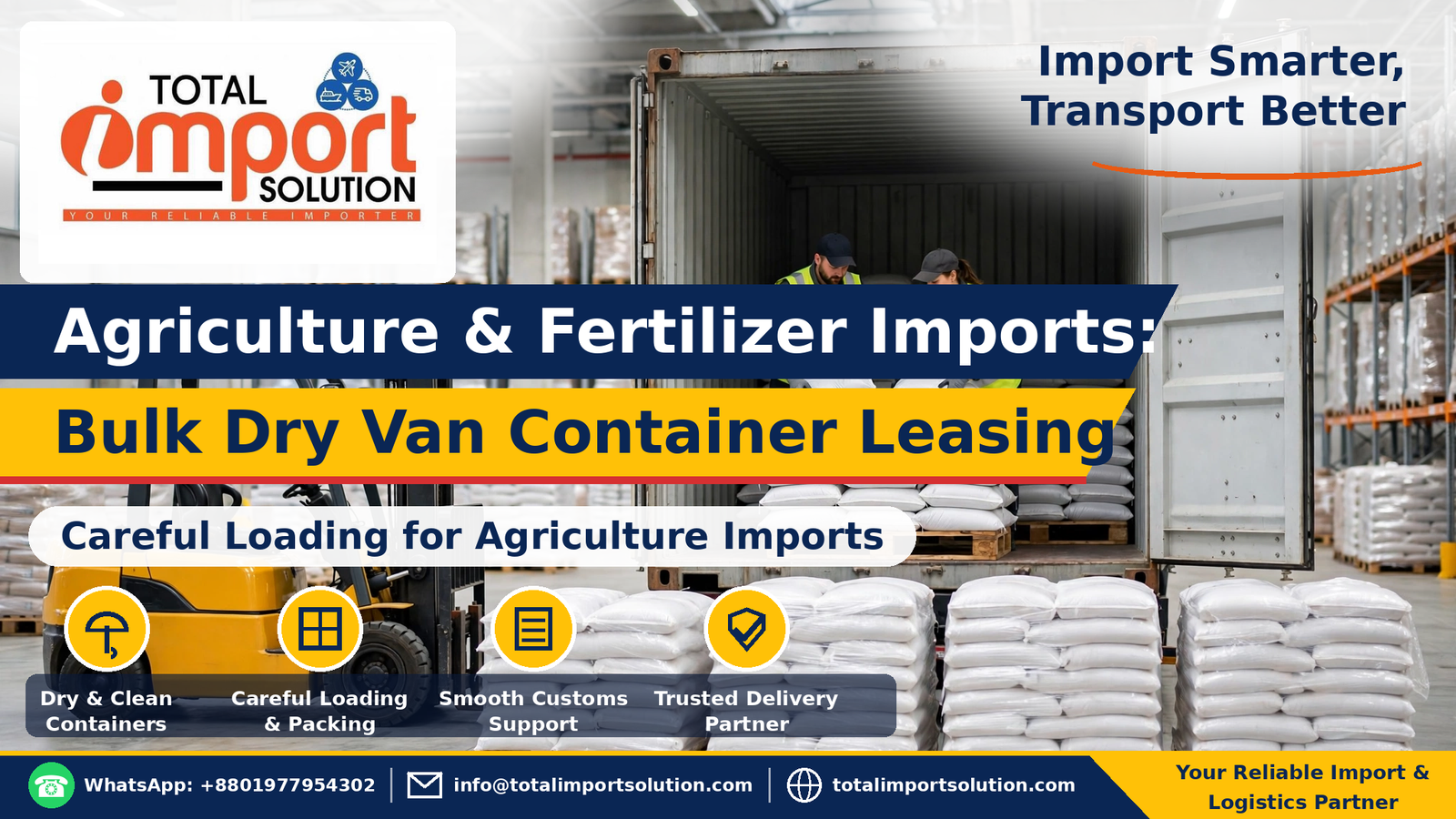
Loading a dry van for fertilizer and agriculture cargo follows a fixed order. The order protects the cargo, protects the workers, and leaves a clear record of what was loaded. The first step is the container check described earlier. The second step is the cargo check: count the bags, check the labels, and set aside any bag that is torn, wet or wrongly labelled. The third step is the loading plan. The plan states how many bags go in each layer, where the pallets go, and where the air gaps are left.
Loading starts at the front of the container, the end away from the doors, and works back towards the doors. The first layer is laid flat and level, and each layer after that is laid in the same way, with the bags turned so that the stack locks together. When the load is complete, the team counts the bags again and compares the count with the packing list. Then the doors are closed and the container is sealed. Take a photo of the sealed doors, the seal number and the container number.
- Check the container and record the result.
- Count and check the bags, and set aside any damaged bag.
- Write the loading plan: layers, pallets, air gaps.
- Load from the front of the container towards the doors.
- Lay even layers, heavy bags at the bottom, straight stacks.
- Count the load again and compare it with the packing list.
- Close the doors, fit the seal, and record the seal number.
- Photograph the sealed doors, the seal and the container number.
9. Documents You Need for Agriculture and Fertilizer Imports
Documents are the backbone of an import shipment. Without the right documents, the container cannot clear customs, the buyer cannot prove what was ordered, and a problem at the port cannot be sorted out quickly. The document list should be prepared before the cargo is loaded, and every document should be checked against the cargo and against the other documents so that names, weights, container numbers and product descriptions all match.
The core documents for a fertilizer or agriculture import include the commercial invoice, the packing list, the bill of lading, the certificate of origin, and any product certificate or test report that applies to the cargo. The packing list shows what is inside each container, bag by bag or carton by carton. Fertilizer and seed may need extra papers, such as a product registration, a quality certificate, or a phytosanitary certificate for seed and plant products. A rate or fee is confirmed only after checking the actual shipment and documents, so the importer should ask for any charge to be shown against the real papers, not against a general estimate.
| Document | What it shows | Who issues it |
|---|---|---|
| Commercial invoice | Seller, buyer, product, quantity, terms | Supplier |
| Packing list | Contents of each container | Supplier or packing team |
| Bill of lading | Container numbers, seal numbers, ports | Shipping line |
| Certificate of origin | Country where the cargo was produced | Chamber or authorised body |
| Quality or test certificate | Product grade and test result | Laboratory or supplier |
| Phytosanitary certificate | Plant health status for seed and plant products | Plant protection authority |
10. Customs Clearance in Bangladesh: A Clear Order of Work
Customs clearance in Bangladesh follows a clear order, and the importer should know that order before the vessel arrives. The work starts before arrival, when the importer or the customs agent prepares the bill of entry and gathers the documents. The bill of entry is the main customs declaration, and it must match the invoice, the packing list and the bill of lading. When the vessel arrives and the container is landed, the agent submits the declaration with the documents, and customs checks the papers. If a paper is missing or a figure does not match, customs will ask for a correction, and the container waits until the correction is made.
Customs may examine the cargo. The container may be opened in the presence of customs and the agent, and the cargo may be checked against the declaration. After the document check and any examination, customs assesses the shipment and the importer settles the assessed charges. A rate or fee is confirmed only after checking the actual shipment and documents, so the importer should check every figure on the assessment against the real papers before paying.
- Prepare the bill of entry and gather all documents before arrival.
- Check that every figure matches across the invoice, packing list and bill of lading.
- Submit the declaration through the customs agent when the container lands.
- Answer any customs query with the correct document, without delay.
- Be ready for cargo examination, with the packing list and certificates at hand.
- Check the assessment against the actual shipment and documents.
11. From Port to Warehouse and Farm: Delivery and Unloading
Delivery starts at the port, where the container is collected after customs release. The transport team checks the container number and the seal number against the documents before the container leaves the port. If the numbers do not match, the container should not leave until the mismatch is sorted out.
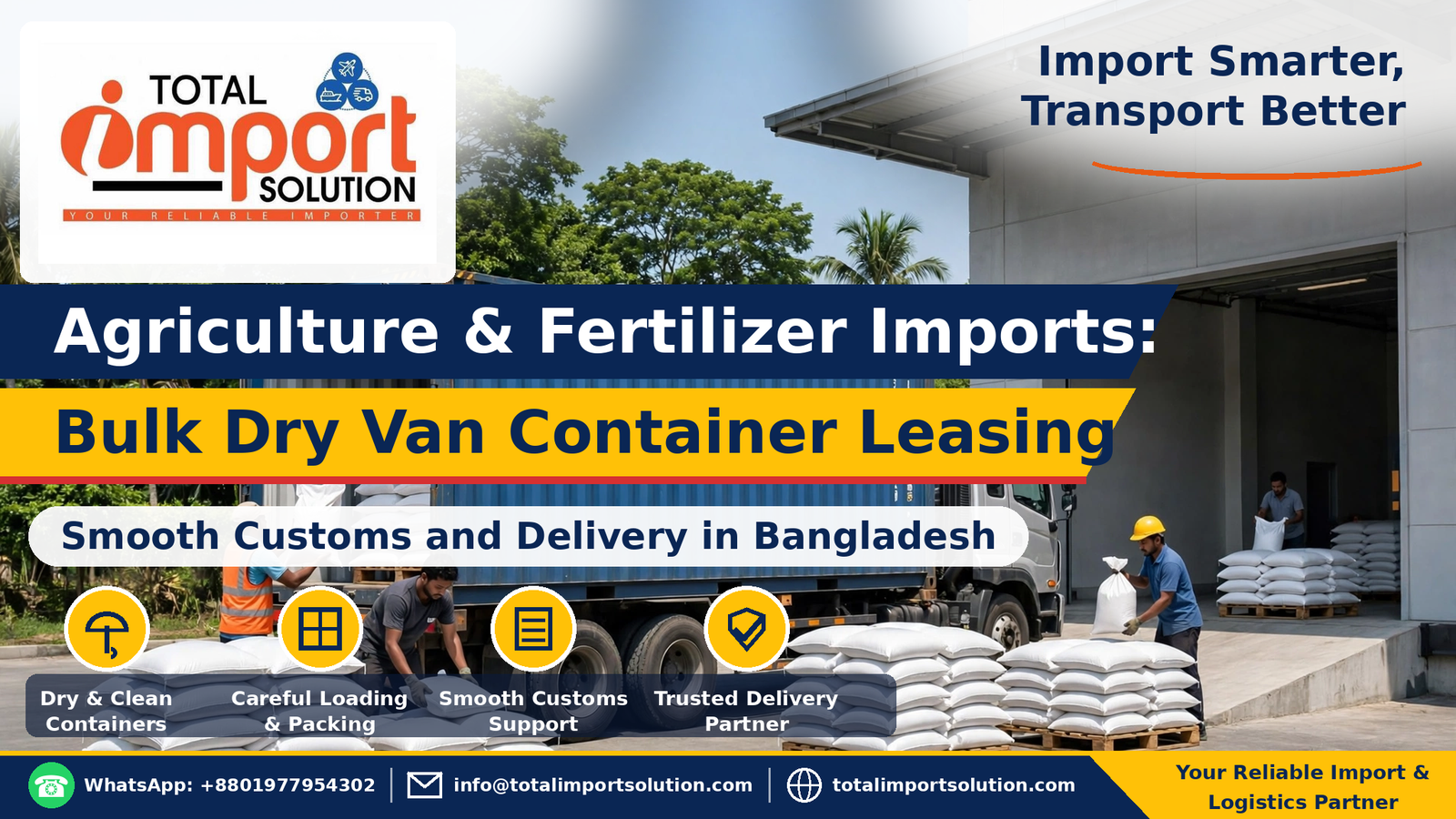
At the warehouse or farm store, the receiving team checks the seal first. The seal number must match the number on the bill of lading and the number recorded at loading. If the seal is broken or the number is different, the team should stop, take photos, and inform the importer before opening the doors. If the seal is correct, the doors are opened with care. The bags are then counted as they are unloaded, and the count is compared with the packing list. Unloading should be done under cover when rain is falling, and the bags should go straight into a dry store, not onto wet ground. Fertilizer bags should be stacked on pallets, with air space around the stacks and with the labels facing out so that stock can be checked easily.
| Delivery step | What to check | What to record |
|---|---|---|
| Port collection | Container number, seal number | Numbers matched to documents |
| Road transport | Vehicle size, route, road condition | Departure time, vehicle details |
| Arrival at store | Seal number, seal condition | Seal number, photos if damaged |
| Door opening | Stand clear, open slowly | Any fallen or torn bags |
| Unloading count | Count bags against the packing list | Count, shortages, damage |
12. Common Problems and How to Prevent Them
Most problems in fertilizer and agriculture container shipments can be prevented with checks made early. Damp cargo is the most common problem, and it is prevented by the container check, the dry floor, the air gaps and the decision to stop loading in rain.
Torn bags are another common problem. They are prevented by checking each bag before loading, by stacking in even layers, and by handling bags with care during loading and unloading. Shortages are prevented by counting the bags at loading, counting them again before the doors are closed, and counting them once more at delivery. Document mismatches are prevented by checking every document against the others before the shipment leaves the origin. The container numbers, seal numbers, product names, weights and quantities should be the same on the invoice, the packing list and the bill of lading. Finally, poor communication is prevented by keeping one shipment file, one named contact at each stage, and one shared plan.
| Problem | Early sign | Prevention |
|---|---|---|
| Damp, caked fertilizer | Wet floor, rain during loading, damp bags | Dry container, pallets, stop loading in rain |
| Torn bags and spillage | Weak seams, sharp edges, rough handling | Bag check, smooth floor, careful handling |
| Shortage at delivery | Counts not done at loading | Count at loading, before sealing, and at delivery |
| Document mismatch | Different numbers on different papers | Check all documents together before sailing |
| Delayed clearance | Missing certificate, late bill of entry | Prepare papers before arrival, confirm the list early |
13. Planning Your First Bulk Lease: A Simple Checklist
A first bulk lease becomes much easier when it is planned on paper before any container is booked. Start by writing down the cargo: the products, the bag sizes, the number of bags per shipment, and the months when the cargo is needed. Then write down the delivery points: the warehouses and farm stores, their addresses, their access limits, and their storage space. With the cargo and the delivery points written down, the container plan follows naturally: the sizes, the number of containers per shipment, and the loading dates.
Next, agree the checks in writing with the provider. The condition check, the cleaning standard, the replacement rule for a failed container, and the record of container numbers and seal numbers should all be written into the plan. Agree the document list with the customs agent at the same time, so that no certificate is discovered missing after the cargo has sailed. Finally, name one contact person for the supplier, one for the provider, one for the agent and one for the buyer, and keep one shipment file that all of them can refer to.
- List the cargo: products, bag sizes, bags per shipment, months needed.
- List the delivery points: addresses, access limits, storage space.
- Agree container sizes, numbers and loading dates with the provider.
- Agree the condition check, cleaning standard and replacement rule in writing.
- Agree the full document list with the customs agent before sailing.
- Name one contact per stage and keep one shared shipment file.
Frequently Asked Questions
1. What is bulk dry van container leasing for fertilizer imports?
It is hiring several closed dry containers together under one plan for fertilizer and agriculture cargo bound for Bangladesh.
2. Why is a dry van container a good choice for fertilizer?
A dry van is a sealed steel box with solid walls, a solid roof and tight-closing doors. It keeps rain, dust and sea spray away from the cargo, which matters because fertilizer absorbs moisture and can cake and harden when it gets damp.
3. How many containers should an importer lease at once?
The number depends on the size of the orders, the storage space at the destination, and the delivery schedule.
4. What should be checked on a container before loading?
Check the roof, walls and frame outside, test the door locking rods, look for daylight inside with the doors closed, check the floor for soft spots and damp, smell the interior, and check the door seals.
5. What does the daylight test show?
The daylight test shows holes and gaps in the walls or roof. With the doors closed, any line of light inside the container means water and dust can enter, and that container should be repaired or replaced before loading.
6. How can moisture be kept out of a fertilizer load?
Use a dry container with a dry floor, place bags on pallets or a clean liner, leave air gaps at the walls and roof, stop loading in rain, reject wet bags,
7. Should fertilizer bags be loaded on pallets?
Pallets are a good choice for most fertilizer loads. They keep bags off the floor, let air move under the bags, make forklift work faster, and keep each stack separate and stable when the container moves.
8. What documents are needed for a fertilizer import into Bangladesh?
The core documents are the commercial invoice, the packing list, the bill of lading, the certificate of origin, and any product certificate or test report that applies.
9. What is a bill of lading and why does it matter?
A bill of lading is the transport document issued by the shipping line. It shows the container numbers, the seal numbers, the port of loading and the port of arrival, and it is checked at the port and at customs.
10. How does customs clearance work in Bangladesh?
The importer or agent prepares the bill of entry before arrival, submits the declaration with the documents when the container lands, answers any customs query, is ready for cargo examination if asked, checks the assessment, settles the assessed charges, and collects the release papers.
11. How is a rate or fee confirmed for a shipment?
A rate or fee is confirmed only after checking the actual shipment and documents. Every charge should be shown against the real papers, the real container numbers and the real cargo, not against a general estimate.
12. What should the receiving team check at delivery?
The team should check the seal number against the bill of lading, look at the seal condition, open the doors with care, count the bags against the packing list, note any damage,
13. What should be done if the seal number does not match at delivery?
Stop, take photos of the seal and the container number, inform the importer before opening the doors, and check the cargo carefully against the packing list once the doors are opened. Do not sign a clean delivery note for a load that has not been checked.
14. Can seed, grain and animal feed travel in the same type of container?
Yes, seed, grain and animal feed can travel in dry van containers when the container is clean, dry and free of chemical residue.
15. What causes fertilizer to cake during a shipment?
Fertilizer cakes when it absorbs moisture from a damp floor, from rain during loading, from condensation inside the container, or from bags that were already damp at the origin. Dry containers, dry bags, air gaps and careful loading prevent most caking.
16. How should fertilizer be stored after delivery?
Store fertilizer in a clean, dry store, raised off the ground where possible, stacked on pallets with air space around the stacks and labels facing out. Keep the store free of pests and keep the bags away from damp walls and floors.
Contact Total Import Solution
- WhatsApp: +8801977954302
- Email: info@totalimportsolution.com
- Website: totalimportsolution.com
- Service: Agriculture & Fertilizer Imports: Bulk Dry Van Container Leasing
- Company: Total Import Solution — Since 2016, serving importers in Bangladesh.
