
Side-Opening Shipping Container Rental for Easy Depot Loading
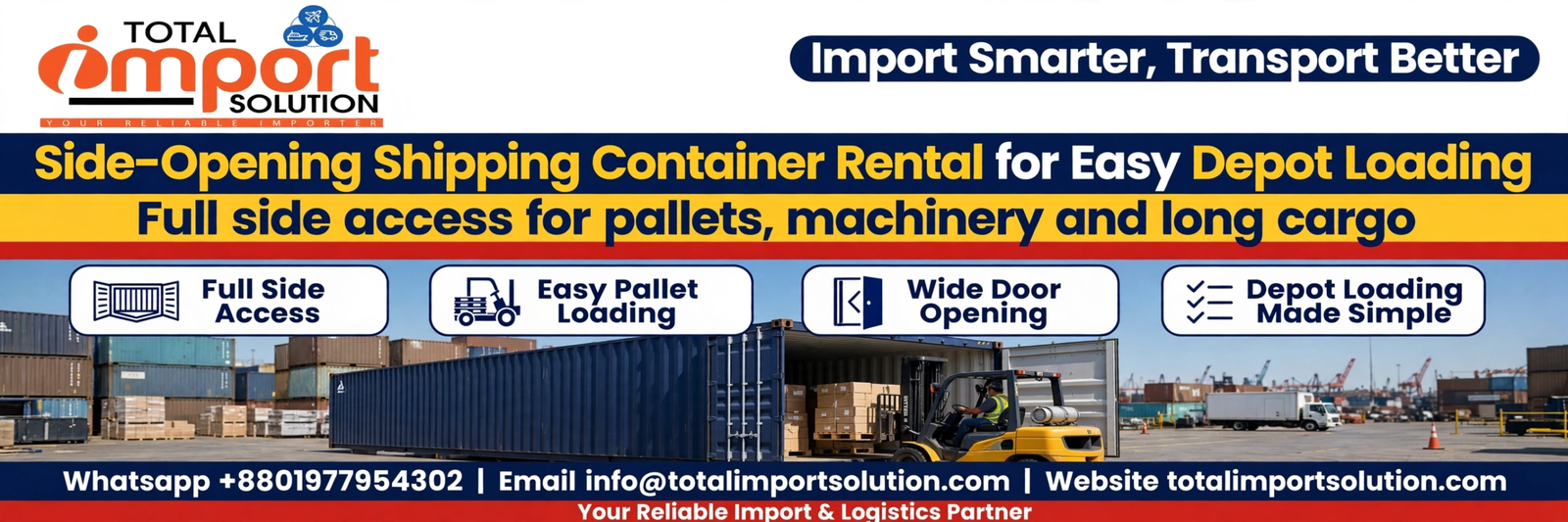
A standard container opens only at the end, so every carton, pallet and machine must travel the full length of the box through one narrow doorway. When cargo is long, wide or heavy, that single doorway becomes the slowest part of the loading day. A side-opening container changes that shape of work: its long side opens as well as its end doors, so loading can happen along the whole length of the container, close to where each item will sit.
At a depot, where space is shared, time is booked in slots and several jobs run side by side, the ability to load from the side keeps the work moving. A forklift can place a pallet straight into its bay instead of pushing it down a long corridor. Long items can be slid in sideways instead of being turned around at the door.
This guide explains how to hire and load a side-opening container for easy depot loading: what it is, which cargo suits it, how to check the side doors, how to plan the load, and how to return it. No prices, rates, fees, duty figures, statistics or transit times are given here, because those figures are confirmed only after checking the actual shipment and its documents. Container sizes and capacities are given only as widely used approximate figures, clearly labelled approximate.
Total Import Solution, an importer and logistics provider serving importers in Bangladesh since 2016, supports container rental alongside its import services.
1. What a Side-Opening Container Is
A side-opening container is a standard steel shipping container with one long side fitted with doors that open along the full length, or along most of it. The end doors work in the usual way, and the side doors swing or fold open to give a wide opening along the side wall. Some designs use several side door panels, each opening on its own, so you can open only the part of the side you need. Others open the whole side in one movement. Either way, the inside of the container can be reached from the side, not only from the end.
The difference shows itself only when the doors are open. With the side open, a forklift can approach from the side and set a pallet down in its place without entering the container. A long item, such as a bundle of pipes or a length of timber, can be fed in sideways and laid along the floor. Several workers can load different bays at the same time. Before you hire, confirm in writing which side opens, how far it opens, and whether the doors open as one panel or in sections, because your loading plan depends on knowing which one you have.
2. How Side Doors Change Loading at a Depot
At a depot, loading happens in shared space. Trucks arrive, forklifts move between bays, and several containers are worked on at once. With a standard container, the whole loading job lines up behind one end door. The work is slow because the doorway is the bottleneck.
With the side open, the bottleneck disappears. Forklifts can work along the length of the container, placing each pallet in its own bay. Workers can load cartons from the side while the forklift works further along.
This also changes how much space the job needs. A standard container must be backed up to a loading bay with clear space behind the end doors, and the forklift must have a straight run into the box. A side-opening container needs clear space along its side instead. At a busy depot, that can be easier to arrange, because the side of a container parked in a row is often the space that is free, while the end is blocked by the next container or by traffic.
3. Cargo That Suits Side Loading Best
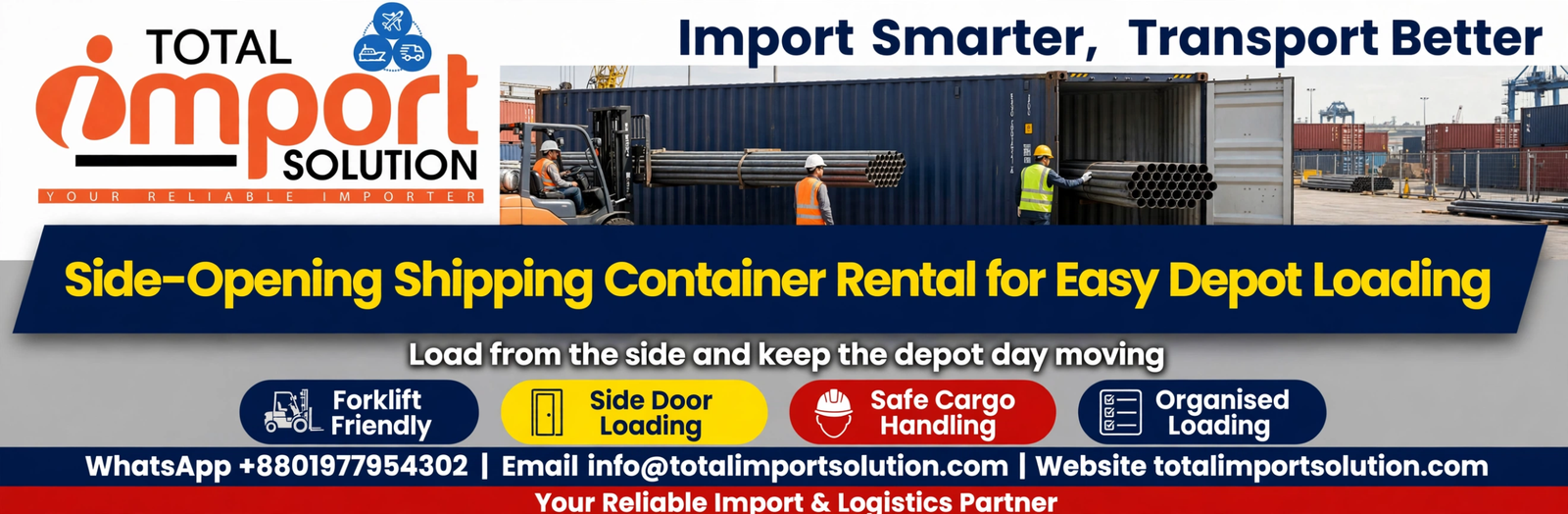
Side loading helps most with cargo that is hard to move through a narrow end door. Long cargo is the clearest example: bundles of pipe, lengths of timber, steel sections, aluminium profiles, rolls of material and long crates all slide in sideways far more easily than they turn through an end doorway.
Wide and bulky cargo suits side loading too. A machine that is almost as wide as the container, a wide crate, or a pallet stacked high can be set down through the side opening with room to spare.
Not every cargo needs a side-opening container. Small cartons that one person can carry and light goods that stack easily will load well enough through standard end doors. The question to ask is simple: does any item in this shipment need more room than the end door gives? If the answer is yes, a side-opening container is worth hiring.
| Cargo type | Side loading helps? | Why |
|---|---|---|
| Long pipes, timber, steel sections | Yes | Slides in sideways, no turning at the door |
| Wide machines and wide crates | Yes | Sets down through the wide side opening |
| Palletised goods | Yes | Each pallet goes straight into its bay |
| Heavy items | Yes | Forklift sets the load down close to the door |
| Small cartons, light boxes | Sometimes | Helpful, but end-door loading may be enough |
| Loose bulk cargo | No | Poured or loose cargo needs a different container type |
4. Container Sizes and Approximate Capacities
Side-opening containers are hired in the same sizes as standard containers, and the figures below are the widely used approximate capacities for those sizes. They are approximate, not exact: the inside space of any one container depends on its build, its wall thickness and the door gear, so always confirm the inside measurements of the actual container before you plan the load. The payload figures are also approximate, and the limit that matters for your shipment is the figure on the container plate and in your booking papers, which you must check before loading.
| Size | Inside volume (approximate) | Payload (approximate) | Best for |
|---|---|---|---|
| 20 foot standard | About 33 cubic metres (CBM) | About 26,000 to 28,000 kg | Heavy cargo in a small space, long items in a shorter box |
| 40 foot standard | About 67 cubic metres (CBM) | About 26,000 to 28,000 kg | Lighter cargo, long runs of palletised goods |
| 40 foot high cube | About 76 cubic metres (CBM) | About 26,000 to 28,000 kg | Tall cargo, extra height for stacked pallets |
A 20 foot container suits heavy cargo because its small volume fills up with weight before it fills up with space. A 40 foot container suits lighter cargo that takes up room without weighing much.
When you choose a size, measure your cargo first. Measure the longest item, the widest item, and the tallest stack, and add room for packing, pallets and bracing. Then check those measurements against the inside measurements of the container you will hire, not against a figure in a brochure. Weight matters as much as space: add the weight of the cargo, the pallets, the packing and the bracing, and check the total against the payload figure for the container.
5. Checking the Side Doors Before You Sign
The side doors are the reason you hired this container, so they are the first thing to check. A side-opening container that will not open, or will not close and seal properly, is no better than a standard container. Check the doors at the depot, before you sign the hire papers, and do not accept the container until the checks pass.
Start with the outside. Walk the full length of the opening side and look at the door panels, the hinges and the locking rods.
Then check the seals. Run your hand along the rubber seal around each door and look for cracks, hard patches, missing pieces and places where the seal has come away from the frame. Close the door and look for daylight coming through the seal line from inside the container. Daylight through a closed door means water will come through too.
Use the checklist below at the depot, and tick each line only after you have seen it with your own eyes. Photograph the doors open and closed, and photograph any damage you find.
| Check | What to look for | If it fails |
|---|---|---|
| Side door panels | Flat, straight, no holes or dents | Ask for repair or a replacement container |
| Hinges | Straight, free of damage, doors swing freely | Ask for repair or a replacement container |
| Locking rods | Turn freely and hold the doors shut | Ask for repair or a replacement container |
| Rubber seals | Whole, soft, no cracks or gaps | Ask for a new seal or a replacement container |
| Daylight test | No daylight through a closed door | Do not accept the container for loading |
| Floor edge | Sound and level where doors meet the floor | Ask for repair or a replacement container |
| Top rail | Straight, doors close flat against it | Ask for repair or a replacement container |
| End doors | Open, close and lock in the usual way | Ask for repair or a replacement container |
6. Loading Plan: Order, Weight and Balance
A good loading day is decided the day before, on paper. Before the container arrives, write a loading plan that lists every item, its weight, its size, and the bay where it will sit. The plan should say which items go in first, which go in last, and which side door bay each item will enter through.
Order matters even with side doors. Heavy items go at the bottom and towards the middle of the container, where the weight is spread evenly across the floor. Light items go on top. Items that must come out first at the destination go near a side door bay where they can be reached without moving other cargo. Items that are fragile go where they will not be crushed by heavier goods and where they can be braced on all sides.
Balance matters as much as order. A container loaded heavy on one side or one end is harder to lift, harder to carry on a truck, and more likely to shift on the road. Spread the weight evenly from side to side and from end to end. Put the heaviest items low and near the centre of the floor.
Write the plan down in a simple form that the team can follow. List the items in loading order, with the bay number and the door they will enter through. Keep a copy of the plan at the container, and give a copy to the person who will unload it at the destination.
7. Forklift and Handling Equipment at the Depot
Side loading depends on the right handling equipment, and the depot is where that equipment lives. The main tool is the forklift, and the size of forklift you need depends on the heaviest pallet in your shipment. A forklift that is too small for the load is unsafe, and a forklift that is too large for the space will not be able to turn beside the container.
The ground beside the container matters too. A forklift carrying a heavy pallet needs firm, level ground to approach the side doors. Soft ground, loose gravel, puddles or a slope can make the forklift tip or sink, and a forklift that cannot reach the doors squarely cannot set a pallet down in its bay.
Other equipment may be needed for long or awkward items. A crane or a second forklift can help with long bundles that one forklift cannot carry alone. Slings, spreader bars and lifting beams can help with machines that have no fork pockets. Pallets, dunnage and bracing timber should be at the container before loading starts, not fetched halfway through the job.
The people matter as much as the machines. The forklift driver should know the loading plan, the bay numbers and the order of loading, and the workers should know where to stand and which items are fragile. A short talk before the work starts, with the plan in hand, prevents the misunderstandings that cause damage.
8. Step-by-Step Loading at the Depot
Loading a side-opening container follows a clear sequence. Follow the steps in order, and do not skip ahead: each step makes the next one easier.
Step 1: Position the container. Park the container with its opening side facing the loading area, with clear space along the whole side for the forklift. Chock the wheels and check that the container sits level.
Step 2: Open and check the side doors. Open every side door panel you will use and check that each one swings freely and stays open on its own.
Step 3: Lay out the cargo in loading order. Set the pallets and items out beside the container in the order they will go in, with the first items closest to the door bay they will enter through.
Step 4: Load the heaviest items first. Place the heaviest items low and towards the middle of the floor, through the side door bay nearest to their place.
Step 5: Fill each bay in turn. Work along the container bay by bay, placing each pallet or item in its planned place.
Step 6: Brace as you go. Brace each bay as it is filled, rather than leaving all the bracing until the end.
Step 7: Load the light and fragile items last. Place light items on top of the heavy load and fragile items where they are braced on all sides.
Step 8: Check the load from the side. Before closing the doors, walk the full length of the open side and look at the whole load. Check that the weight is even, that the bracing is firm, and that nothing is pressing against the doors.
Step 9: Close and lock the side doors. Close each door panel in turn and lock the rods. Check that each door closes flat and that the seal sits evenly all round.
Step 10: Record the load. Write down the final weight, the number of pallets and items, the bay each item is in, and any change from the plan.
9. Securing, Lashing and Bracing Inside the Container
Cargo moves when a container is lifted, stacked, carried by truck and loaded onto a vessel. If it is not secured, it will slide, tip and press against the doors. Securing the cargo is not an extra step: it is part of loading, and it should be done bay by bay as the container fills, not left until the end.
Bracing stops cargo from moving sideways and forward. Timber, blocking and dunnage bags fill the gaps between the cargo and the container walls, so there is no room for the load to slide. Brace each item on all four sides where you can.
Lashing holds cargo down and stops it from tipping. Straps and lashing belts run from the cargo to the lashing points on the container floor and walls. Check that the lashing points you use are sound, and do not lash to a door hinge, a seal or a damaged fitting. Tighten each strap until it is firm, and check it again after the next bay is loaded, because a strap can slacken when the cargo beside it is moved.
Check the securing from outside the container before the doors are closed. Look along the open side and check that every bay is braced, every strap is tight, and nothing is leaning against a door. If anything moves, fix it now, while the side is still open and the cargo can still be reached.
10. Weather, Dust and Keeping Cargo Dry at an Open Depot
A depot is an open yard, and an open side door is an open invitation to rain, dust and wind. A side-opening container is at its most open during loading, and that is exactly when the cargo is most exposed. A shower during loading can soak cartons, rust bare steel and swell timber, and dust blown in from the yard can settle on goods that must arrive clean. Plan for the weather before the loading day.
Check the forecast the day before and on the morning of the loading day. If rain is expected, ask the depot whether the container can be loaded under cover, or whether a tarpaulin can be rigged over the open side. If no cover is available, load the most sensitive cargo first, while the weather is still dry, and keep tarpaulins ready to throw over the open side and over cargo waiting beside the container.
Dust is a quieter problem. At a busy depot, trucks and forklifts stir up dust all day, and it settles on everything. If your cargo must arrive clean, wrap it before it reaches the depot.
At the end of the loading day, check the cargo for damp before the doors are closed. If anything is wet, dry it or replace it before the doors are closed.
11. Depot Rules, Gate Pass and Paperwork
Every depot has its own rules, and a loading day runs on paperwork as much as on forklifts. Before the loading day, confirm with the depot what papers are needed for the container to enter, for the truck to enter, and for the cargo to be loaded.
The gate pass is the first paper. Confirm who issues it, what details it needs, and how far in advance it must be arranged. The gate pass usually needs the container number, the truck number, the names of the driver and the workers, and the date and time of the visit.
The hire papers are the second set. The hire agreement should show the container number, the size and type, the pickup place and date, and the return place and date.
The cargo papers are the third set. These are the papers that describe the goods: the packing list, the weight record and any document the destination needs. If a document is missing, raise it before loading starts, not after the doors are closed.
Confirm availability in writing before the date, and again on the day, because depot availability changes from day to day. A loading slot, a forklift, a parking bay or a depot service that was available last week may not be available this week. Written confirmation protects both sides: the depot knows what you need, and you have a record of what was agreed. Do not rely on a verbal promise for a loading slot or a piece of equipment.
12. Returning the Container: Condition and Handover Checks
The hire does not end when the doors are closed. It ends when the container is returned, checked and handed over, and the return check matters as much as the pickup check. A container returned with damage, dirt or missing fittings can lead to a dispute.
Before the return, clean the container. Sweep the floor, remove all bracing timber, straps, dunnage and packing, and wipe down the walls.
Check the side doors again at the return, in the same way as at pickup. Open each panel, check the hinges and the locking rods, and look at the seals. If a door was damaged during loading or during the journey, note it and tell the depot before the handover, with photographs.
Hand the container over in person where you can. Walk the depot staff around the container, show them the doors, the floor and the inside, and go through the return checklist together. Sign the return receipt only after the check is done, and keep a copy with the hire papers. The return receipt should show the container number, the date and time of return, the place of return, and the condition noted at handover.
| Return check | Done? |
|---|---|
| Floor swept, bracing and packing removed | |
| Side doors open, close and lock freely | |
| Seals whole, no daylight through a closed door | |
| Floor and walls checked for damage | |
| Damage, if any, noted and photographed | |
| Return receipt signed, copy kept |
13. How Total Import Solution Helps You Hire a Side-Opening Container
Total Import Solution supports importers in Bangladesh with container rental alongside its import services, and applies the checks in this guide before a container is accepted for a customer. The team helps you choose the size that fits your cargo, confirm the container type in writing, check the side doors at the depot, plan the load, and raise a problem with the depot before you sign.
The team has served importers in Bangladesh since 2016, working with cargo loaded at Chittagong off-dock ICDs, Dhaka inland depots, and factory sites. For each hire, the team confirms the container number, the size and type, the pickup place and date, and the door details in writing, so you can check them against the container in front of you.
A rate or fee for a hire is confirmed only after checking the actual shipment and documents, so share your cargo description, container size and type, loading place, date or date range, and destination, and the team will confirm the details for your actual shipment.
Frequently Asked Questions
1. What is a side-opening container?
A side-opening container is a standard steel shipping container with one long side fitted with doors that open along the full length, or along most of it. The end doors work in the usual way.
2. Why hire a side-opening container for depot loading?
Because loading can happen along the whole length of the container, close to where each item will sit. A forklift can place a pallet straight into its bay, long items can slide in sideways, and several workers can load different bays at the same time.
3. Which cargo suits side loading best?
Long cargo such as pipes, timber and steel sections, wide machines and wide crates, palletised goods and heavy items all suit side loading.
4. What sizes of side-opening container can I hire?
The usual sizes are 20 foot standard, 40 foot standard and 40 foot high cube. A 20 foot container holds about 33 cubic metres (CBM), a 40 foot container holds about 67 cubic metres (CBM), and a 40 foot high cube holds about 76 cubic metres (CBM). These are approximate figures.
5. How much weight can a side-opening container carry?
The payload of the usual sizes is about 26,000 to 28,000 kg, which is an approximate figure. The limit that matters for your shipment is the figure on the container plate and in your booking papers, which you must check before loading, and never exceed.
6. How do I check the side doors before I sign?
Open each panel and close it again, check that it swings freely and closes flat, run your hand along the rubber seals for cracks and gaps, and look for daylight through a closed door from inside.
7. What should I do if a side door does not close flat?
Do not accept the container for loading. Ask the depot for a repair or a replacement container, and check the replacement in the same way. A door that does not close flat will not seal, and a seal that does not seal will let rain and dust into your cargo.
8. Can several forklifts work on one container at the same time?
Yes, that is one of the main benefits of side loading. Forklifts can work along the length of the container, placing each pallet in its own bay, while workers load cartons from the side. Keep the loading area clear.
9. How should I plan the order of loading?
Put heavy items at the bottom and towards the middle of the floor, light items on top, fragile items where they are braced on all sides, and items that must come out first at the destination near a side door bay where they can be reached. Write the plan down and share it with the team before the work starts.
10. How do I stop cargo from moving inside the container?
Brace each bay as it is filled, using timber, blocking and dunnage to fill the gaps between the cargo and the walls, and lash the cargo to the lashing points on the floor and walls with straps. Check the bracing and the straps before the doors are closed.
11. What if it rains during loading at the depot?
Check the forecast the day before and on the morning of the loading day, and ask the depot whether the container can be loaded under cover. Keep tarpaulins ready for the open side and for cargo waiting beside the container.
12. What papers do I need for a depot loading day?
You need a gate pass for the container, the truck and the workers, the hire agreement and booking confirmation, the pickup receipt and inspection report, and the cargo papers such as the packing list and weight record. Confirm with the depot before the day what papers are needed.
13. Do I need to confirm depot availability in writing?
Yes. Confirm availability in writing before the date, and again on the day, because depot availability changes from day to day. Written confirmation protects both sides.
14. What should I check when I return the container?
Clean the container, sweep the floor and remove all bracing and packing, check the side doors, hinges, locking rods and seals in the same way as at pickup, and note any damage with photographs before the handover. Keep a copy of the return receipt with the hire papers.
15. How is a rate or fee for a side-opening container hire confirmed?
A rate or fee is confirmed only after checking the actual shipment and documents. Share your shipment details and the team will confirm the details for your actual shipment.
16. How can Total Import Solution help with side-opening container hire?
Total Import Solution supports importers in Bangladesh with container rental alongside its import services, helping you choose the size, confirm the container type in writing, check the side doors at the depot, plan the load, and raise problems with the depot before you sign.
Contact Total Import Solution
For side-opening shipping container rental for easy depot loading in Bangladesh, contact Total Import Solution:
- Company: Total Import Solution, serving importers in Bangladesh since 2016
- Service: Side-Opening Shipping Container Rental for Easy Depot Loading
- WhatsApp: +8801977954302
- WhatsApp direct link: https://wa.me/8801977954302
- Phone: +8801977954302
- Email: info@totalimportsolution.com
- Website: totalimportsolution.com
Get a quote in 1 minute: send these details on WhatsApp.
- Cargo description — what the goods are and how they are packed
- Container size and type — for example 20 foot standard or 40 foot high cube
- Loading place — factory, Chittagong off-dock ICD, or Dhaka inland depot
- Date or date range — when the container is needed
- Destination — the destination port and country
Share these details, and the team will help you check the side doors before you sign.
