
High-Payload 20ft Containers: Rental Pricing and Specs
A high-payload 20ft container is the workhorse of heavy cargo. It is short, strong, and built to carry dense goods such as machinery parts, metal products, stone goods, and heavy raw materials. For an importer in Bangladesh who buys heavy cargo from China, the 20ft container is often the right box, because its shorter length suits dense loads and its payload is high for its size. This guide explains what high payload means, how the specs work, and how rental pricing is worked out in practice.
No fixed rental rate is given in this guide, because a rate is confirmed only after checking the actual shipment and documents. Rental pricing depends on the route, the lease period, the container condition, the port of loading, and the terms of the lease. What this guide gives is a clear way to understand the factors, to compare offers fairly, and to plan a heavy load that stays within the limit. All payload and weight figures here are widely standard approximate figures, clearly labelled as approximate. The actual limit for a container is on the plate fixed to that container, and the plate is the authority.
Since 2016, Total Import Solution has supported importers in Bangladesh with container hire guidance, heavy load planning, documentation, customs clearance support, and delivery coordination. The team works with buyers who import machinery and heavy goods for the first time, and with buyers who ship heavy loads on a regular basis. This guide gives practical steps only, using approximate standard figures, and it advises checking the actual container in every case.
1. What a High-Payload 20ft Container Means
A high-payload 20ft container is a standard 20 foot steel container built to carry a heavy weight of cargo. Payload means the weight of the cargo alone, without the weight of the empty container. A high payload means the container can carry a large weight of dense goods in a short box. The 20ft size is about 6 metres long, which makes it easy to place at a factory yard, easy to load with a forklift, and easy to move by truck after discharge. For dense cargo, the weight limit is reached long before the space is full, so the short box is not a drawback. The importer should think in weight first and in volume second when the cargo is heavy.
| Term | What it means | Why it matters |
|---|---|---|
| Payload | Weight of cargo the container can carry | The figure to watch most closely |
| Tare weight | Weight of the empty container | Needed to work out the gross weight |
| Gross weight | Payload plus tare weight together | The figure the carrier and port use |
| High payload | A large payload for the box size | Suits dense, heavy cargo |
| 20ft size | Short box, about 6 metres long | Easy to place, load and move |
2. Payload, Tare Weight and Gross Weight
Three weights matter for every container, and they are easy to confuse. The payload is the weight of the cargo alone, and it is the figure the importer must watch most closely. The tare weight is the weight of the empty container, and it varies a little from one container to another. The gross weight is the payload plus the tare weight, and it is the figure the carrier and the port use for lifting and stowage. As a widely standard approximate guide, a 20ft container has a payload of about 28,000 kg. This is an approximate figure only. The tare weight of a 20ft container is about 2,300 kg as an approximate figure, so the gross weight is about 30,300 kg as an approximate figure. The actual figures for the container in hand are on its plate, and the plate is the authority.
| Weight | Approximate figure for a 20ft container | Where to find the actual figure |
|---|---|---|
| Payload | About 28,000 kg | On the container plate |
| Tare weight | About 2,300 kg | On the container plate |
| Gross weight | About 30,300 kg | On the container plate |
| Volume | About 33 CBM | In the container spec sheet |
3. Why Importers Choose the 20ft Size for Heavy Cargo
Importers choose the 20ft size for heavy cargo because the short box matches the way dense goods are packed and handled. A short box is easier to load evenly, because the weight does not have far to spread. A short box is easier to place at a factory yard, because it needs less room and a shorter access route. A short box is easier to move by truck, because the load sits closer to the axles. For a buyer in Bangladesh who imports machinery parts or metal goods from China, these points matter on every shipment. The 20ft container is also widely available on the China to Bangladesh routes, which makes booking simpler.
| Reason | What it gives the importer | What to check |
|---|---|---|
| Short box | Even loading, less spread | Weight spread across the floor |
| High payload | Dense cargo fits in one box | Plate figure for that container |
| Easy placement | Fits a small factory yard | Yard space and truck access |
| Wide availability | Booking is simpler | Agent confirms the box type |
| Lower handling | Less space to fill and check | Load plan kept in writing |
4. How Rental Pricing Is Worked Out
Rental pricing for a high-payload 20ft container is worked out from several factors, and no single rate fits every shipment. The route matters, because the port of loading and the port of discharge affect the cost. The lease period matters, because a longer hire is priced differently from a short hire. The container condition matters, because a newer box and an older box are priced differently. The season matters, because busy periods change availability. The terms of the lease matter, because the return place, the free time allowed, and the repair rules all form part of the price. A rate is confirmed only after checking the actual shipment and documents, and the importer should ask for the terms in writing before signing.
| Pricing factor | How it affects the rental | What the importer should ask |
|---|---|---|
| Route | Port of loading and discharge | Which ports the price covers |
| Lease period | Longer hire, different terms | How the period is counted |
| Container condition | Newer or older box | Age and condition of the box |
| Season | Busy periods change availability | Whether the rate holds for the dates |
| Return place | Where the box must go back | Return depot and free time |
| Repair rules | Who pays for damage | Return standard in writing |
5. What to Check Before You Book
Before booking a high-payload 20ft container, the importer should check five things. First, the cargo weights, added up from the supplier’s figures and checked against the packing list. Second, the container plate, read on the actual box before loading starts. Third, the lease terms, read in full before signing, including the return standard and the free time. Fourth, the documents, checked so that the invoice, the packing list, and the bill of lading agree on the weight. Fifth, the road plan, checked so that the truck and the route suit the loaded box. Each of these checks takes a short time, and each one prevents a problem that would take far longer to fix.
Step 1: Add up the cargo weights. Get the weight of each carton in writing from the supplier and add the total.
Step 2: Read the container plate. Note the payload, tare weight and gross weight on the actual box.
Step 3: Read the lease terms. Check the return standard, the free time, and the repair rules before signing.
Step 4: Check the documents. Compare the weights on the invoice, packing list and bill of lading.
Step 5: Plan the road stage. Ask the agent about the truck, the route, and the road limit for the loaded box.
The booking should be made with the agent once these checks are done. The agent should receive the carton weights, the packing list, and the loading plan in good time, so the right box can be arranged and the loading can be planned. A buyer who books in a hurry, without the weights in hand, may find that the box does not suit the cargo, which leads to a reload at the port. A buyer who books early, with the figures ready, gives the agent time to find a sound box and to plan the loading. The importer should also ask the agent for the container number and the depot details in writing, so the loading team knows which box to expect.
6. Reading the Container Plate
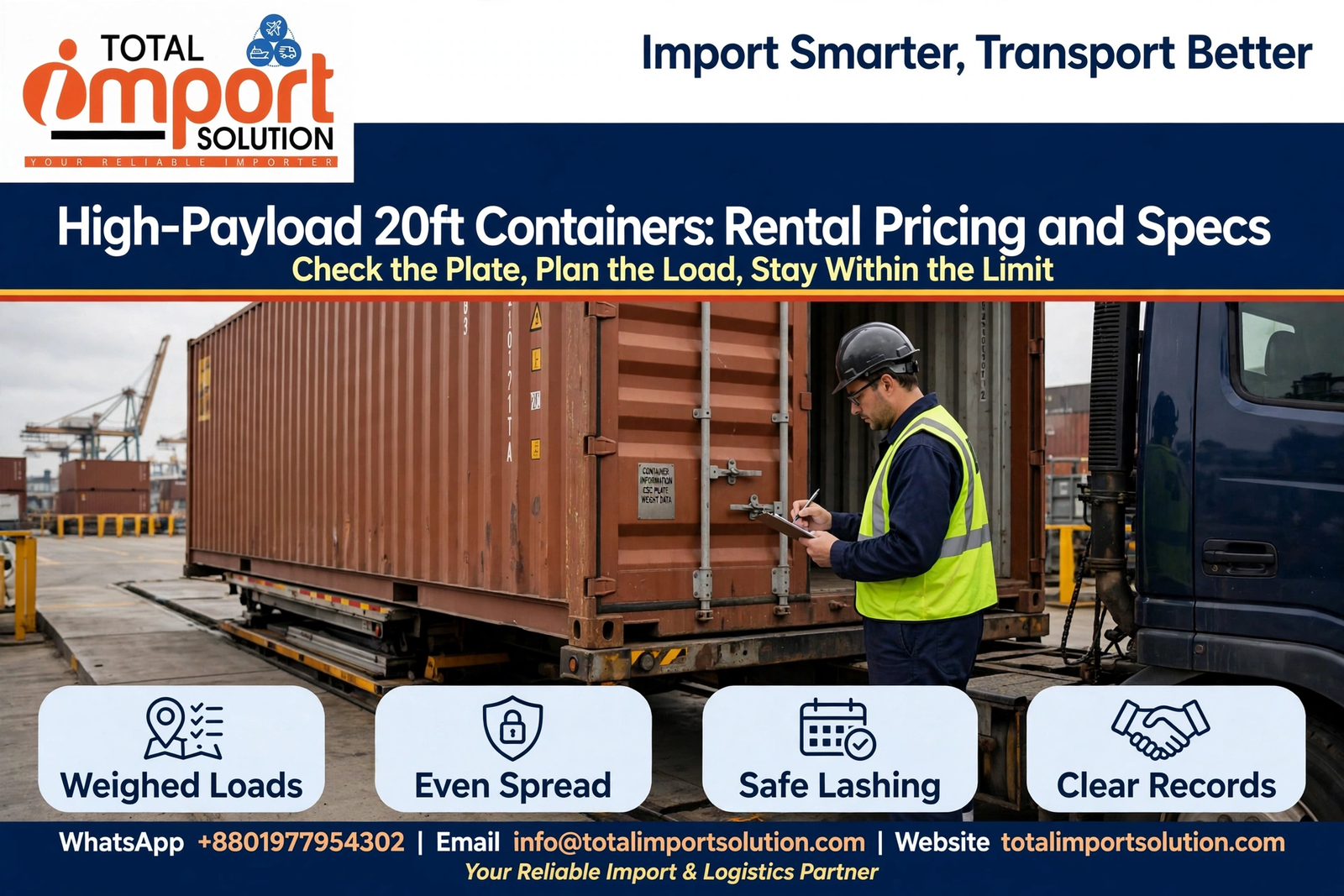
Every container carries a plate, usually fixed to the door, that shows its key figures. The plate shows the maximum gross weight, the tare weight, and the maximum payload, together with the container number, the size and type code, and the inspection dates. The importer, or the person loading the container, should read the plate before loading starts and write the figures down. If the plate is damaged, missing, or hard to read, the container should not be loaded until the agent or the depot confirms the figures in writing. The plate is the authority for that container, and it overrides any general guide, including the approximate figures in this article.
| Plate item | What it shows | What to do with it |
|---|---|---|
| Maximum gross weight | Heaviest the loaded box may be | Never load past this figure |
| Tare weight | Weight of the empty box | Subtract from gross to find payload |
| Maximum payload | Heaviest cargo the box may carry | Compare with the cargo total |
| Container number | Identity of the box | Record it on every document |
| Inspection dates | When the box was last checked | Note if a check is overdue |
Step 1: Find the plate. Look on the container door for the fixed metal plate.
Step 2: Read the gross weight. Note the maximum gross weight shown on the plate.
Step 3: Read the tare weight. Note the weight of the empty container.
Step 4: Work out the payload. Subtract the tare weight from the gross weight to find the payload for that container.
Step 5: Write it down. Record the figures with the container number in the loading plan.
7. Loading a Heavy 20ft Container Step by Step
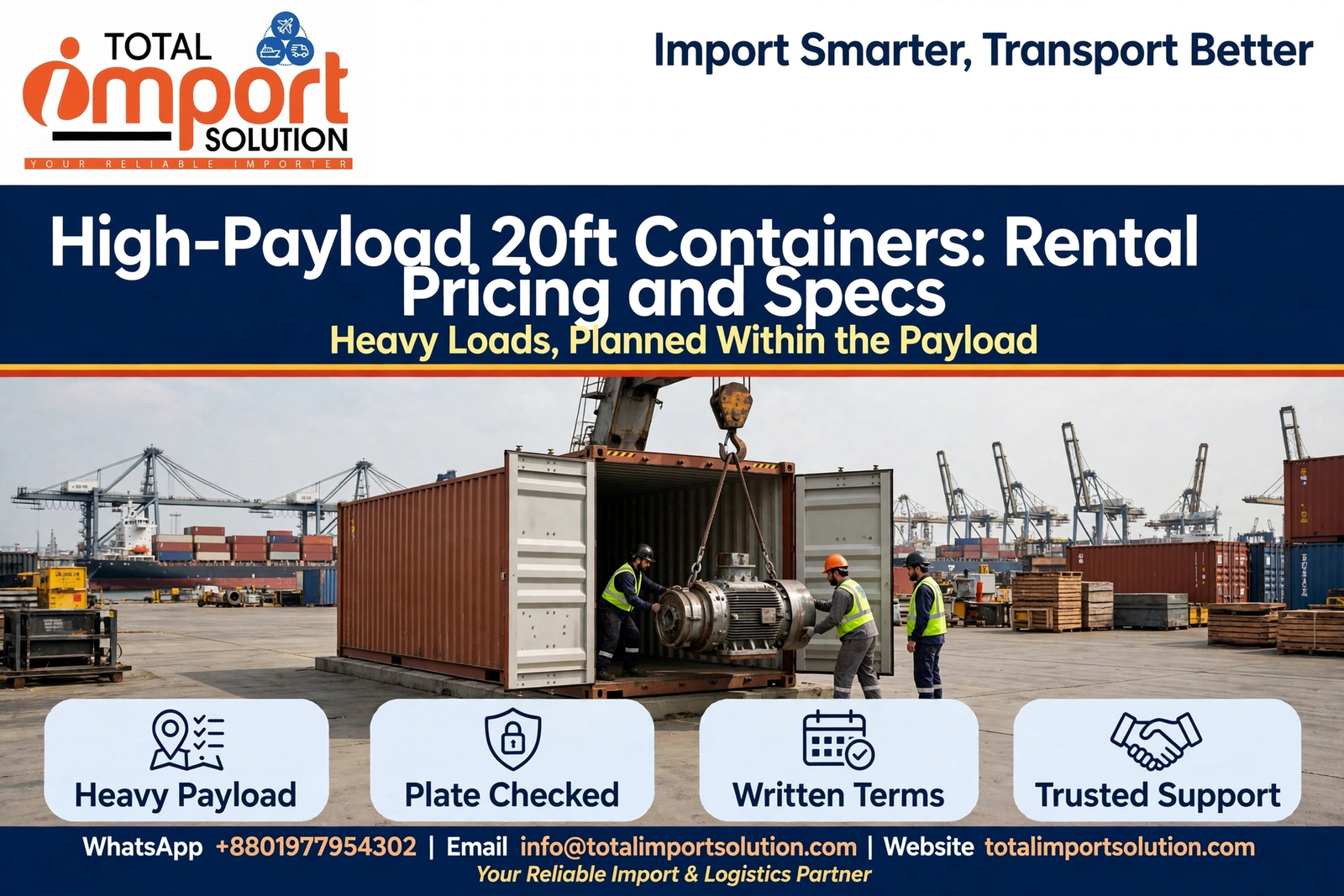
Loading a heavy 20ft container needs a plan, because the weight must be spread evenly and the load must not shift. The loading team should work from a written load plan that shows the carton count, the weight of each group of cartons, and the total weight. The heaviest items go at the bottom and near the centre of the box, and the lighter items go on top. The load should be balanced from side to side, so that no axle is overloaded on the road. Bracing and dunnage should be used where needed, so the cargo cannot move during transport. After loading, the packed container should be weighed at a weighbridge, and the verified gross mass should be recorded and given to the carrier.
Step 1: Prepare the load plan. List every carton group with its weight and its place in the box.
Step 2: Load heavy items low. Put the heaviest cartons at the bottom and near the centre.
Step 3: Spread the weight evenly. Balance the load from side to side and from front to back.
Step 4: Brace the load. Use bracing and dunnage so the cargo cannot shift.
Step 5: Weigh the packed box. Use a weighbridge after loading and record the verified gross mass.
8. Packing, Bracing and Weight Spread
Packing and bracing decide whether a heavy load arrives in good order. Cartons should be strong enough for the weight they carry, and heavy items should not sit on top of light cartons. Pallets should be sound, and the load should be spread across the floor so that no single point carries too much weight. Bracing should fill the gaps between cartons, so the load cannot shift when the container is lifted or when the truck turns. Dunnage, such as timber or air bags, should be used where the load needs support. A load that is packed with care protects the cargo, the container floor, and the people who handle the box.
| Packing point | What to do | Why it matters |
|---|---|---|
| Strong cartons | Use cartons suited to the weight | Weak cartons crush under heavy loads |
| Heavy items low | Heaviest at the bottom, near the centre | Protects the floor and the balance |
| Even spread | Weight across the whole floor | No single point is overloaded |
| Bracing | Fill gaps so the load cannot shift | A shifted load damages cargo |
| Dunnage | Timber or air bags where needed | Supports the load in transit |
| Floor check | Check the floor before loading | A soft floor cannot carry heavy cargo |
The importer should ask the supplier how the cargo will be packed, and should check the packing list against the plan. If the supplier packs the cargo without a plan, the loading team at the port may have to repack it, which takes time and adds handling. A packing plan agreed in advance, with the carton sizes and weights in writing, lets the loading team work quickly and safely. The importer should also ask the agent whether the loading team at the port of loading has experience with heavy 20ft loads, because a team that knows heavy cargo will load it better. A clear plan, shared with the supplier and the agent, is the best way to keep a heavy load safe.
9. Documents for a Heavy Load
The weight of a heavy shipment appears on several documents, and they must agree with each other. The commercial invoice shows the goods and their value. The packing list shows the carton count, the item names, and the weights. The bill of lading shows the container number, the ports, and the gross weight. The verified gross mass record shows the weighed gross weight given to the carrier. If these papers disagree, the shipment can be held at the port of loading or at discharge while the difference is sorted out. The importer should compare the weights on all four papers before the container sails, and ask the supplier to correct any difference at once.
| Document | Weight shown | What to check |
|---|---|---|
| Commercial invoice | Goods, quantity, and value | Item names match the packing list |
| Packing list | Carton count and weights | Total weight matches the invoice |
| Bill of lading | Container number and gross weight | Gross weight matches the weighing record |
| Verified gross mass record | Weighed gross weight | Given to the carrier in writing |
| Delivery note | Container number and condition on delivery | Weight and seal noted on arrival |
10. Port and Road Checks in Bangladesh
Ports in Bangladesh apply weight rules when a container arrives, and the importer should know the general course of events. The container is checked against the documents, and the weight shown on the bill of lading and the packing list is compared with the actual weight where a check is made. If the weights do not match, the container can be held while the difference is sorted out. The port may weigh the container, and the importer may be asked for the weighing record from the port of loading. Keeping the verified gross mass record, the packing list, and the bill of lading in agreement is the best way to keep this stage moving. The agent should explain the port process for the shipment in hand.
| Stage | What happens | What the importer should prepare |
|---|---|---|
| Arrival | Container unloaded and moved to the yard | Container number and bill of lading |
| Weight check | Weight compared with the documents | Verified gross mass record |
| Document check | Packing list and bill of lading compared | Papers in agreement with each other |
| Hold for checking | Container held if weights do not match | Weighing record from the port of loading |
| Release | Container released for customs clearance | All papers ready before this stage |
| Road movement | Container moved by truck to the warehouse | Road transport arranged in advance |
11. Common Mistakes With Heavy 20ft Loads
Several common mistakes cause trouble with heavy 20ft loads. The first is guessing the weight instead of weighing the cargo, which leaves the documents open to challenge. The second is counting only the cargo and forgetting the packing, the pallets, and the bracing, which all add weight. The third is using a general guide figure instead of the plate on the actual container. The fourth is loading the heaviest items at one end, which overloads one axle on the road. The fifth is letting the invoice, the packing list, and the bill of lading disagree on the weight. The sixth is planning the sea stage only and forgetting the road stage. Each of these can be avoided by weighing the cargo, reading the plate, and keeping the papers in agreement.
| Mistake | Why it causes trouble | What to do instead |
|---|---|---|
| Guessing the weight | Documents can be challenged at any stage | Weigh the cargo and keep the record |
| Forgetting packing weight | Pallets and bracing add weight | Add packing, pallets, and bracing to the total |
| Using a guide figure only | The actual container may differ | Read the plate on the actual container |
| Packing heavy items at one end | One axle is overloaded on the road | Spread the weight evenly across the floor |
| Papers that disagree | Shipment held while the difference is sorted | Compare all weights before the container sails |
| Forgetting the road stage | Container cannot travel as loaded | Plan the road limit before the container sails |
12. Returning the Container in Good Order
Returning the container after a heavy load needs the same care as the pick-up. Empty the container fully, sweep the floor, and check for damage to the floor, the walls, and the doors. A heavy load can mark the floor, so the floor should be checked with care. Compare the container with the pick-up condition report, and note any new marks. Report any damage to the leasing company with photos before the return. Return the container by the agreed date, because a late return can bring extra charges under the lease. Ask the depot to sign a return condition report, and keep a copy with the shipment file.
Step 1: Empty the container fully. Remove all goods, packing, and bracing.
Step 2: Clean the container. Sweep the floor and remove all rubbish.
Step 3: Check for damage. Compare the container with the pick-up condition report, with care for the floor.
Step 4: Report any damage. Tell the leasing company with photos before the return.
Step 5: Return on time. Return by the agreed date and get a signed return condition report.
13. How to Judge a Good Provider for Heavy Container Hire
A good provider for heavy container hire is judged by clear terms, a sound container, and honest communication. Look for a provider that asks for the cargo weights before booking, reads the plate on the actual container, gives the rental terms in writing, and keeps the invoice, packing list, and bill of lading in agreement. Check that the provider plans the road stage as well as the sea stage, and reports a weight problem at once with a suggested fix. Ask other importers about their experience, and look for a provider that has worked with Bangladesh importers on a regular basis. Total Import Solution has worked with importers in Bangladesh since 2016, and the team aims to give that kind of careful, steady support on every heavy shipment.
| Quality to look for | What it looks like in practice | How to check it |
|---|---|---|
| Weight planning | Cargo weights asked for before booking | Ask how the load is planned |
| Plate checking | Plate read on the actual container | Ask for the plate figures in writing |
| Written terms | Rental terms given before signing | Ask for the agreement in advance |
| Papers in agreement | Invoice, packing list, and bill of lading agree | Compare the weights on all papers |
| Road planning | Road limit planned before sailing | Ask about the road route and limit |
| Fast reporting | Weight problems reported at once | Ask how problems are reported |
| Bangladesh experience | Regular work with Bangladesh importers | Ask about past shipments to Bangladesh |
Frequently Asked Questions
1. What is a high-payload 20ft container?
A standard 20 foot steel container built to carry a heavy weight of cargo. Its short length suits dense goods, and its payload is high for its size, which makes it the usual choice for machinery parts, metal goods, and other heavy cargo.
2. What is the approximate payload of a 20ft container?
As a widely standard approximate figure, about 28,000 kg. This is approximate only, and the actual payload for the container in hand is on its plate, which is the authority for that box.
3. How is rental pricing worked out for a 20ft container?
Pricing depends on the route, the lease period, the container condition, the season, the return place, and the repair rules. No fixed rate fits every shipment, and a rate is confirmed only after checking the actual shipment and documents.
4. What is tare weight?
Tare weight is the weight of the empty container. As an approximate figure, a 20ft container weighs about 2,300 kg empty. The gross weight is the payload plus the tare weight.
5. Where do I find the actual weight limit for my container?
On the plate fixed to the container door. The plate shows the maximum gross weight, the tare weight, and the maximum payload for that container, and it is the authority for that box.
6. Why choose a 20ft container instead of a 40ft container for heavy cargo?
Because the short box matches dense cargo. The weight limit is reached long before the space is full, so a 40ft box would carry the same weight with half the space empty, which wastes space and money.
7. Do packing, pallets, and bracing count toward the payload?
Yes. The payload covers everything inside the container, including the cargo, the packing, the pallets, and the bracing, so all of it must be added to the total.
8. What happens if a container is loaded past its limit?
It can be refused or held at the port of loading, held for checking at discharge in Bangladesh, delayed at customs clearance, or stopped on the road. The cargo and the container can also suffer damage.
9. How should heavy cargo be loaded in a 20ft container?
Put the heaviest items at the bottom and near the centre, spread the weight evenly across the floor, brace the load so it cannot shift, and weigh the packed container at a weighbridge after loading.
10. What documents carry the weight of a shipment?
The commercial invoice, the packing list, the bill of lading, and the verified gross mass record. The weights on all four papers must agree with each other.
11. Is the road weight limit the same as the sea weight limit?
No, the road limit can be lower. The truck, the trailer, and the road have their own limits, and the weight on each axle matters, so the importer should ask the agent about the road limit for the route in hand.
12. What mistakes cause the most trouble with heavy 20ft loads?
Guessing the weight instead of weighing, forgetting the packing weight, using a guide figure instead of the plate, packing heavy items at one end, letting the papers disagree, and forgetting the road stage.
13. How do I compare rental offers fairly?
Ask every provider the same questions in writing: what the rental covers, how many free days are allowed, where the container must be returned, what condition it must be in on return, and whether depot and handling charges are included. Compare the full terms, not only the first figure.
14. What should I do before returning the container?
Empty it fully, sweep the floor, check the floor, walls and doors against the pick-up condition report, report any damage with photos, and return it by the agreed date with a signed return condition report.
15. How do I choose a good provider for heavy container hire?
Look for weight planning before booking, plate checking on the actual container, written rental terms, papers kept in agreement, road planning, fast reporting of problems, and regular experience with Bangladesh importers.
16. How can Total Import Solution help with high-payload 20ft container hire?
Total Import Solution supports importers with load planning, weight checking advice, container hire guidance, document checking, customs clearance support, and delivery coordination in Bangladesh, with one team from order to delivery.
Contact Total Import Solution
- WhatsApp: +8801977954302
- Email: info@totalimportsolution.com
- Website: totalimportsolution.com
- Service: High-Payload 20ft Containers: Rental Pricing and Specs
- Company: Total Import Solution — Since 2016, serving importers in Bangladesh.
