
How to Handle Port Congestion Using Leased Equipment
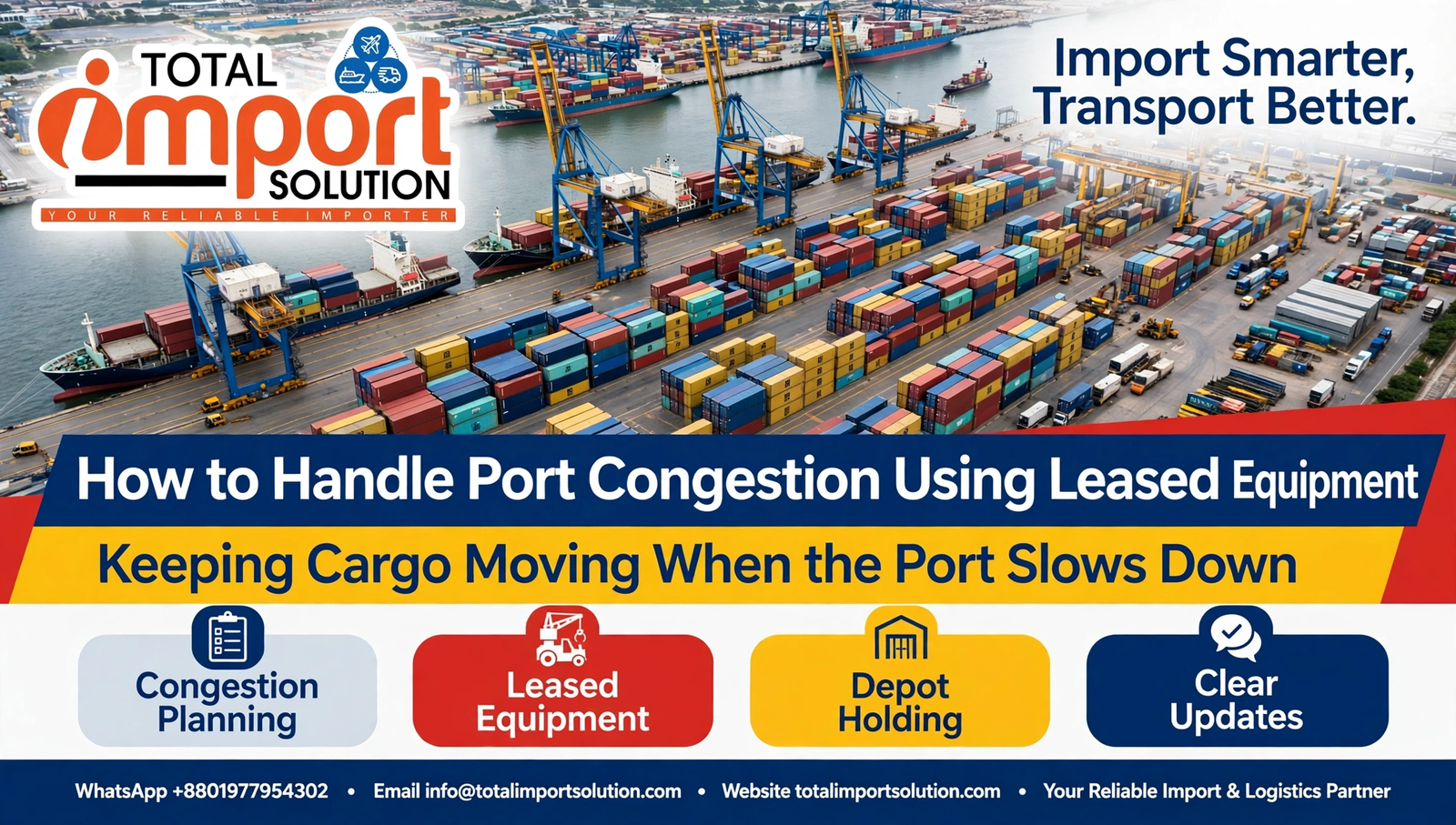
Port congestion is a familiar problem for importers in Bangladesh. A vessel arrives at Chittagong Port, but the berth is busy, the yard is full, and the container waits. Trucks queue at the gate, the clearing agent waits for the container to be placed for checking, and the factory in Dhaka waits for raw materials that are sitting in the port. Congestion does not always mean that something has gone wrong with one shipment. It often means that many vessels have arrived close together, the yard is holding more containers than usual, or the flow of trucks and trains out of the port is slower than the flow of cargo coming in. Whatever the cause, the effect is the same: the container stays longer at the port, the delivery to the factory slips, and the importer must manage the delay without losing control of the cargo.
Leased equipment is one of the practical tools an importer can use in congested times. A leased container, a leased trailer, or a prime mover hired for a period gives the importer flexible capacity that can be moved where it is needed. Leased equipment can hold cargo at an off-dock yard, carry it to an inland container depot, or move it to the factory as soon as the port releases it. This guide explains how to handle port congestion using leased equipment in practical, step-by-step terms. It covers what congestion means, why it builds up, how it affects leased equipment, planning ahead, choosing the right equipment, working with depots and inland terminals, documents, charges, and communication. No fixed prices, rates, duty percentages, or fees are given here. A rate or fee is confirmed only after checking the actual shipment and its documents.
Total Import Solution, since 2016, supports importers in Bangladesh with container leasing, shipment planning, documentation, customs clearance support, and delivery coordination. The aim of this guide is to help an importer keep cargo moving when the port is congested, using leased equipment in a planned and careful way, so that the factory receives its goods with as little disruption as possible.
1. What Port Congestion Means for Importers
Port congestion means that the port is handling more cargo than it can move through smoothly at that time. Vessels may wait for a berth, containers may wait in the yard for a long time before they are placed for checking or loaded onto a truck, and trucks may queue at the gate to enter or leave. For an importer, congestion shows up in practical ways: the container is not available on the expected day, the clearing agent cannot file or complete the clearance on schedule, and the delivery to the factory is pushed back. The importer still owns the cargo and still owes the same duties and charges, but the timing of every later step becomes uncertain. Congestion also ties up equipment: containers that sit in the yard are not available for the next shipment, and trailers that wait at the gate cannot take the next load.
| Sign of congestion | What the importer sees |
|---|---|
| Vessels waiting | Berth busy, vessel waits before unloading |
| Full yard | Container not placed for checking on time |
| Truck queues | Long waits at the port gate |
| Slow release | Clearance and delivery dates slip |
| Equipment held up | Containers and trailers tied up at the port |
2. Why Congestion Builds Up at Ports
Congestion builds up when more cargo arrives than the port can move out in the same period. Several vessels may arrive close together, each carrying many containers, and the yard must hold them all while the trucks and trains carry them away one load at a time. Seasonal demand can add to the pressure, because many importers order at the same time of year and the vessels arrive in a cluster. Weather can slow down the unloading of a vessel or the movement of trucks on the road. A breakdown of a crane or a handling machine can slow the yard, and a change in the customs checking routine can hold containers longer than usual. Congestion can also build up outside the port: if the road to Dhaka is slow, or the inland depot is full, trucks cannot return quickly to the port for the next load, and the yard fills up further. What matters is recognising the early signs — a vessel waiting, a container not placed, or a truck queue — and starting the response before the delay grows.
| Cause of congestion | How it affects the port |
|---|---|
| Many vessels together | Yard fills faster than trucks can clear it |
| Seasonal demand | Many importers order at the same time |
| Weather | Unloading and road movement slow down |
| Equipment breakdown | Crane or handling machine out of service |
| Slow inland movement | Trucks cannot return quickly for the next load |
| Longer checking | Containers held longer for customs checking |
3. How Congestion Affects Leased Equipment
Congestion affects leased equipment in several direct ways, and an importer who leases containers, trailers, or prime movers should understand each one. First, a leased container that sits in a congested yard cannot be used for the next shipment. The lease period keeps running while the container waits, so the importer pays for time in which the equipment is not moving cargo. Second, a leased trailer or prime mover that queues at the gate loses working hours, and the transporter may not be able to take the next load on the same day. Third, empty containers cannot be returned to the depot on schedule, because the depot may be full or the truck cannot reach it, and the empty container may have to wait at the factory or at an off-dock yard. Fourth, the importer may need more equipment than usual during congestion, because cargo that would normally move in one flow must be split across several moves, or held at an inland depot until the factory is ready to receive it. The practical answer is to plan leased equipment around the congestion: book earlier, keep the lease terms clear, and keep the equipment moving as soon as the port allows.
| Effect on leased equipment | What it means for the importer |
|---|---|
| Container held in the yard | Lease period runs while the container waits |
| Trailer queued at the gate | Working hours lost, next load delayed |
| Empty return delayed | Depot full, empty container waits |
| More equipment needed | Cargo split across several moves |
| Storage at inland depot | Goods held until the factory is ready |
| Unclear return date | Return plan must stay flexible |
4. Planning Ahead Before Congestion Hits
The best time to handle congestion is before it arrives. An importer who plans ahead can keep cargo moving even when the port slows down, because the equipment, the papers, and the transport are already arranged. Planning starts with the order itself: place the order early enough that a delay at the port does not stop the factory line, and share the expected arrival with the factory, so that production can plan around a range of delivery days rather than a single fixed day. The importer should also keep the documents ready before the vessel arrives, so that the customs declaration can be filed promptly when the container is placed. A second part of planning is equipment: confirm the leased containers, trailers, and prime movers in advance, agree the lease period in writing, and confirm the depot or off-dock yard that will hold the cargo if the factory cannot receive it at once. A third part is communication: agree with the provider who will report the vessel position, who will report the container status, and how often the importer will receive an update.
| Planning point | What to do |
|---|---|
| Order early | Place the order with time to absorb a delay |
| Share the arrival | Give the factory a range of delivery days |
| Prepare documents | Papers ready before the vessel arrives |
| Confirm equipment | Leased containers and trailers agreed in writing |
| Arrange holding space | Depot or off-dock yard confirmed in advance |
| Agree updates | Who reports what, and how often |
5. Using Leased Equipment to Keep Cargo Moving
Leased equipment gives the importer flexible capacity that can be moved where it is needed most during congestion. A leased container can be used to hold cargo at an off-dock yard while the factory prepares its store, so that the port yard is cleared and the container is not left standing in the port. A leased trailer or prime mover can be sent to the port as soon as the container is released, so that the container does not wait for transport after clearance. Where the factory cannot receive the full load at once, leased equipment can carry the cargo in stages, with part of the load delivered first and the rest held at an inland depot until the factory is ready. The importer should match the equipment to the cargo: a dry container for general goods, a flat rack or open top container for oversized cargo, and a reefer container for goods that need a controlled temperature. The size should also match the load. As a widely used approximate guide, a 20ft container holds about 33 cubic metres, a 40ft container holds about 67 cubic metres, and a 40ft high cube holds about 76 cubic metres. These are approximate figures only, and the buyer should check the actual container before loading, because the usable space depends on the shape of the goods and the way they are packed.
| Leased equipment | How it helps during congestion |
|---|---|
| Leased container | Holds cargo at an off-dock yard, clears the port yard |
| Leased trailer | Moves the container as soon as it is released |
| Prime mover | Carries the container to the factory or depot |
| Inland depot space | Holds cargo until the factory is ready |
| Staged delivery | Part of the load delivered first, rest held |
| Right container type | Dry, flat rack, open top, or reefer matched to the cargo |
6. Step-by-Step Response When Congestion Is Reported
Step 1: Confirm the congestion. Ask the provider or the agent for the facts: which vessel is waiting, which containers are affected, and whether the yard, the berth, or the gate is the slow point.
Step 2: Check the container status. Confirm whether the container has been unloaded, where it is in the yard, and whether it has been placed for checking or is still waiting.
Step 3: Review the documents. Check that the invoice, packing list, bill of lading, and import papers are complete and match each other, so that clearance can start as soon as the container is placed.
Step 4: Confirm the leased equipment. Check which leased containers, trailers, and prime movers are available, where they are, and whether the lease period covers the expected delay.
Step 5: Arrange holding space. If the factory cannot receive the cargo at once, confirm space at an off-dock yard or an inland container depot, and agree how the cargo will be held and moved.
Step 6: Plan the transport. Arrange the truck or prime mover for the expected release day, and keep the arrangement flexible so it can move to the next available day.
Step 7: Inform the factory. Tell the factory the revised delivery range, what has been done to keep the cargo moving, and what the factory should prepare for receiving.
Step 8: File the clearance. As soon as the container is placed, the agent files the customs declaration and answers any queries promptly.
Step 9: Move the cargo out. When the container is released, move it at once to the depot or the factory, using the leased equipment already arranged.
Step 10: Check and record. On delivery, count the goods against the packing list, check the condition, note any damage or shortage on the receipt, and record the return of the empty container.
7. Choosing the Right Leased Equipment During Congestion
Choosing the right leased equipment during congestion is a practical decision that depends on the cargo, the route, and the holding plan. The first question is the container type. General goods travel well in a dry container, oversized cargo needs a flat rack or open top container, and goods that need a controlled temperature need a reefer container. The second question is the size. A 20ft container suits a smaller load, while a 40ft container or a 40ft high cube suits a larger load or light, bulky goods, and the buyer should check the actual container before loading because approximate capacities are only a guide. The third question is the lease period. During congestion, the importer should agree a lease period that allows for delay, and should confirm in writing what happens if the equipment is held longer than planned, including how the return will be arranged. The fourth question is the condition of the equipment. Every leased container should be checked before loading: clean, dry, free of damage, with doors that close properly. A container with a leak or a damaged floor can let in rain and damage the goods. The fifth question is the transport to go with it. A container without a trailer and a prime mover is of little use during congestion, so the importer should confirm the full set — container, trailer, and mover — together, rather than booking each part separately.
| Equipment choice | What to check |
|---|---|
| Container type | Dry, flat rack, open top, or reefer matched to the cargo |
| Container size | 20ft, 40ft, or 40ft high cube matched to the load |
| Lease period | Period agreed in writing, with delay allowed for |
| Container condition | Clean, dry, no damage, doors close properly |
| Full set | Container, trailer, and prime mover confirmed together |
| Return plan | Where and how the empty container will be returned |
8. Working with Depots, ICDs and Off-Dock Yards
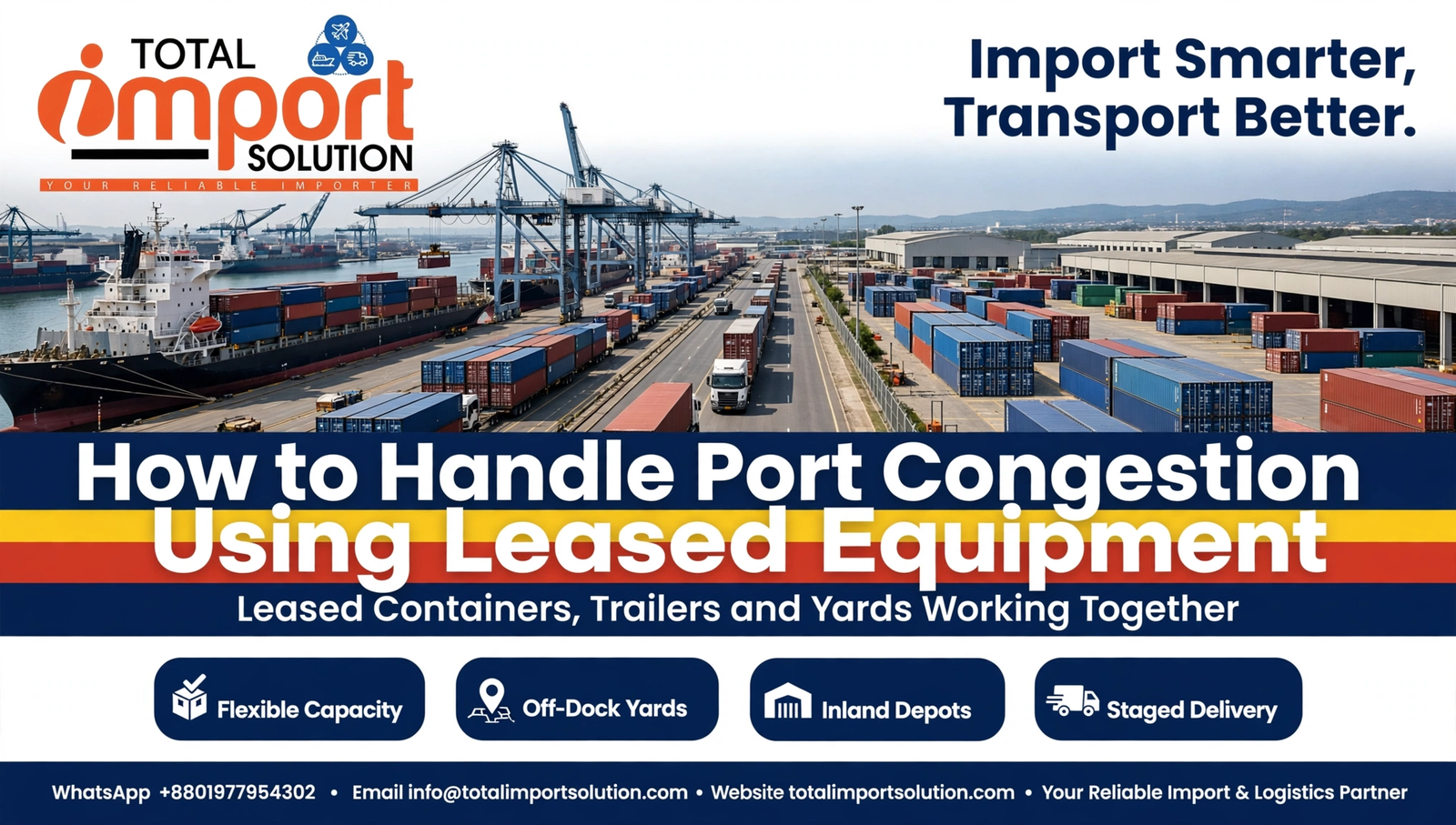
Depots, inland container depots (ICDs), and off-dock yards are the places where cargo can be held when the port is congested and the factory cannot receive it at once. Kamalapur ICD in Dhaka and Pangaon Inland Container Terminal are examples of inland points where containers can be handled away from the main port, and off-dock yards near Chittagong Port can hold containers that have been released but cannot yet travel to Dhaka. Using these places well means planning the move in advance: confirm the space, agree the handling, and confirm who will receive the container and who will release it. The importer should also confirm the documents needed at each point, because a container held at an ICD or an off-dock yard still needs its papers in order, and the seal should be checked when the container arrives and when it leaves. The provider should share a simple status list with the importer: container number, location, status, and next planned move, updated as the situation changes.
| Holding point | How it helps |
|---|---|
| Off-dock yard | Holds released containers near the port |
| Inland container depot | Handles containers away from the main port |
| Kamalapur ICD | Inland handling point in Dhaka |
| Pangaon terminal | Inland terminal for short-haul movement |
| Factory yard | Holds cargo where the factory can receive it |
| Status list | Container number, location, status, next move |
9. Documents and Customs During Congestion
Documents matter even more during congestion, because a container that is ready for clearance but has incomplete papers will wait longer, and a container with papers that disagree will be held for checking. The most important documents are the commercial invoice, the packing list, and the bill of lading. The invoice shows the supplier, the buyer, the description of the goods, the quantity, and the value. The packing list shows what is in each carton, including the item name, the quantity, and the weight. The bill of lading shows the port of loading, the port of arrival, the container number, the seal number, and the consignee. The importer's own papers include the trade licence, the import registration certificate, and the tax identification number. The buyer should check every document before the vessel arrives, and should correct any mistake at once, because a mistake found at the port during congestion takes longer to fix than a mistake found early.
Customs clearance during congestion follows the same rules as at any other time, but the timing is tighter. The agent files the declaration, customs compares the papers with the cargo, and the container may be opened for physical checking. The buyer should give the agent full and honest information, answer queries promptly, and keep the factory informed of the clearance progress. Where a shipment contains many types of goods, each type should be listed on its own line, with a clear description of the goods, their material, and their use.
| Document point | What to do |
|---|---|
| Check early | Check every document before the vessel arrives |
| Match the papers | Invoice, packing list, and bill of lading agree |
| Correct mistakes | Correct any mistake at once, before arrival |
| Clear description | Goods name, material, and use stated plainly |
| Answer queries | Reply to customs queries promptly |
| Keep the factory informed | Share clearance progress as it happens |
10. Managing Costs and Charges During Congestion
Congestion can add charges to a shipment, and the importer should understand which charges may arise and how to keep them under control. When a container stays at the port beyond the free period, storage charges can build up. When a leased container is held longer than the agreed period, the lease cost continues, and the empty container may need to be returned later than planned. When a truck waits at the gate, the transporter may charge for the waiting time. The importer can reduce them by acting early: file the papers promptly, arrange the transport for the expected release day, move the container out as soon as it is released, and return the empty container promptly under the provider's instructions. The importer should ask the provider for a clear written statement of the charges after the shipment and documents have been checked, showing each charge separately, so that the importer can see what was paid and why. A rate or fee is confirmed only after checking the actual shipment and its documents, and no fixed figure should be accepted without that check.
| Charge | What it covers |
|---|---|
| Port storage | Storage if cargo stays beyond the free period |
| Lease cost | Lease period running while equipment waits |
| Waiting time | Truck waiting at the gate or at the yard |
| Handling | Loading, unloading, and handling at the port or depot |
| Transport | Truck delivery from the port or depot to the factory |
| Agent service fee | Agent's work on documents and clearance |
11. Communication: Keeping Buyers, Suppliers and Factories Informed
Good communication is the difference between a delay that is managed and a delay that turns into confusion. During congestion, the importer, the supplier, the agent, the provider, and the factory all need the same basic facts: where the container is, what stage it has reached, what the next step is, and when the delivery is now expected. The provider should give regular updates, even when the news is that nothing has changed, because silence makes the factory plan in the dark. The importer should keep one contact point on the factory side, so that updates always reach the same person, and that person should share the update with the store team and the production team. The supplier in China should also be kept informed if the congestion affects the next order, so that the next shipment can be planned with the delay in mind. Written updates are better than verbal ones during congestion, because a written note can be shared and kept as a record. A short daily note — container number, location, status, and next planned move — is enough to keep everyone working from the same facts.
| Communication point | Good practice |
|---|---|
| Regular updates | Update even when nothing has changed |
| One contact point | Same person receives every update |
| Written notes | Short daily note, shared and kept |
| Factory briefing | Store and production teams told together |
| Supplier informed | Next order planned with the delay in mind |
| Shared facts | Container number, location, status, next move |
12. How to Judge a Good Equipment and Logistics Provider in Congested Times
The buyer should judge a provider by clear signs, not by promises, and congestion is the time when those signs matter most. The first sign is honest reporting. A good provider reports congestion at once, explains what it means for the delivery, and gives a revised range of delivery days rather than a single date that cannot be kept. The second sign is a practical plan: the provider explains how the leased equipment will be used, where the cargo will be held, and how the transport will be arranged, in writing. The third sign is clear communication, with regular updates and copies of the documents shared as they are issued. The fourth sign is careful paperwork: the provider checks the invoice, packing list, and bill of lading against each other before the goods are shipped. The fifth sign is clear charges in writing, with each charge explained separately and no fixed figure given without checking the actual shipment and its documents. The sixth sign is experience with congestion itself: a provider who has handled congested periods before will know the depots, the inland terminals, and the off-dock yards, and will know how to keep cargo moving when the port slows down.
| Provider quality | Good sign |
|---|---|
| Honest reporting | Congestion reported at once, with a revised range |
| Practical plan | Equipment, holding, and transport explained in writing |
| Communication | Regular updates, documents shared |
| Paperwork | Documents checked before shipping |
| Charges | Each charge explained in writing |
| Congestion experience | Knows the depots, terminals, and off-dock yards |
13. Working with Your Provider, Mistakes to Avoid, and How Total Import Solution Helps
Working well with your provider during congestion starts with sharing full information: the exact goods, quantities, supplier details, the expected arrival, and the date the factory needs the goods. Share the order, the invoice, and the packing list as soon as they are ready, so the provider can plan the equipment, the holding space, and the customs papers, and can spot a problem early. Keep one contact point on the factory side, and keep the store team informed of the expected delivery range.
The mistakes to avoid are simple, but they happen often. Do not wait for the port to clear on its own without a plan. Do not book leased equipment as if the port were running normally, without allowing for delay in the lease period. Do not send unchecked documents, mix many types of goods in one carton without a clear list, or wait until the container is already in the yard to prepare the customs papers. Do not leave the holding space and the inland transport unplanned until the release day, and do not keep the factory in the dark while the container waits. Total Import Solution helps importers handle port congestion with leased equipment at each stage. Since 2016, the company has supported importers in Bangladesh with container leasing, depot and inland terminal coordination, document checking, customs clearance support, and delivery coordination to factories in Dhaka. The team checks the invoice and packing list against the order, follows the shipment through the congested port, arranges the leased equipment and the holding space, files the customs papers, and keeps the buyer informed until delivery.
Frequently Asked Questions
1. What is port congestion?
Port congestion means that the port is handling more cargo than it can move through smoothly at that time, so vessels wait for a berth, containers wait in the yard, and trucks queue at the gate.
2. Why does port congestion happen?
It happens when more cargo arrives than the port can move out in the same period, often because several vessels arrive close together, seasonal demand rises, weather slows work, or inland movement is slow.
3. How does congestion affect my shipment?
The container is not available on the expected day, clearance and delivery dates slip, and the factory must plan around a revised delivery range rather than a single fixed day.
4. How does congestion affect leased equipment?
A leased container held in the yard cannot be used for the next shipment, a trailer queued at the gate loses working hours, and empty containers cannot be returned to the depot on schedule.
5. What leased equipment helps during congestion?
Leased containers, leased trailers, and prime movers help, together with holding space at an off-dock yard or an inland container depot until the factory can receive the cargo.
6. How should I plan ahead for congestion?
Place the order early, share the expected arrival with the factory, prepare the documents before the vessel arrives, confirm the leased equipment in writing, and arrange holding space in advance.
7. What is the step-by-step response when congestion is reported?
Confirm the congestion, check the container status, review the documents, confirm the leased equipment, arrange holding space, plan the transport, inform the factory, file the clearance, move the cargo out, and check on delivery.
8. How do I choose the right leased container during congestion?
Match the container type to the cargo, the size to the load, agree a lease period that allows for delay, check the container condition before loading, and confirm the trailer and prime mover together.
9. What are depots, ICDs, and off-dock yards?
They are places where cargo can be held when the port is congested and the factory cannot receive it at once, including inland container depots, Kamalapur ICD, Pangaon terminal, and off-dock yards near the port.
10. What documents do I need during congestion?
The commercial invoice, the packing list, the bill of lading, the trade licence, the import registration certificate, and the tax papers. A certificate of origin may also be needed.
11. How does customs clearance work during congestion?
The agent files the declaration, customs compares the papers with the cargo, and the container may be opened for physical checking. Clear papers and prompt answers keep the check as quick as possible.
12. What extra charges can congestion cause?
Port storage beyond the free period, lease cost running while equipment waits, truck waiting time, handling, transport, and the agent service fee. Each charge should be shown separately in writing.
13. How should I keep everyone informed during congestion?
Give regular written updates, keep one contact point on the factory side, brief the store and production teams together, and share a short daily note with the container number, location, status, and next move.
14. What mistakes should I avoid during congestion?
Do not wait without a plan, book equipment without allowing for delay, send unchecked documents, leave holding space unplanned until the release day, or keep the factory in the dark.
15. How do I choose a good provider for congested times?
Look for honest reporting, a practical written plan, regular communication, careful paperwork, charges explained in writing, and experience with congestion, depots, and inland terminals.
16. How can Total Import Solution help during port congestion?
Total Import Solution supports importers with container leasing, depot and inland terminal coordination, document checking, customs clearance support, and delivery coordination to factories in Dhaka.
Contact Total Import Solution
- WhatsApp: +8801977954302
- Email: info@totalimportsolution.com
- Website: totalimportsolution.com
- Service: How to Handle Port Congestion Using Leased Equipment
- Company: Total Import Solution, serving importers in Bangladesh since 2016.
