
If you export goods from Bangladesh, you will need an empty container before you can load anything. It must be the right size and type, in good condition, and available at the right place and time. If you are importing, you may also need one for storage, repositioning or a return load. In both cases, the work starts in Chittagong, where most of the country’s containers are held, checked and released.
This guide explains empty container sourcing and hire in Chittagong in plain terms: what an empty container is, when you need one, where it is sourced, the sizes and types, the hiring steps, documents, inspection, port procedures, delivery, and cost factors. No fixed prices are listed here. A rate is confirmed at booking, depending on size, type, condition, duration, delivery location and availability.
What Is an Empty Container?
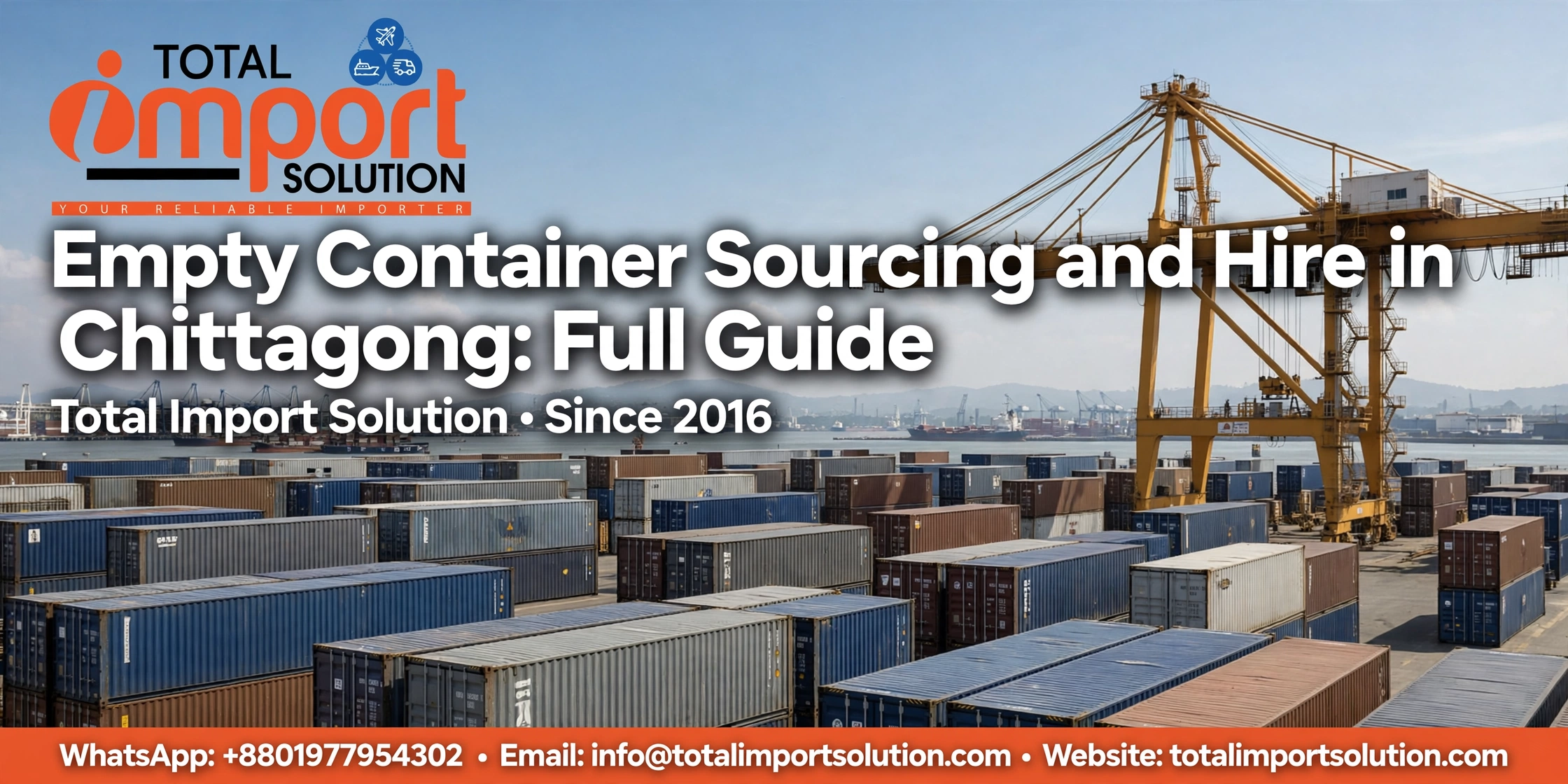
An empty container is a shipping container that has been unloaded and is ready for its next use. It has no cargo inside. Once it is cleaned, checked and released, it can be hired, loaded with export cargo, and sent back to the port.
An empty container is not a damaged container. A unit offered for hire should have working doors, seals, floor and roof, and it should be clean and dry inside. If it has holes, a leaking roof, a broken floor or doors that do not close, ask for a replacement unit.
Empty containers are held at the port, at container depots and at private yards around Chittagong. They move in and out as vessels arrive and depart, so availability changes with shipping demand. Enquire early if you need a specific size or type for a specific date.
When Do You Need an Empty Container?
The most common reason is export loading. A garment factory in Dhaka or Gazipur finishes an order, and the cartons must be loaded into a container and sent to Chittagong Port for the vessel. The empty container is brought to the factory, loaded, sealed and taken to the port.
The second reason is storage. A business may need a container at its site for weeks or months, to store raw materials, finished goods, tools or stock. Placed on a firm and level surface, an empty container works as a secure store, and it can be returned when it is no longer needed.
The third reason is repositioning. A container unloaded at one place may be needed at another place for the next load. Moving an empty container from the depot to the factory, or from the port to a warehouse, is part of normal container work.
The fourth reason is a return load. An importer who has unloaded a container may want to use the same unit, or another empty unit, for an export load, so the container does not travel back empty. Whether that is possible depends on the shipping line, the booking and the condition of the unit, so ask first.
Where Empty Containers Are Sourced in Chittagong
Chittagong Port is the main seaport for Bangladesh’s import and export cargo, and most empty containers pass through it. When a vessel arrives, import containers are discharged, and after clearance and unloading, the empty units are returned to depots and yards around the port.
Container depots, also called off-dock yards, hold empty containers, check them, clean them and release them for hire. A depot will normally have 20ft and 40ft standard containers, and often high cube and reefer units as well, though the mix changes with demand. Private yards and leasing companies also hold empty containers and can arrange delivery.
Sourcing means finding the right unit and getting it released. The supplier checks availability, confirms the size and type, and arranges collection or delivery. You do not need to visit the depot yourself in most cases, but you should know where the container is coming from, so you can plan the timing. A container from a depot near the port reaches a Chittagong factory quickly, while delivery to Dhaka takes longer.
Ask the supplier three questions before you agree: where is the container now, when can it be delivered, and what is its condition.
Sizes and Types in Brief
Most empty containers are 20ft or 40ft. A 20ft container is about 6 metres long, and a 40ft container is about 12 metres long. The width is generally the same for both, at around 2.4 metres. A 20ft unit is compact and easier to place in a smaller yard. A 40ft unit holds roughly twice the volume in general terms, and it suits a larger volume of cargo in one unit, with one seal and one delivery.
A standard dry container is the most common type: a closed steel box for general dry cargo such as packed goods, cartons and textiles.
A high cube container is taller than a standard container, generally around 2.9 metres high on the outside, with the same length and width. It suits light, bulky cargo that needs height, such as garments in cartons and furniture. It is less common than a standard container, so confirm availability early.
A reefer container has a cooling unit for temperature-sensitive cargo, such as frozen food and fresh produce. It needs a power supply, and it normally costs more than a standard dry container. Open-top and flat-rack containers are specialist types for top-loaded or oversized cargo.
| Feature | 20ft standard | 40ft standard | 40ft high cube |
|---|---|---|---|
| Length | About 20 feet, around 6 metres | About 40 feet, around 12 metres | About 40 feet, around 12 metres |
| Width | Around 2.4 metres | Around 2.4 metres | Around 2.4 metres |
| Outside height | Around 2.6 metres | Around 2.6 metres | Around 2.9 metres |
| Volume | Smaller, roughly half of a 40ft | Larger, roughly double a 20ft | Largest of the three, extra height |
| Best for | Smaller loads, tight sites, heavy cargo | Larger volume, bulky cargo, fewer units | Light, bulky cargo that needs height |
Do not choose by length alone. Measure the cargo first: its volume, weight, the height of the tallest item, and how high it can be stacked safely. A 20ft can suit dense, heavy cargo, while a 40ft or a high cube can suit bulky, light cargo. Confirm the exact internal size of the unit offered, as the data plate is the reference.
How to Source and Hire an Empty Container, Step by Step
Sourcing and hiring an empty container follows a clear sequence. Use the same steps every time.
Step 1: Write down your requirement. Note the cargo, its rough volume and weight, the size and type you need, the delivery location, the date, and how long you need it. If you are unsure about the size, share the cargo details and ask for advice.
Step 2: Enquire and check availability. Share your requirement and ask whether the size and type are available for your date. Availability changes with shipping demand, so enquire early, and earlier still for a high cube, reefer or specialist type.
Step 3: Ask for a written quotation. Ask for the size and type, the hire period, the charge, the delivery charge, the deposit and the payment terms, and what is included and what is not included. A rate is confirmed at booking, so ask for it in writing.
Step 4: Confirm and book. Once you agree on size, type, duration, delivery date, address and a contact person, confirm the booking. Make sure someone will be at the site to receive the container.
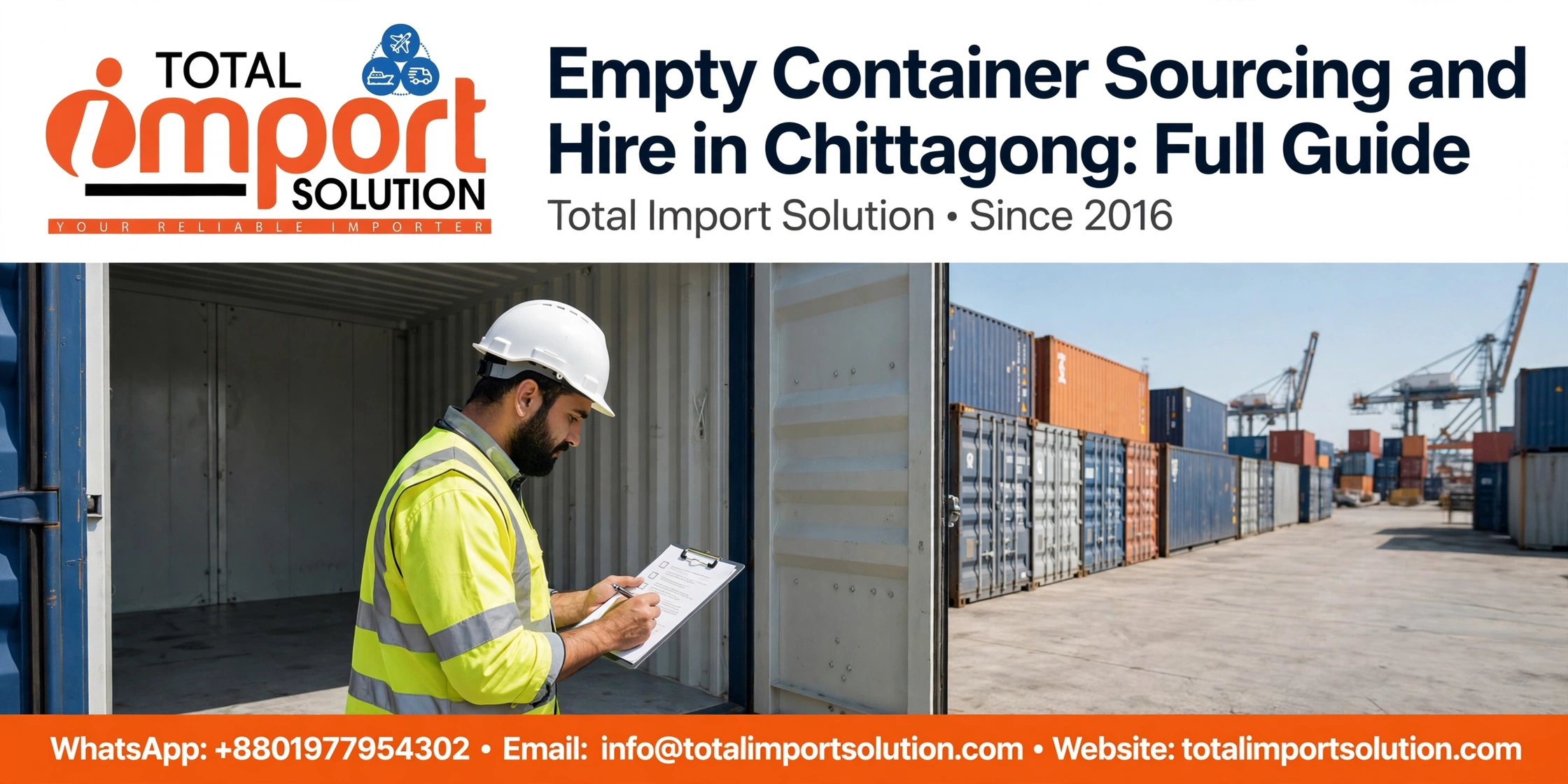
Step 5: Inspect on delivery. Check the doors, seals, roof, walls and floor before you sign, as explained in the inspection section below. Take photos inside and outside, note the container number, and raise any problem at once.
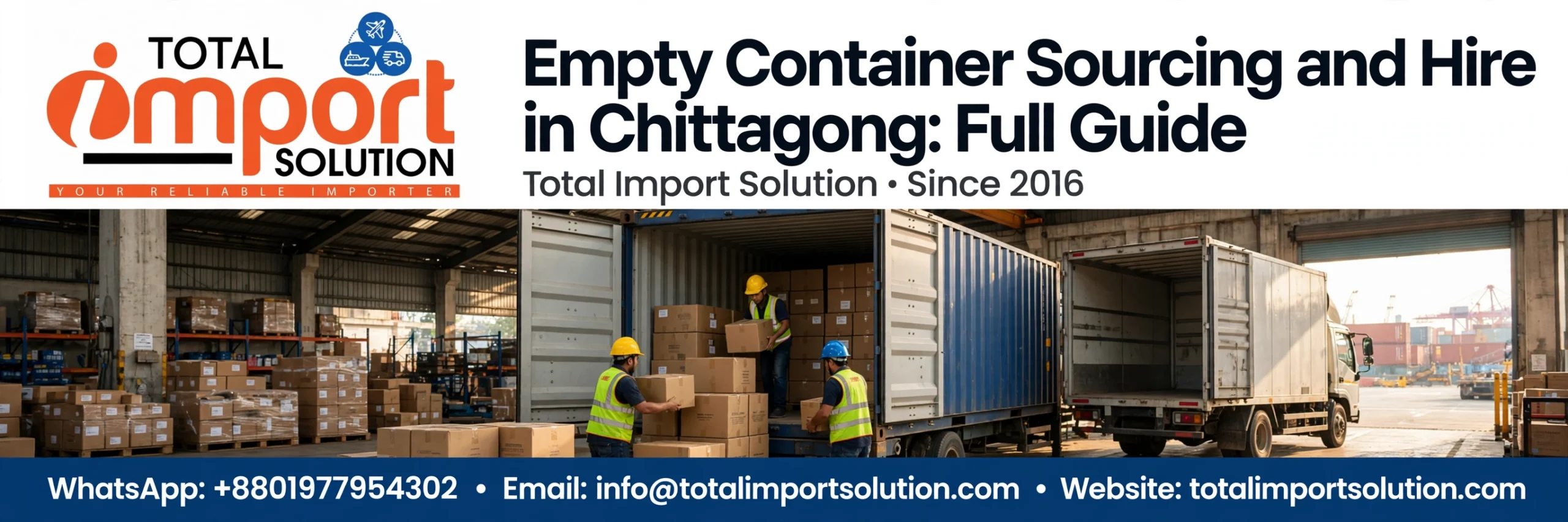
Step 6: Load carefully. Put heavier items at the bottom and lighter items on top, distribute the weight evenly, and secure the load. Count the cargo as you load it and keep a packing list.
Step 7: Send to the port or keep for storage. For an export, the loaded container is sealed and sent to Chittagong Port for the vessel. For storage, it stays at your site on a firm, level, dry surface, with the doors closed and locked.
Step 8: Return as agreed. When the hire ends, arrange collection, make sure the container is empty and clean as agreed, and confirm in writing that the hire is closed.
Documents to Keep Ready
Keep the basic documents ready so the process does not stop. For a business hire, keep a copy of your trade licence or business registration, the delivery address in full, and the receiver’s contact details.
For an export, keep the commercial invoice, packing list and shipping documents for your buyer and vessel booking ready. For an import, keep the bill of lading, commercial invoice and packing list ready. Keep a hire note with the size, type, period, delivery date and location, plus the container and seal number if used.
If customs clearance is involved, your clearing and forwarding agent normally handles it, so share the container details with your agent in good time, including the container number, size and type, vessel and cut-off time.
Inspection Checklist Before You Accept a Container
Check these points on delivery, and note anything wrong before you sign. First, the doors: open and close them, check the locking rods, handles and seals, and look for gaps. They should open and close smoothly.
Second, the roof and walls: look for holes, dents, rust and daylight coming through. A hole in the roof will let rain in and damage the cargo. Third, the floor: check for broken boards, soft spots, stains and a strong smell.
Fourth, the inside: check for water marks, previous cargo residue and any sign of contamination. An empty container should be clean and dry inside. Note the container number, take photos, and raise any problem at once.
The same checklist applies whether the container is for export loading or for storage. For a container kept for storage, check it again from time to time, especially after heavy rain, and raise any leak or damage at once.
Chittagong Port Procedures and Customs
Chittagong Port is where most containers enter and leave Bangladesh, so its procedures shape the whole process. For an import, the vessel arrives, the container is discharged, customs clearance is completed by your agent, and after clearance it is released for unloading. Once empty, it is returned to a depot or yard.
For an export, the empty container is taken from the depot to your factory or warehouse, loaded, sealed and sent to the port, and loaded on the vessel before the cut-off time. Confirm the cut-off time with your agent and plan transport so you do not miss it. A container that misses its vessel may need a new booking.
Customs and port charges are separate from the hire cost in most cases, so ask which charges are included and which you will pay separately. Your clearing and forwarding agent normally handles customs clearance, and the shipping line handles the vessel booking, so keep both informed about the container number, size and type, and dates.
Delivery to Dhaka and Other Cities
Delivery from Chittagong is normally by road, and the location changes the total cost and the timing. Delivery near the port is quickest. Delivery to Dhaka, Gazipur, Narayanganj and other cities takes longer, because of the distance, the road and the traffic.
When you ask for a rate, always give the full delivery address, not only the city, and confirm whether the delivery charge is included. For Dhaka delivery, the site matters: a narrow road, a sharp turn, a low gate or a small yard can make delivery difficult, and a 40ft container needs a longer approach and more space than a 20ft container.
Allow extra time for Dhaka traffic, and share the receiver’s contact details so the driver can call on arrival. For an export from Dhaka, start loading early, because the loaded unit still has to reach the port before the vessel cut-off.
What Affects the Hire Cost?
No fixed price is given here, because the hire cost depends on several factors. Size matters: a 40ft container normally costs more than a 20ft container. Type matters: a high cube or a reefer normally costs more than a standard dry container of the same size.
Duration matters: a short hire is priced differently from a longer hire. Condition matters: a container in good, clean and inspected condition is worth more than a unit with damage or wear. Delivery location matters: delivery to Dhaka differs from delivery near the port, because of the distance, the road and the time. Availability matters too: when many exporters need empty containers at the same time, availability can change.
Always compare the total cost, including delivery and any deposit, and confirm it in writing before you book. A rate is confirmed at booking. Do not compare two quotations unless they cover the same size, type, period and delivery location. A low initial figure may exclude delivery or port handling, so ask what is included.
Common Mistakes to Avoid
The most common mistake is booking the wrong size or type. A container that is too small means a second container, a second delivery and a second seal. A container too large for your site means a delivery that cannot reach you. Measure the cargo and the site before you confirm.
The second mistake is booking too late. Empty container availability changes with shipping demand, and a specific size or type may not be available at short notice. Enquire early, especially for a high cube or reefer.
The third mistake is loading without inspection. A container with a leaking roof, a damaged floor or doors that do not seal can damage the cargo. Inspect on delivery and raise any problem at once.
The fourth mistake is missing the vessel cut-off. A loaded container that reaches the port late may miss its vessel. Confirm the cut-off time with your agent and plan backwards from it.
The fifth mistake is keeping a container beyond the agreed period without notice, because extra days are normally charged. Inform the supplier before the period ends. The sixth mistake is comparing quotations that cover different things: one may include delivery, while another covers only the container at the depot. Compare the total cost for the same basis.
Frequently Asked Questions (FAQs)
1. What is an empty container?
An empty container is a shipping container with no cargo inside, between jobs, that has been unloaded, cleaned and checked and is ready to be hired again.
2. Where are empty containers sourced in Chittagong?
From Chittagong Port, container depots and private yards around the port, where empty units are held, checked and released for hire.
3. Which size should I choose, 20ft or 40ft?
A 20ft suits smaller loads and tight sites; a 40ft suits larger, bulky loads in one unit.
4. What is the difference between a standard and a high cube container?
A high cube is taller, generally around 2.9 metres high against around 2.6 metres for a standard container, with the same length and width.
5. Can I hire a reefer container in Chittagong?
Reefer containers are available in general, but availability varies. Confirm the power supply and temperature needs at booking.
6. How do I source an empty container for export?
Write down your requirement, enquire about availability, ask for a written quotation, confirm and book, then inspect before loading.
7. How early should I book an empty container?
Enquire as early as you can, especially for a specific size, type or vessel date.
8. What documents do I need to hire an empty container?
Keep your trade licence, delivery address, contact details and shipping documents ready.
9. How do I check an empty container before accepting it?
Check the doors, seals, roof, walls and floor, look for leaks and damage, and take photos inside and outside.
10. What happens if the container is damaged on delivery?
Raise it at once, do not load cargo into it, and ask for a replacement unit. Keep your photos as a record.
11. Can an empty container be delivered to Dhaka?
Yes, delivery by road is normally possible. Confirm the cost and timing for your full address, and check the gate, road and yard first.
12. What is the vessel cut-off time?
It is the latest time a loaded container can reach the port for a specific vessel. Confirm it with your agent and plan backwards from it.
13. What affects the hire cost of an empty container?
Size, type, condition, duration, delivery location and availability.
14. Is there a deposit for hiring an empty container?
It depends on the terms. Ask about any deposit and how it is settled before you book.
15. How do I arrange empty container sourcing and hire with Total Import Solution?
Contact Total Import Solution by WhatsApp or email with your size, type, cargo, delivery location and dates.
Total Import Solution — Contact Us
Total Import Solution, since 2016, provides sourcing and import support for businesses in Bangladesh, including empty container sourcing and hire in Chittagong. For availability and a rate for your requirement, contact us:
- WhatsApp: +8801977954302
- Email: info@totalimportsolution.com
- Website: totalimportsolution.com
